

For years the Masai Mara was a name I knew from wildlife documentaries and endless photography videos. Then, after a long drive from Lake Nakuru, we checked in to our tented camp inside the reserve and were welcomed with a traditional song. For the next five days our alarm rang before 5:30, and we didn’t come back until the sun had gone down.
In those five days we waited 90 minutes for a leopard to come down for lunch, had a lion lie down right next to our open vehicle, got chased by an elephant mother and watched thousands of wildebeest gather at the river. This is the full story of our Masai Mara safari, day by day, with the facts and photography tips I picked up along the way.
In This Post
About the Masai Mara
The Masai Mara National Reserve covers about 1,510 km² of rolling savannah in south-western Kenya, and together with the surrounding community conservancies, it forms the northern part of the Serengeti–Mara ecosystem. It’s famous for its big cats, the Big Five and, from around July, the Great Migration. For wildlife photographers, it really is paradise, and if you’re planning a Masai Mara safari, July to October is the most popular time to go.
Our Daily Routine on a Masai Mara Safari
Our days in the Mara followed a simple rhythm. We were up early for a quick coffee or tea, and out on the game drive by around 5:30 a.m. We stayed out all day and came back to camp at about 6:30 p.m., just in time for a shower, dinner, backing up the day’s photos and sleep. Then we did it all again.
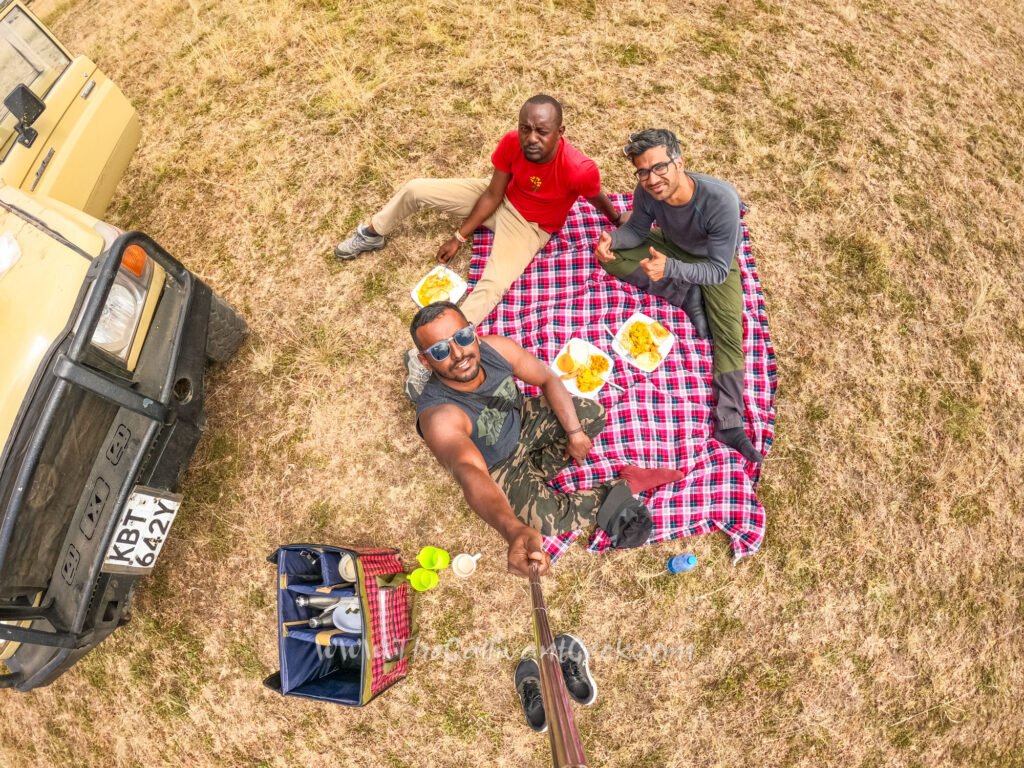
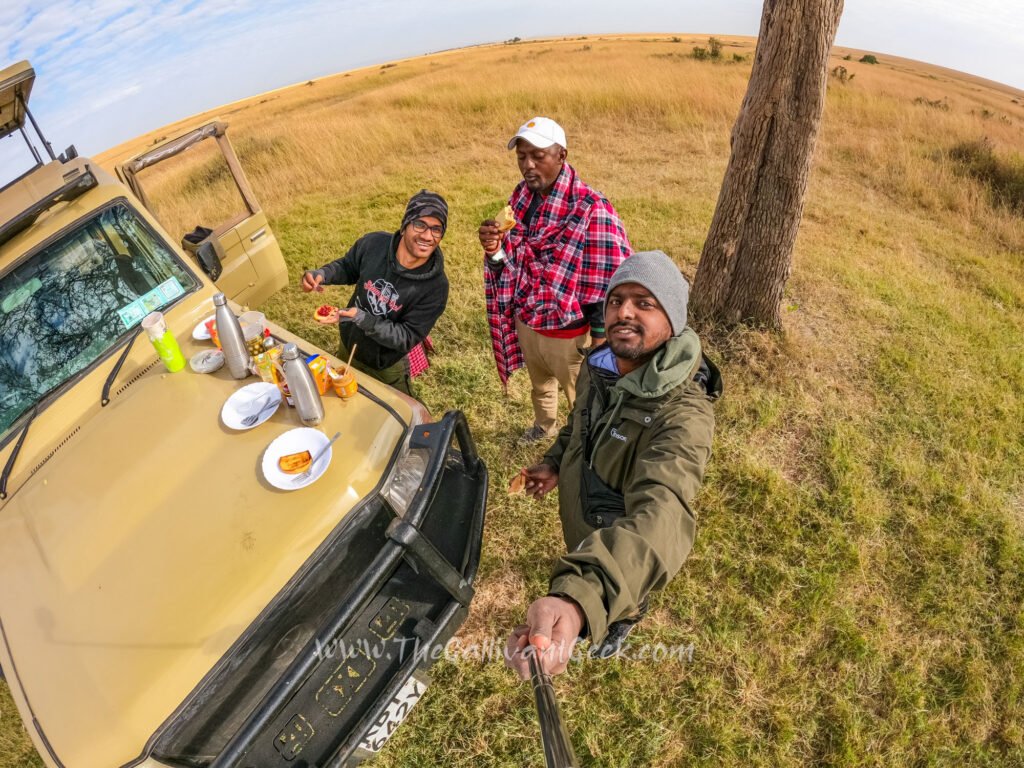
The camp packed us a breakfast and a picnic lunch every day. The food was delicious and filling, but honestly, we barely noticed it. Our full focus was on the wildlife around us. You can’t just stop anywhere to eat, though: in most of the reserve you must stay inside the vehicle, because wild animals can appear from any direction. Getting out is only allowed at designated spots, such as picnic sites and viewpoints along the river. Our driver was very strict about it, and I appreciated that. Safety came first.
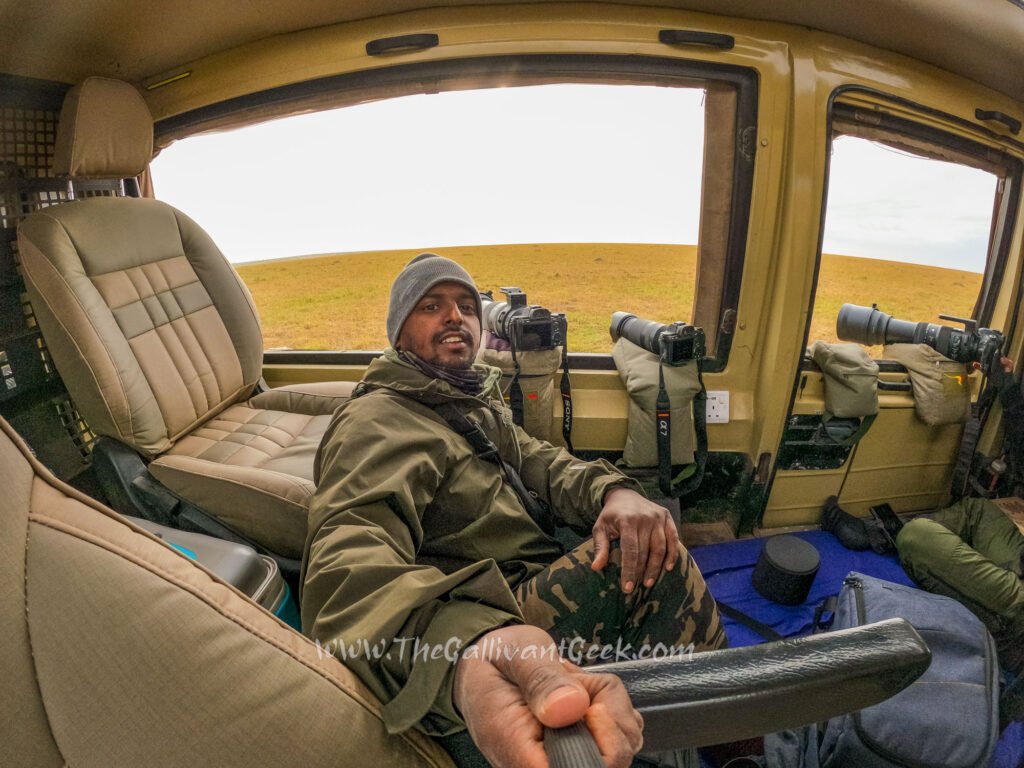
One small trick made a big difference for us. Since we were only two in the vehicle, we asked our driver to put a mattress on the floor. That way we could sit comfortably on the floor of the vehicle, instead of sitting on the seats and bending our backs every time we wanted to take a photo. Over full days in the field, our backs were very grateful.
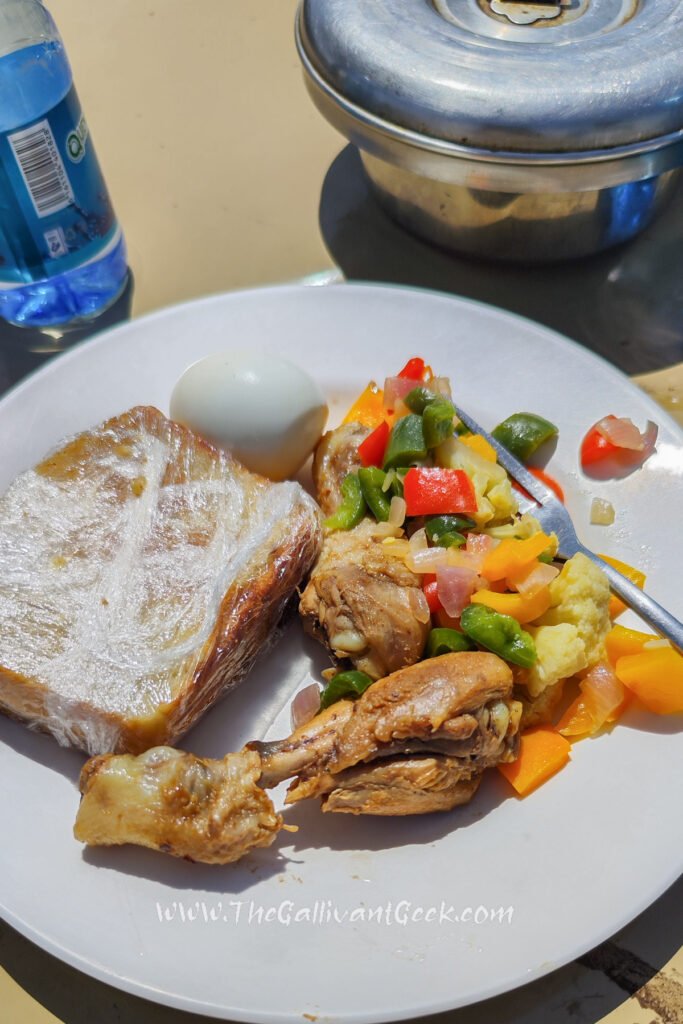
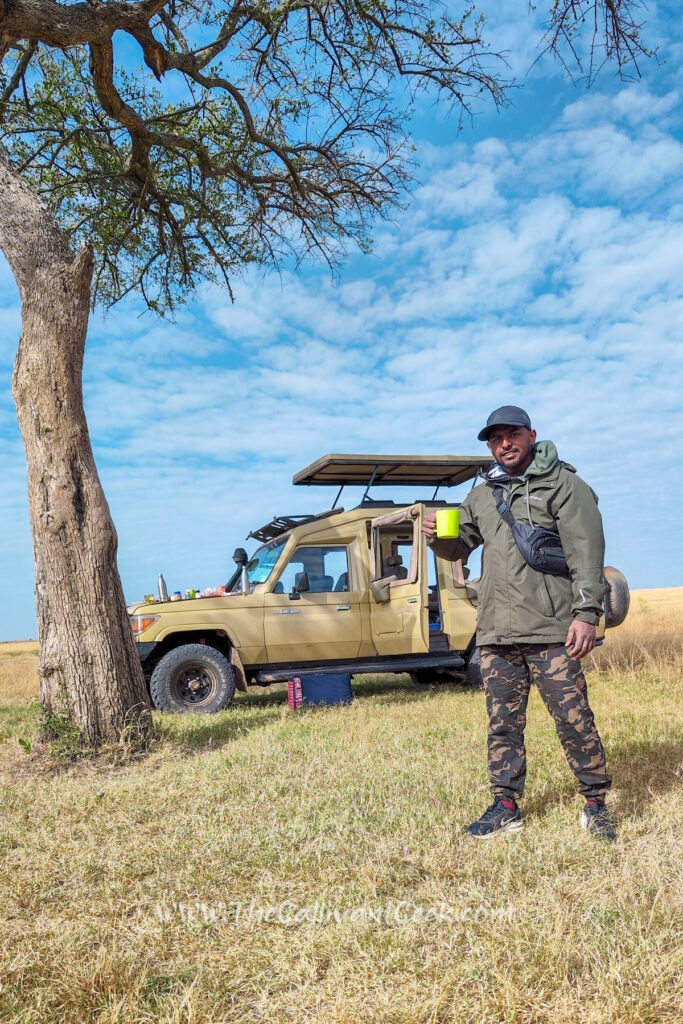
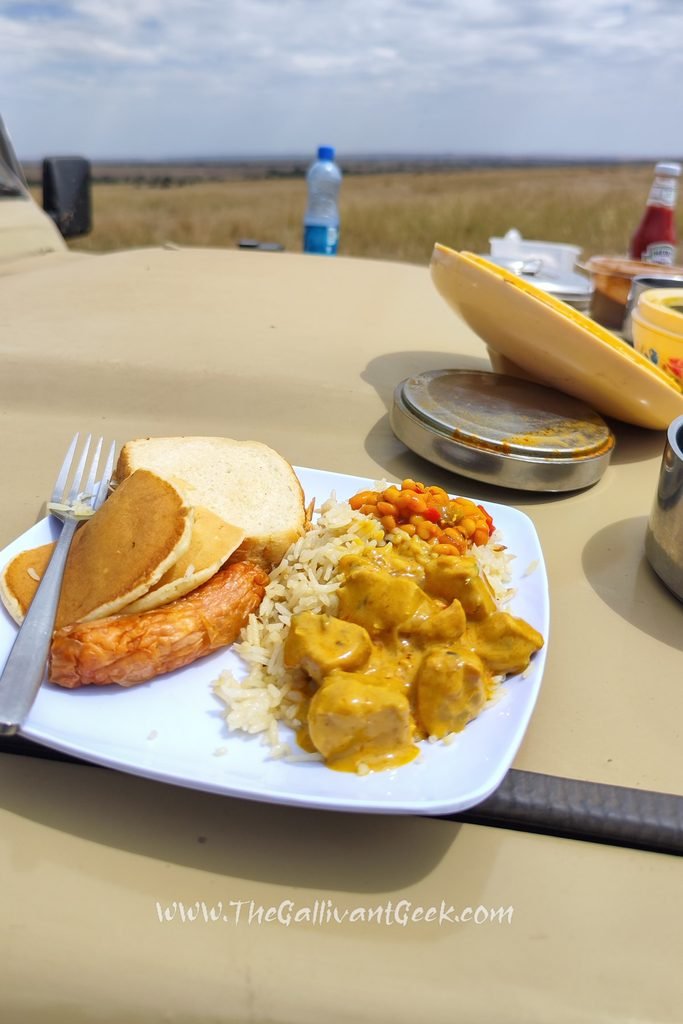
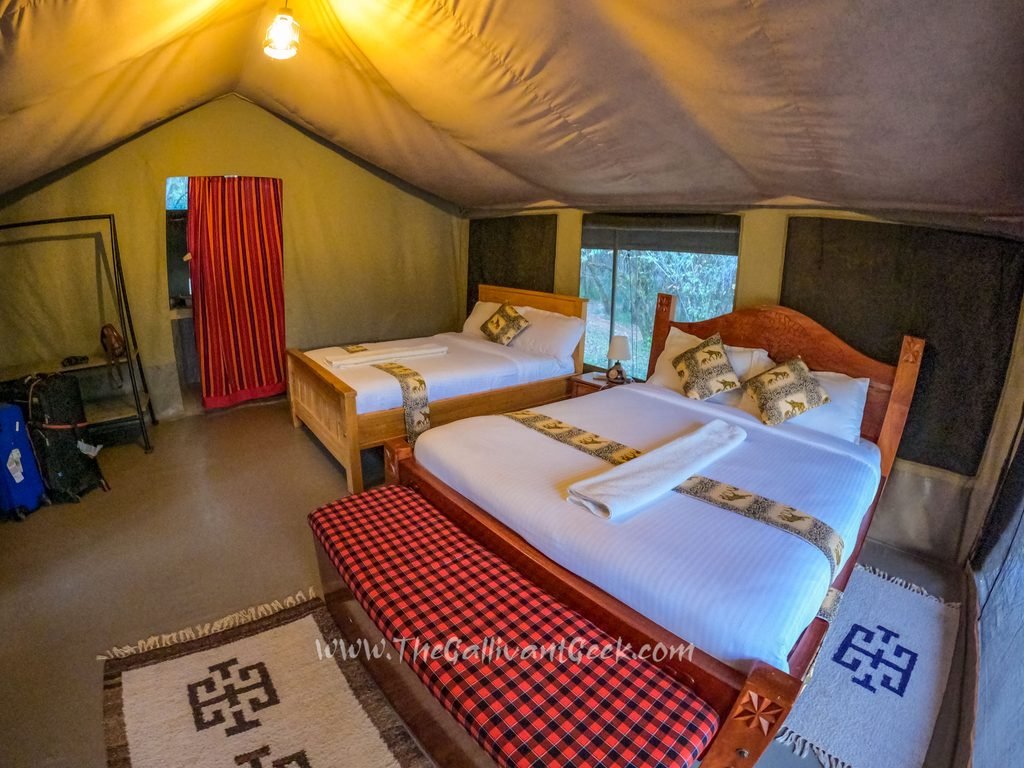
We stayed in a tented camp inside the reserve, and I loved it. Sleeping in a tent feels completely different from a regular hotel: you really feel part of the wild. At night we could hear the animals calling around the camp. It’s a little scary at first, but local security guards watch the camp and its surroundings all night, so we always felt safe.
One thing I didn’t bring was my drone. I had planned to, but flying a drone isn’t allowed in most of Kenya’s national parks and reserves without special permission, and the approval process takes time. So the drone stayed at home, and the long lens did all the work.
Day 1: Cheetah Brothers, Resting Lions and Luluka the Leopard
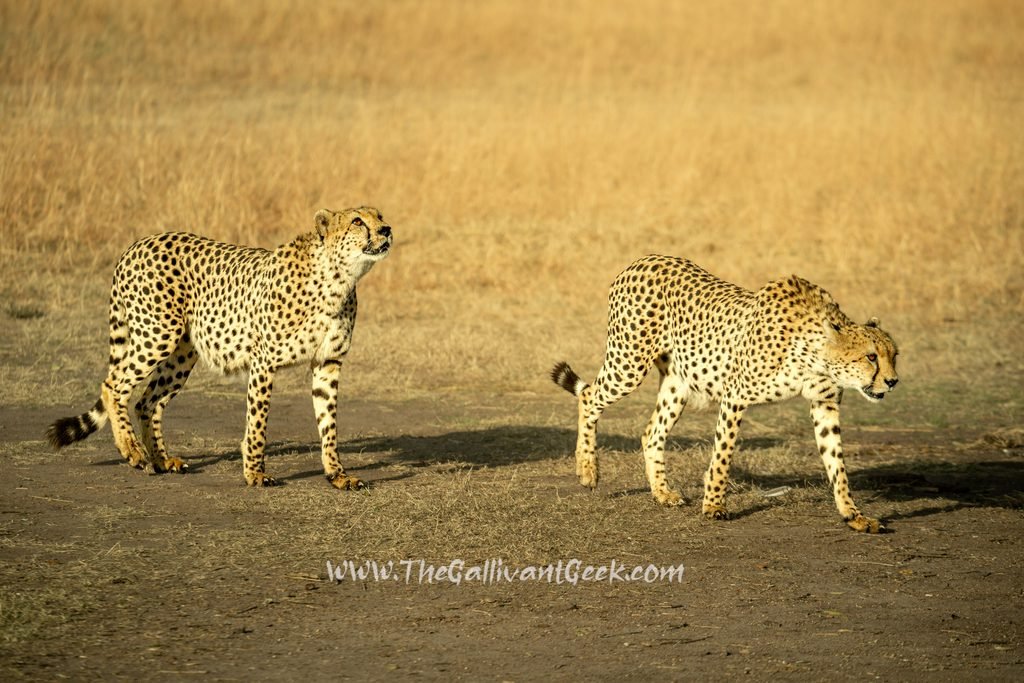
Our first cheetahs
Our first morning started with a bang: two cheetah brothers walking straight towards us. They passed close to the vehicle, stopped at a tree and started marking their territory. Male cheetahs often stay together for life in small groups called coalitions, usually made up of brothers, which helps them hold territory and hunt bigger prey. We waited until they moved on, then went looking for lions.
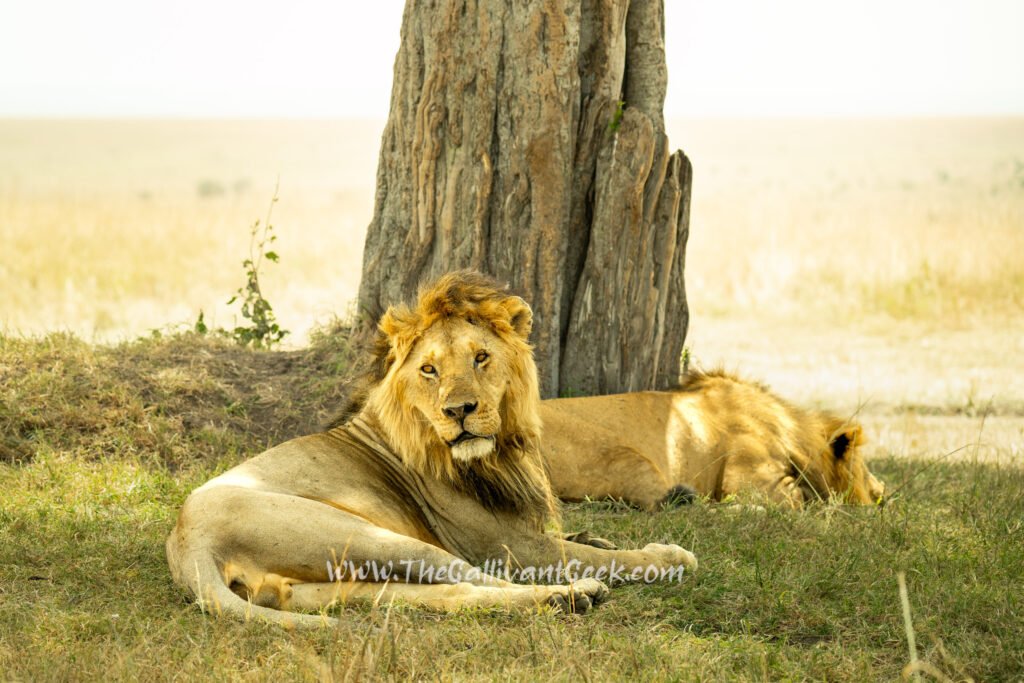
Lions resting in the shade
We found two lions resting under a tree and got some lovely close shots. There were quite a few other safari vehicles around too, which is normal at big cat sightings in the Mara. Lions spend up to 20 hours a day resting, so if you find them in the shade, don’t expect much action. Be patient, and watch for a yawn or a stretch.
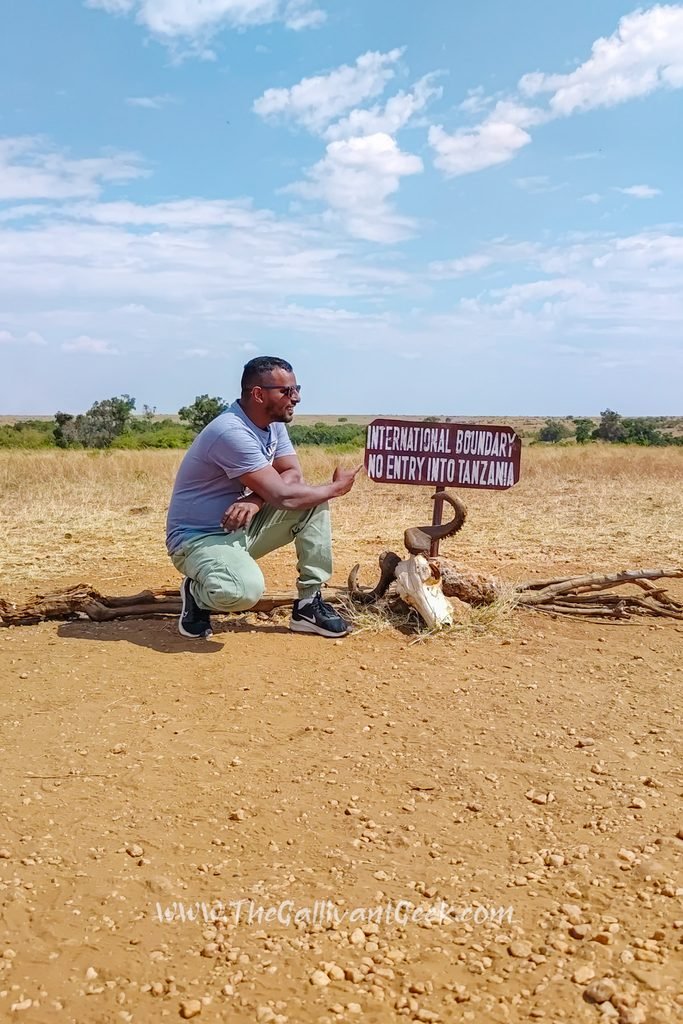
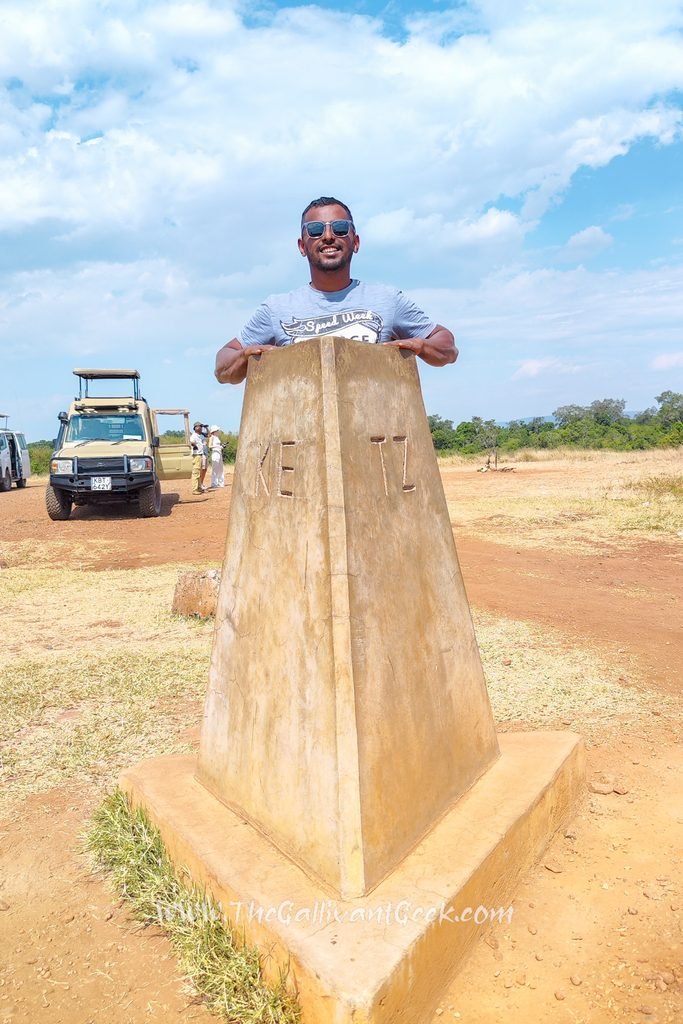
Standing on the Kenya–Tanzania border
Later that day, our guide drove us to a spot most visitors don’t expect on a game drive: the border between Kenya and Tanzania. The Masai Mara and Tanzania’s Serengeti are one continuous ecosystem, and the animals cross freely, with no fences in sight. This was one of the few places where we were allowed to get out of the vehicle, so of course we got out and took some photos there.
Waiting for Luluka
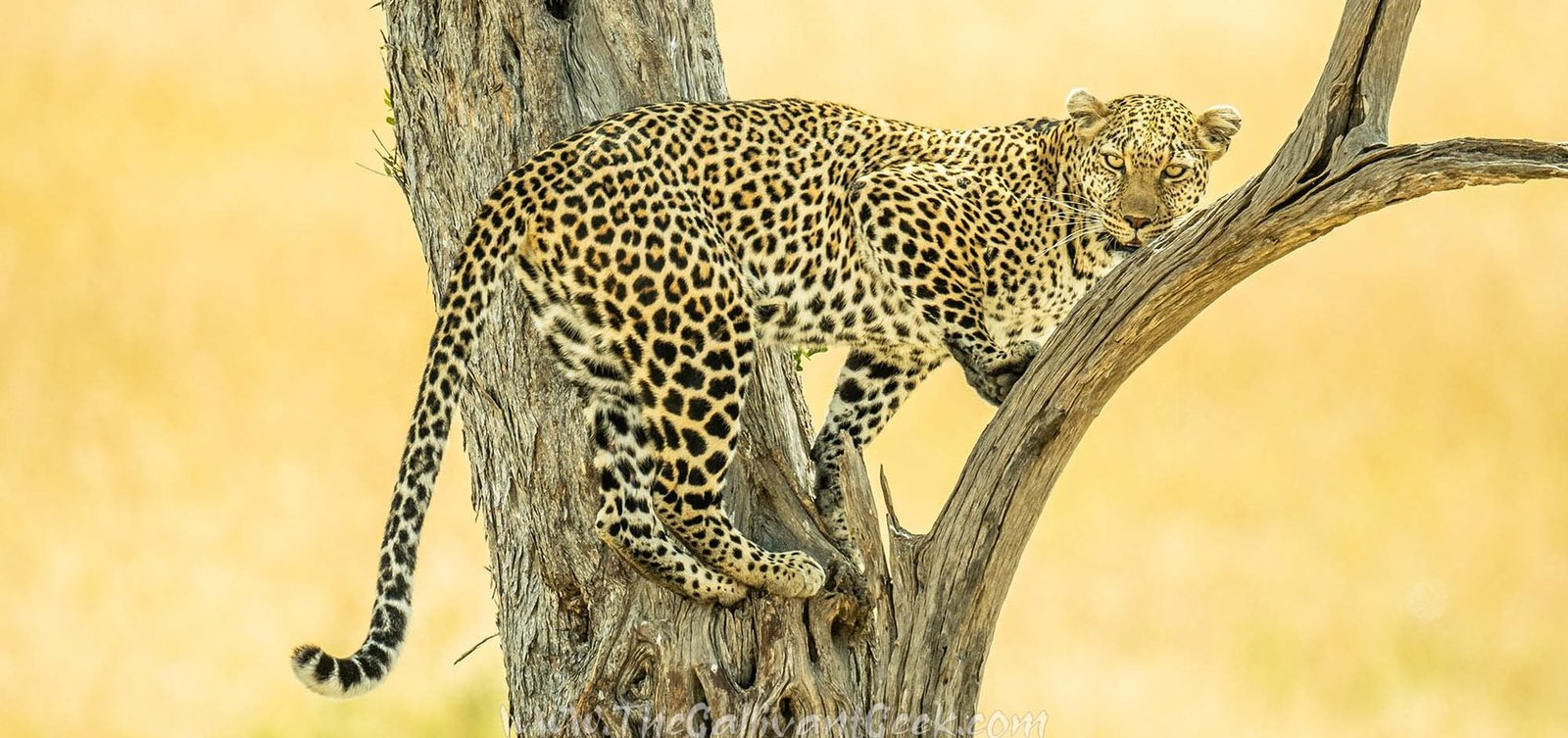
The big moment of day one came later. Our guide found Luluka, one of the Mara’s well-known female leopards. At first we could barely see her: she was lying low under the bushes. But up in a nearby tree hung a kill she had stashed there. Leopards often drag their prey up into trees to keep it away from lions and hyenas, so we had a good feeling she would come back up for lunch.
We decided to wait. After almost an hour and a half, she finally came out of the bushes and lay near the tree. Then she started to climb. It only lasted a few seconds, but halfway up she stopped and looked straight towards me. That’s when I got it: my dream shot. I still get goosebumps looking at that photo.
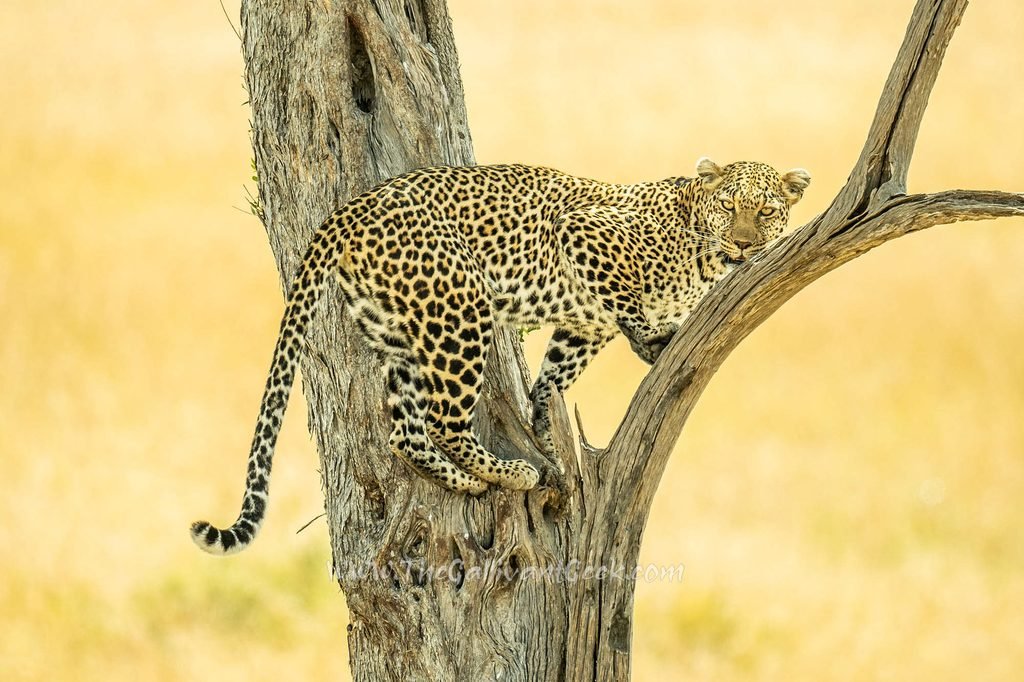
Photography tip: when a leopard has a kill in a tree, it will almost always come back to it. Pick your position with a clear view of the trunk, set a fast shutter speed in advance and wait. The climb is fast, and you won’t get a second chance.
Looking back, that first day was pure luck. For the next four days we searched for leopards everywhere, and we only saw one more, very briefly, before it disappeared into the bushes. No chance for a photo. Leopards are shy and mostly solitary, so if you find one, make the most of every second.
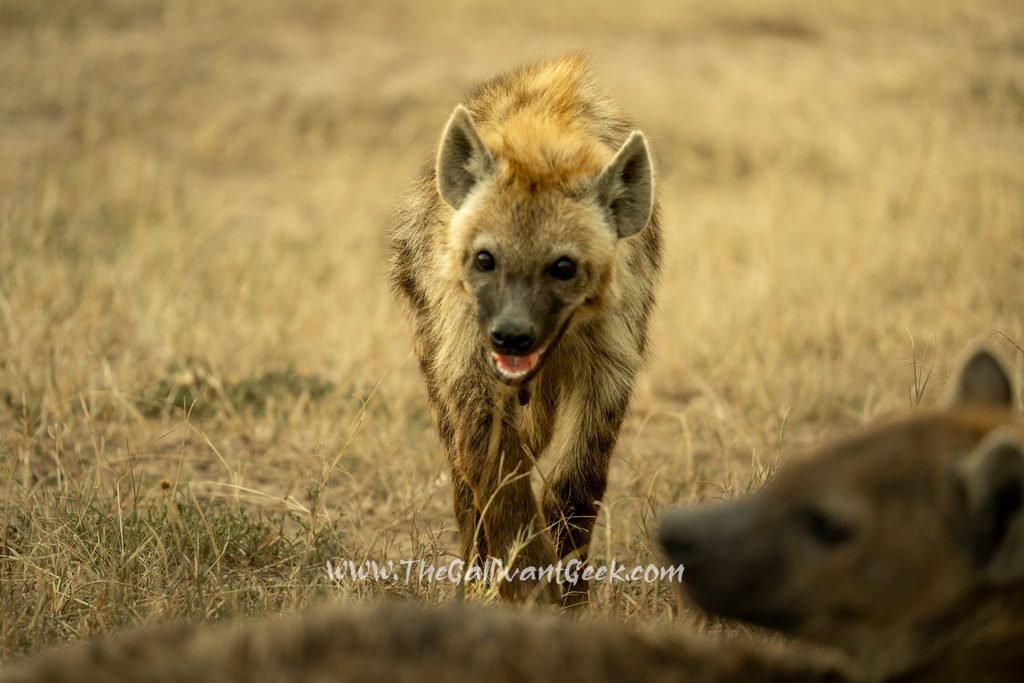
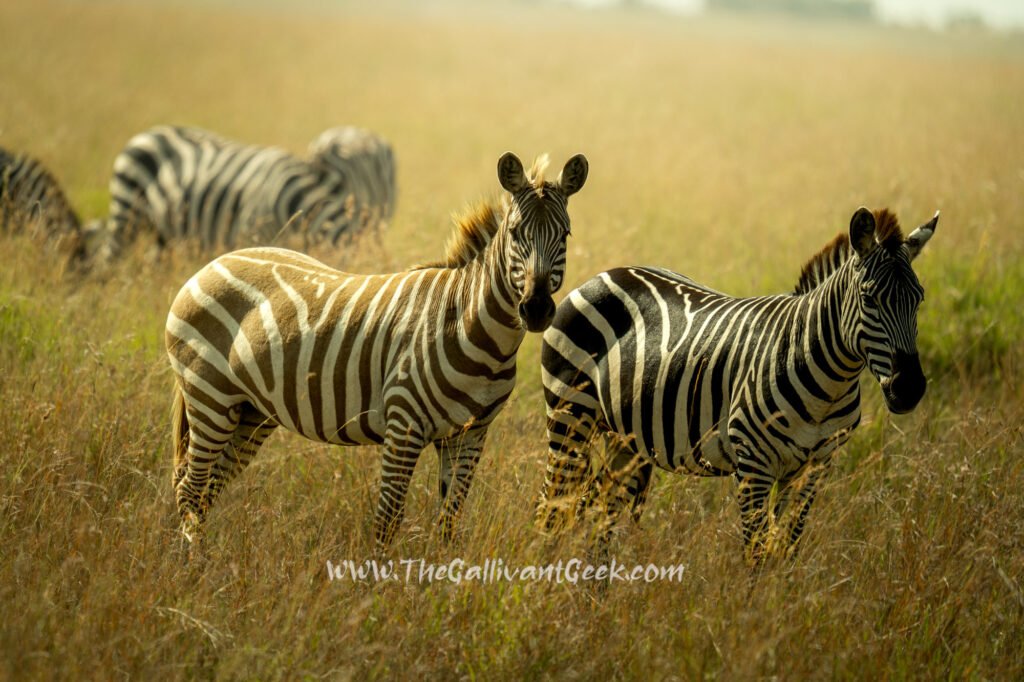
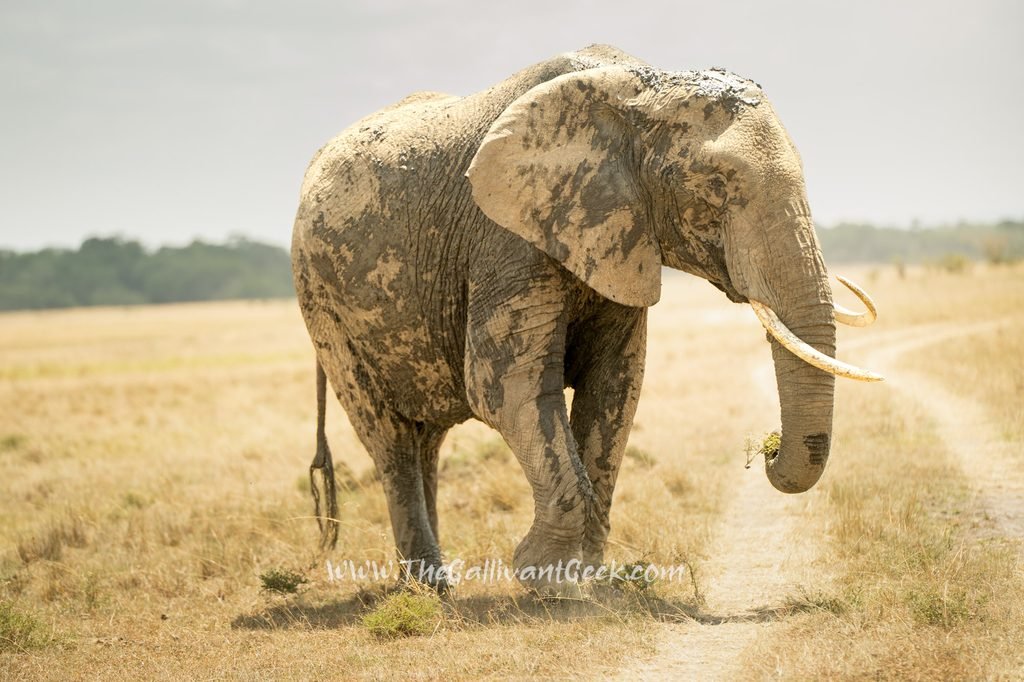
After a few more shots of Luluka, we moved on and stopped for lunch. The afternoon was hot, but I couldn’t stop taking photos. I wanted to make use of every second. We got good close-ups of African elephants, hyenas, topi and zebras before heading back to camp.
Day 2: A Lion Next to Our Vehicle and Waiting at the River
Lions mating
On day two we saw a pair of lions mating. It’s something you see quite often in the Mara, and the numbers are astonishing: during the few days a lioness is receptive, a pair can mate every 20 to 30 minutes, up to around 50 times in 24 hours. About 108 days later, cubs are born.
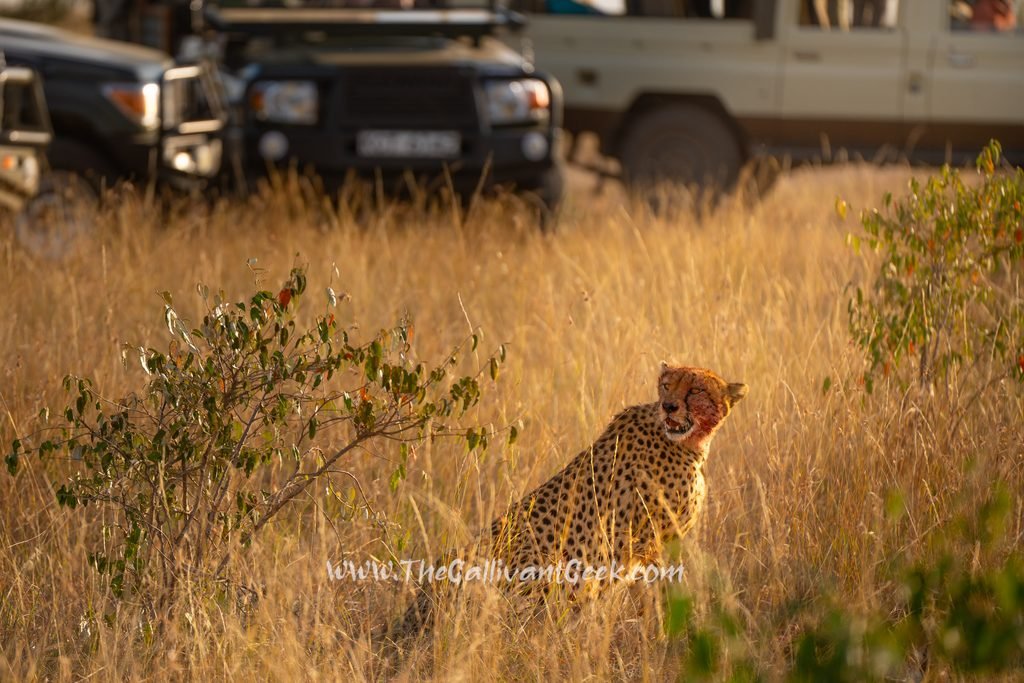
We also found the same two cheetah brothers again, this time with a kill. Unfortunately, it was surrounded by vehicles, and we couldn’t get a clean view for a good shot. That’s part of safari life in peak season. The best thing you can do is be patient, keep your distance and let your guide find a better angle.
The lion who came to sit next to us
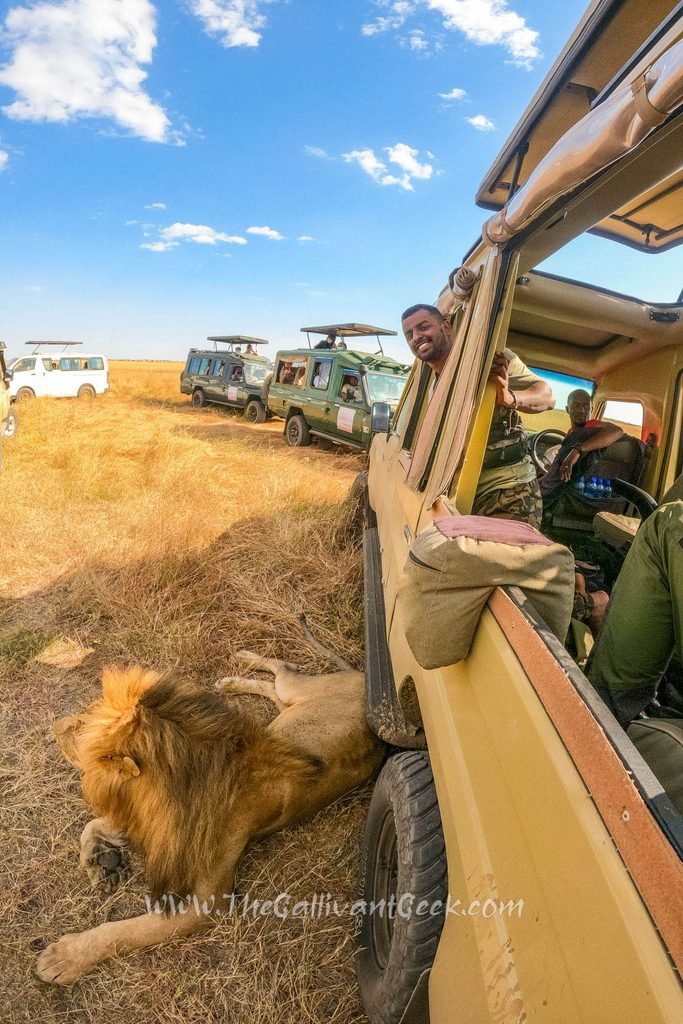
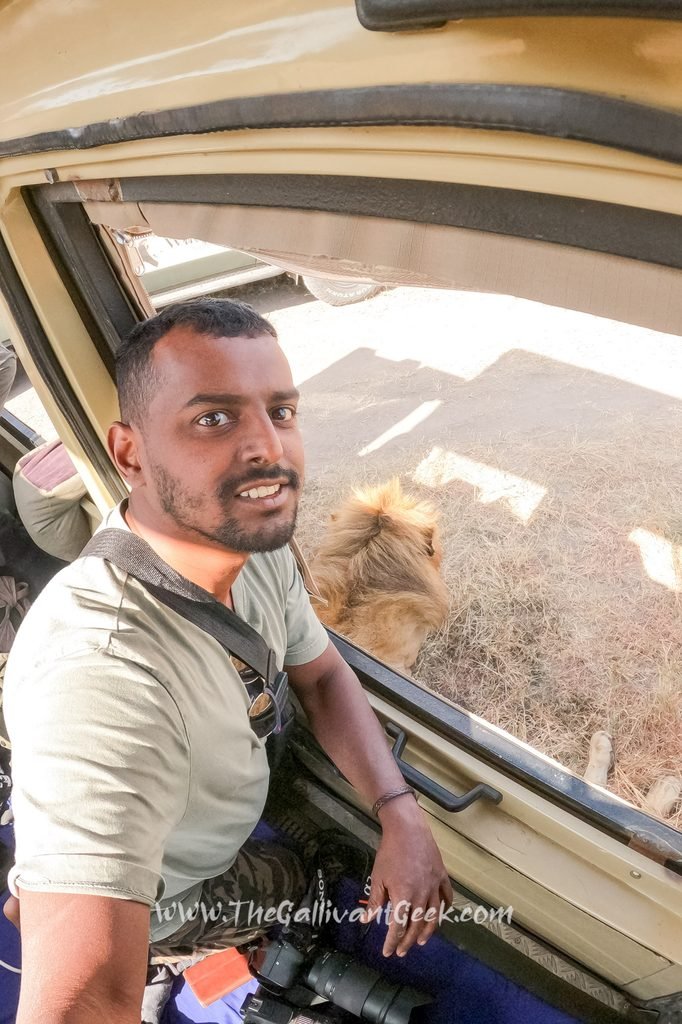
Day two turned into a very special day. Around noon we were photographing a lion that looked tired from the heat. We were about 5 metres away, with several other vehicles full of photographers nearby. Then the lion stood up and started walking, straight towards us. It came right up to our vehicle and lay down in the shade next to us.
I have to admit, I was a bit scared. Safari vehicles in the Mara are fully open for photography: the roof is popped up and the sides are open, with no way to close anything. The lion was on the ground; we were sitting in the vehicle, right next to it. Our driver quietly said we shouldn’t move the vehicle, and that there was nothing to worry about. So I thought: okay, let’s see.
From my seat I could photograph the top of the lion’s head, an angle you almost never get. After about 20 minutes, the lion got up and moved on, and so did we.
Waiting for a river crossing
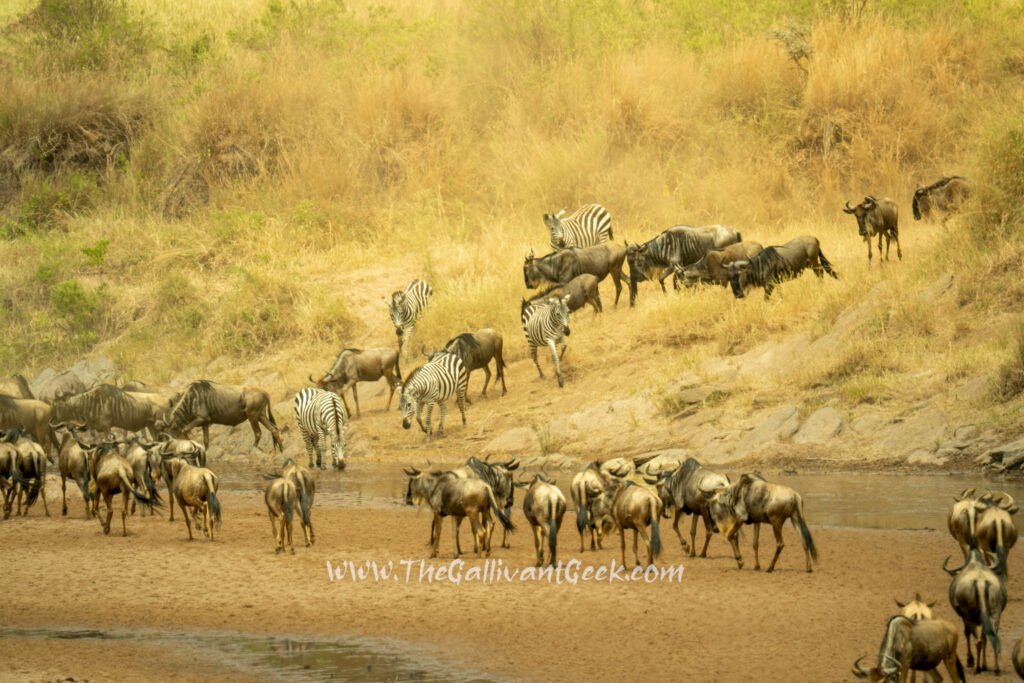
In the afternoon we drove to the river to try our luck with a wildebeest crossing. Around a thousand wildebeest had gathered near the bank, but after waiting for more than an hour, there wasn’t much movement. With more days ahead of us, we decided to come back another time.
The Great Migration: A Quick Guide
The thousand wildebeest we saw that day were only a tiny part of the herd. Here are a few facts about the Great Migration:
- Around 1.5 million wildebeest, together with roughly 200,000 zebras and hundreds of thousands of gazelles, move in a huge loop between Tanzania’s Serengeti and Kenya’s Masai Mara, following the rains and fresh grass.
- The herds usually start arriving in the Mara from late June, and river crossings are most likely between July and October.
- The most famous crossings happen on the Mara River, where crocodiles wait in the water. Herds also cross the smaller Talek River, which runs through the reserve.
- A crossing itself can be over in minutes, but the build-up can take hours, and on some days the herds don’t cross at all. That’s what happened to us.
- Predators follow the herds, which makes this the best time of year for big cat photography.
Day 3: Jackals, Maasai Giraffes and a Sunset Silhouette
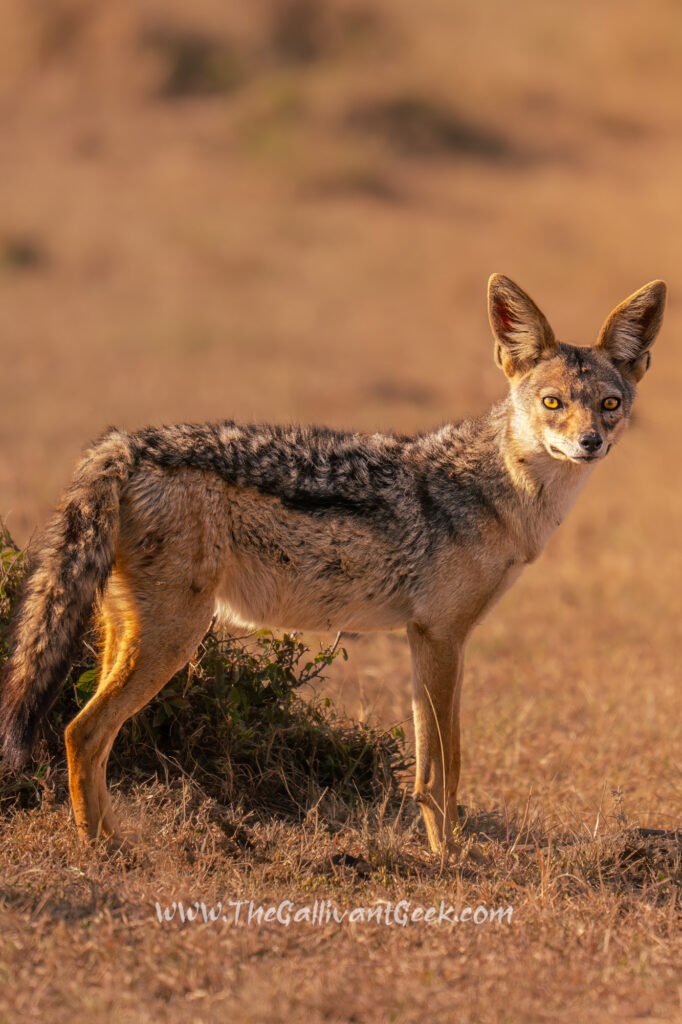
On day three we saw lions mating again, photographed a black-backed jackal and spent some time with a family of warthogs. Yes, just like Pumbaa.
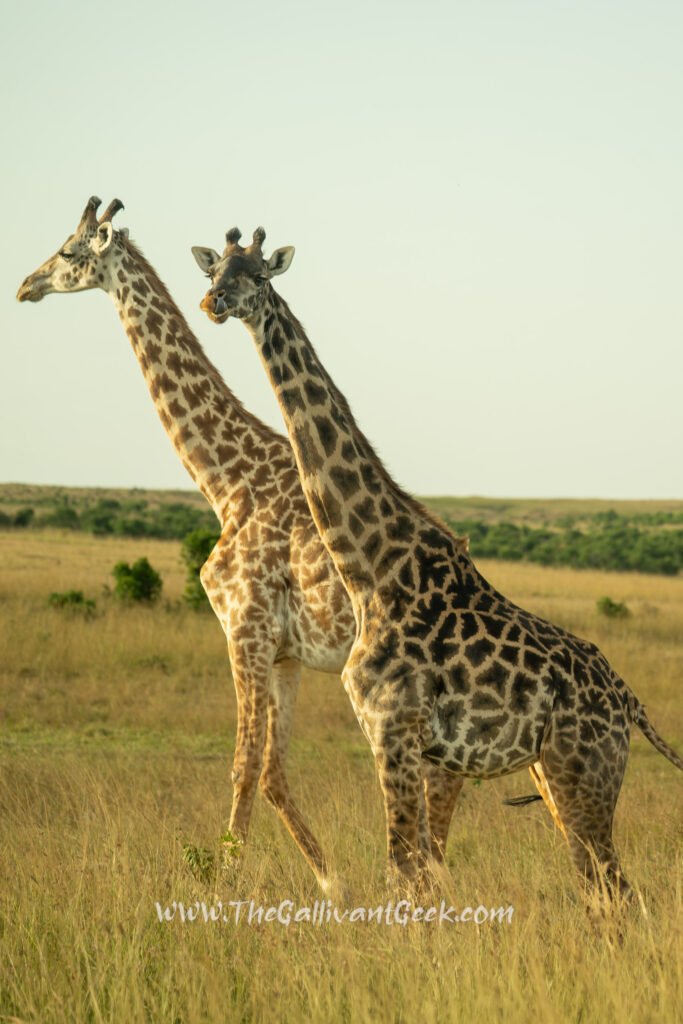
We also photographed Maasai giraffes, the giraffes you see in the Mara. They look quite different from the ones you may know from zoos: their spots are jagged and irregular, like oak leaves, instead of the neat, clean patches of the reticulated giraffe. The Maasai giraffe is the largest giraffe species and the tallest land animal on Earth. Bulls can grow up to around 5.8 metres tall. Sadly, it’s classified as endangered.
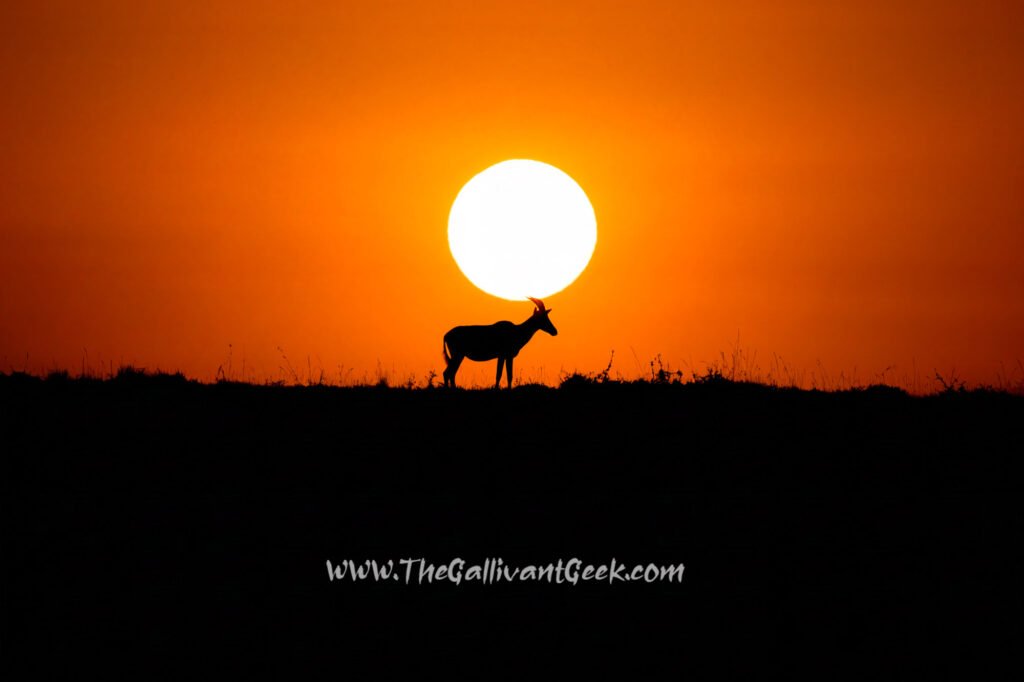
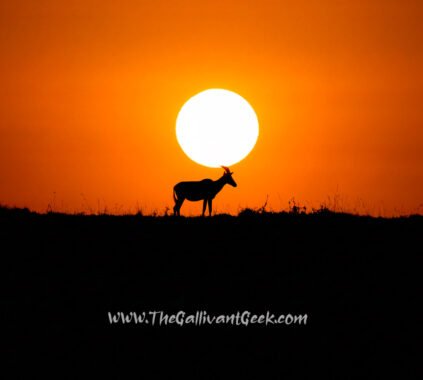
In the evening we planned for a sunset silhouette. We found a topi, one of the Mara’s most common antelopes, standing against the orange sky, and I got the shot I had in mind.
Day 4: A Hungry Lioness, a Maasai Village and an Angry Elephant Mother
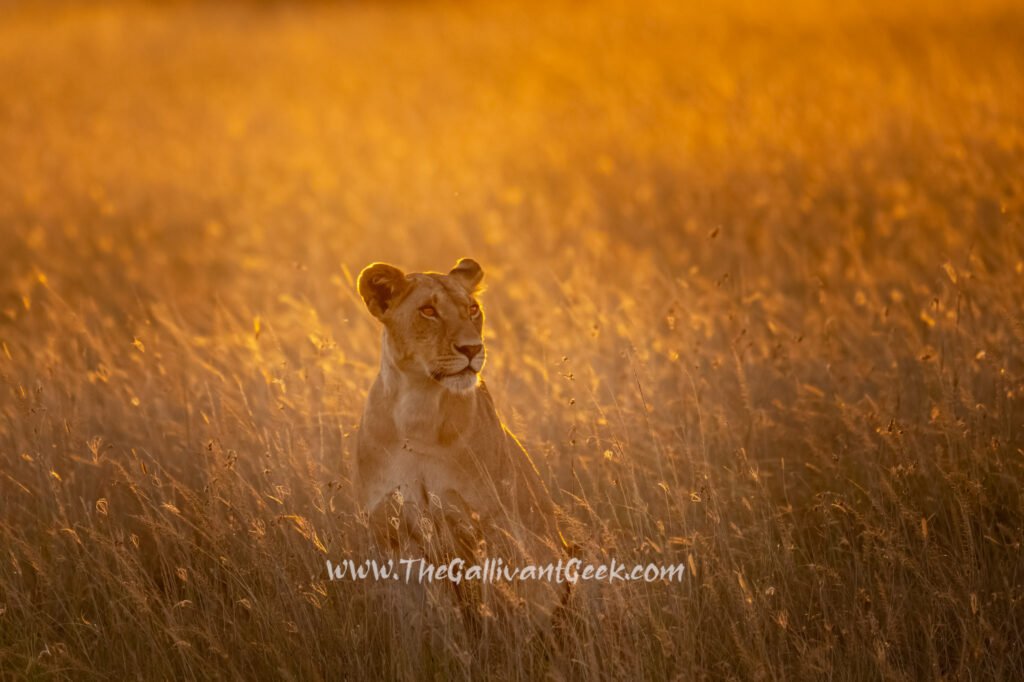
We started day four with a sunrise shoot with a lioness. She looked hungry and was clearly watching for a chance to hunt. We waited with her for a long time, but no hunt came, so eventually we moved on.
We finished the morning drive at around 9 a.m. and went back to camp to freshen up, because that day we had planned a visit to a nearby Maasai village. For once, I left the big lens in the tent. After the visit we rested for a while and headed out again at around 3 p.m. (I’ll share the village visit in a separate post, coming soon.)
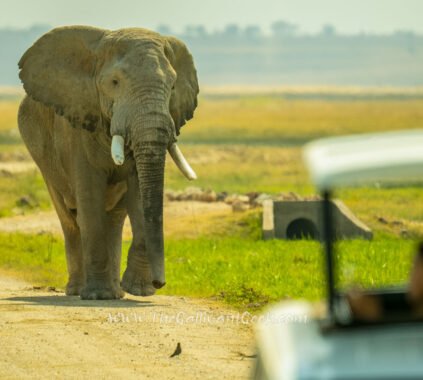
Later we found an elephant herd with a tiny baby. We moved a little closer to photograph the calf, and the mother didn’t like it one bit: she started charging towards our vehicle. Our driver reacted instantly and drove us out of there fast. Lesson learned: always give elephant mothers with calves plenty of space.
In the evening we went back to the same lioness from the morning and got beautiful portraits of her in the golden light of sunset, a perfect end to the day.
Day 5: A Last Morning with a Lion Couple
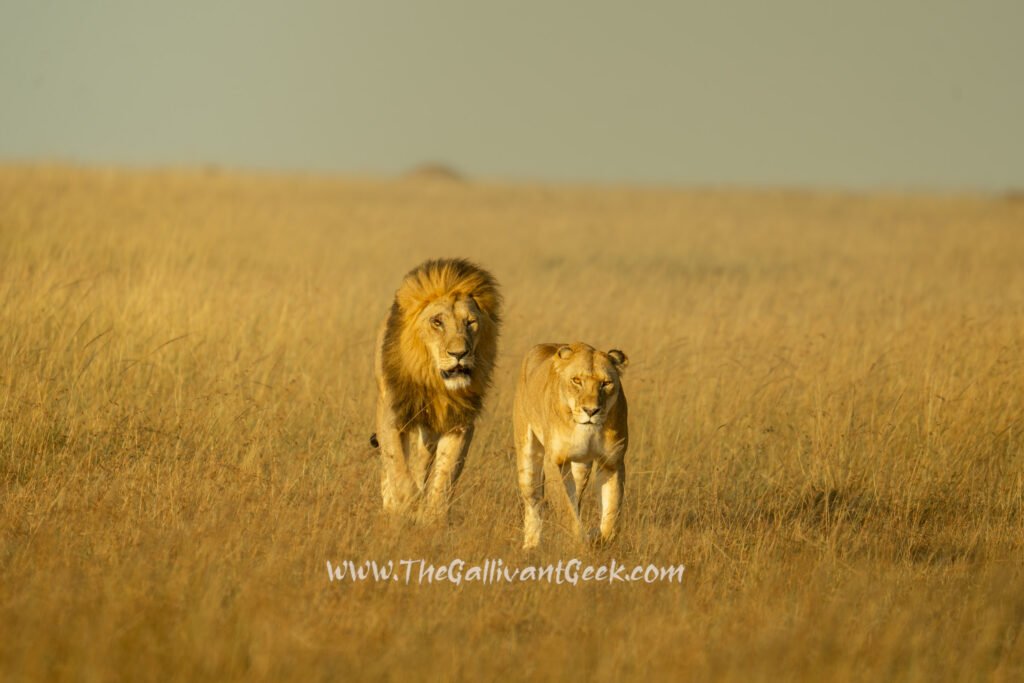
Our last day in the Mara was a morning-only game drive. Early on, we found a lion couple and spent a few hours with them. We got some of the best lion shots of the whole trip, and we left the reserve feeling completely satisfied.
After the drive we went back to camp, packed our bags and started the long drive back to Nairobi.
The Famous Animals of the Masai Mara
One thing that surprised me is how many animals in the Mara are known by name. Guides recognise individual leopards by their spot patterns, and lion prides and coalitions have names too, such as the Topi Pride and the Black Rock Pride. Ask your guide about the animals you’re watching. Knowing an animal’s story makes every sighting more personal, and it’s great material for photo captions.
Did I Tick Off My Wish List?
My main goals for this Masai Mara safari were the Big Five and the Great Migration. Across the whole trip we saw all of the Big Five, and in the Mara we saw the migration herds, even if we missed the big river crossing. I hadn’t planned much bird photography, but I came home with some nice bird shots too.
I took at least 1,000 photos a day, plus wildlife videos and behind-the-scenes clips on my GoPro and phone. By the end of the trip, every memory card, my SSD and my hard drive were full. Completely worth it. Here’s the camera gear I used in the Masai Mara.
Masai Mara Safari Photography Tips
- Start early and stay out all day. The best light is at sunrise and sunset, but some of our best sightings were at noon.
- Be patient. Our leopard shot took 90 minutes of waiting. Good wildlife photos are mostly about time.
- Keep a lens cover handy. The Mara is dusty. Drape a cloth over your camera instead of fiddling with lens caps, so you’re ready in a second.
- Respect the animals. Stay in the vehicle, keep your voice down and give mothers with young plenty of space.
- Travel with the right person. A travel partner who is just as passionate and patient as you makes all the difference.
Masai Mara Safari FAQ
How many days do you need in the Masai Mara?
We spent four full days and one morning in the Masai Mara, and every day brought something new. Three to five days is a good amount of time for photographers.
When is the best time to see the Great Migration in the Masai Mara?
The herds usually arrive from late June, and river crossings are most likely between July and October. Crossings are never guaranteed, so plan several days.
Can you get out of the vehicle in the Masai Mara?
Only at designated places, such as picnic sites and river viewpoints. Everywhere else you must stay inside the vehicle for your own safety.
Is it safe to be close to lions in an open safari vehicle?
With an experienced guide, yes. Lions generally see the vehicle as one large object. Stay seated, keep still and quiet, and follow your guide’s instructions.
Can you see leopards in the Masai Mara?
Yes. The Mara is one of the best places in Africa to see leopards, especially along rivers and wooded areas. Several individual leopards, like Luluka, are well known to local guides. They are elusive, though: we photographed one on our first day and only glimpsed another in the next four days.
Planning your own trip? See the whole route in our 9-day Kenya safari itinerary. To plan your own trip, read how we planned our Kenya photo safari; my Kenya safari tips post is coming soon. Love wildlife photography? Don’t miss my Atlantic puffin trip to Runde, Norway.
Love these Masai Mara moments? My leopard, lion and other Kenya wildlife photos are available as prints: 👉 Kenya Wildlife Photo Prints – Shutter Story
Join My Wildlife Photography Tour
Reading this and dreaming of your own safari? I’m putting together a small-group wildlife photography tour: about 10 days with a photographer’s pace, long days in the field and plenty of time at every sighting. The destination is still being decided, so follow along to be the first to know. Send me a DM on Instagram at @mnmshakir and I’ll share the details.

[…] The next four days were full-day game drives from about 5:30 in the morning until 6:30 in the evening, with packed breakfast and lunch in the field. We watched Luluka the leopard climb a tree, two cheetah brothers mark their territory, a lion lie down right next to our open vehicle, and an elephant mother chase us away from her baby. It deserves its own post: read the full story of our five days in the Masai Mara. […]
[…] For wildlife photographers, this is the ultimate season: huge herds, predators everywhere and the chance of a dramatic crossing on the Mara River. The trade-off is that it’s the busiest and most expensive time to go. You can read what we actually saw in our five days in the Masai Mara. […]
[…] this safari camera gear in action in our five days in the Masai Mara, or follow the whole trip in our 9-day Kenya safari itinerary. Planning your own trip? Start with […]