

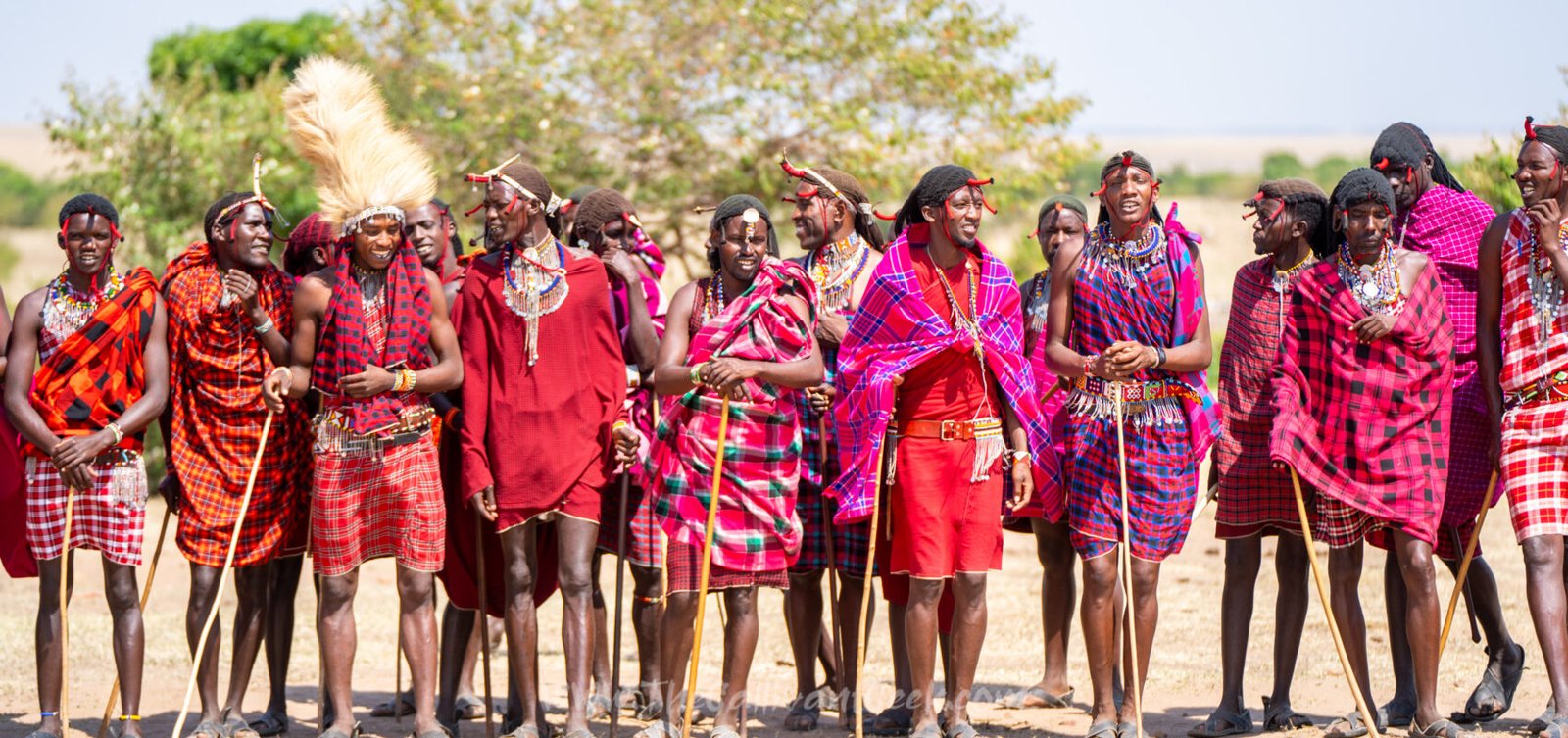
After a week of game drives, I thought the animals would be the highlight of our trip to Kenya. Then, on our last full day in the Masai Mara, we spent a morning with a Maasai community. Warriors jumped high into the air, the women sang us a welcome song, and I made fire with two sticks (after a lot of effort).
Here’s what our Maasai village visit was like, what we learned about Maasai culture, what it cost and my tips if you want to visit one during your own Masai Mara safari.
In This Post
Who Are the Maasai?
The Maasai are a semi-nomadic pastoralist people who live in southern Kenya and northern Tanzania, including the land around the Masai Mara (the reserve is named after them). They speak Maa, and their lives have traditionally centred on their cattle, which are a family’s wealth and an important source of milk and meat. Goats and sheep matter too.
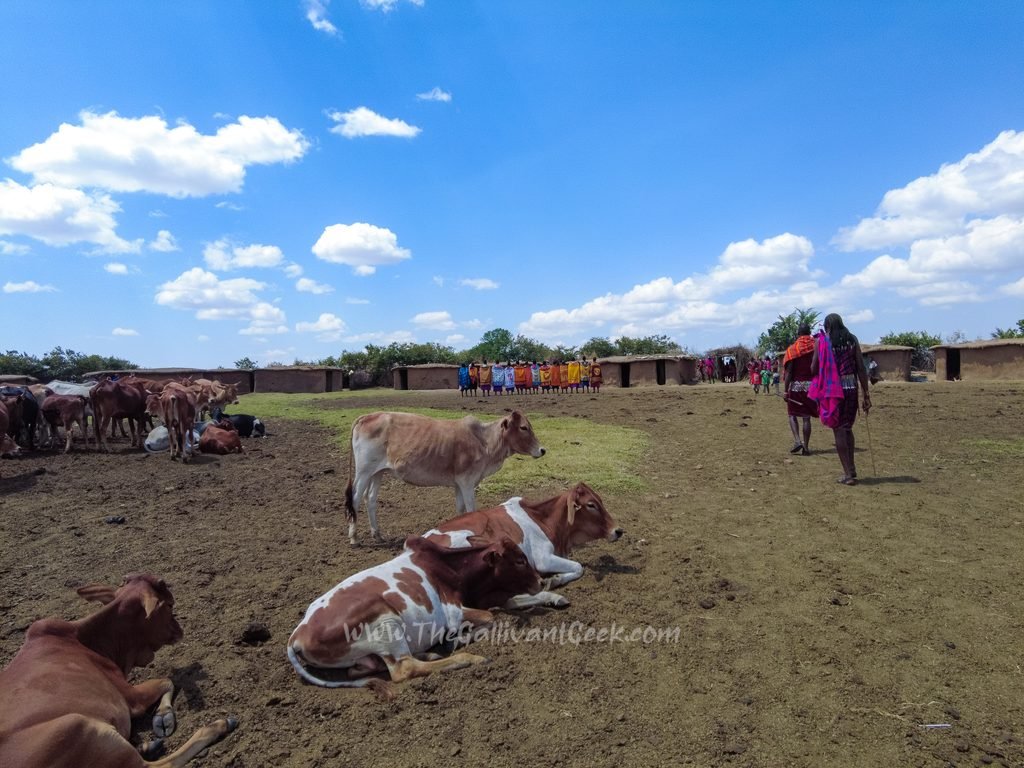
A Maasai homestead is called an enkang. It is a circle of small houses surrounded by a fence of thorny acacia branches, and at night the livestock are brought inside the circle to keep them safe from lions and hyenas. The houses are traditionally built by the women, while the men herd and protect the animals.
Many Maasai today mix tradition with modern life: children go to school, people have mobile phones, and some work in tourism. But in villages like the one we visited, a lot of the old way of life is still very much alive.
When We Visited and What I Brought
We visited on day eight of our trip, our last full day in the Masai Mara (you can see where it fits in our 9-day Kenya safari itinerary). We did an early-morning game drive until around 9 a.m., went back to camp to freshen up and then drove to a nearby village. In the afternoon we rested and were back out on a game drive from around 3 p.m.
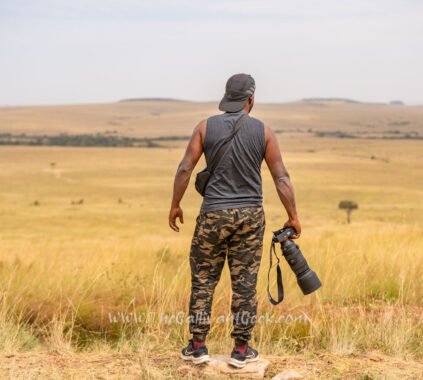
For once, I left my big Sigma 150-600mm in the tent and took only my Tamron 70-180mm. You don’t need a long lens in a village. You need something lighter that works for people, small groups and tight spaces. (Here’s the full camera gear I took to Kenya.)
A Warm Welcome: Songs and the Maasai Jumping Dance
When we arrived near the village, one man from the community met us and explained their way of life and how everyone in the community works together.
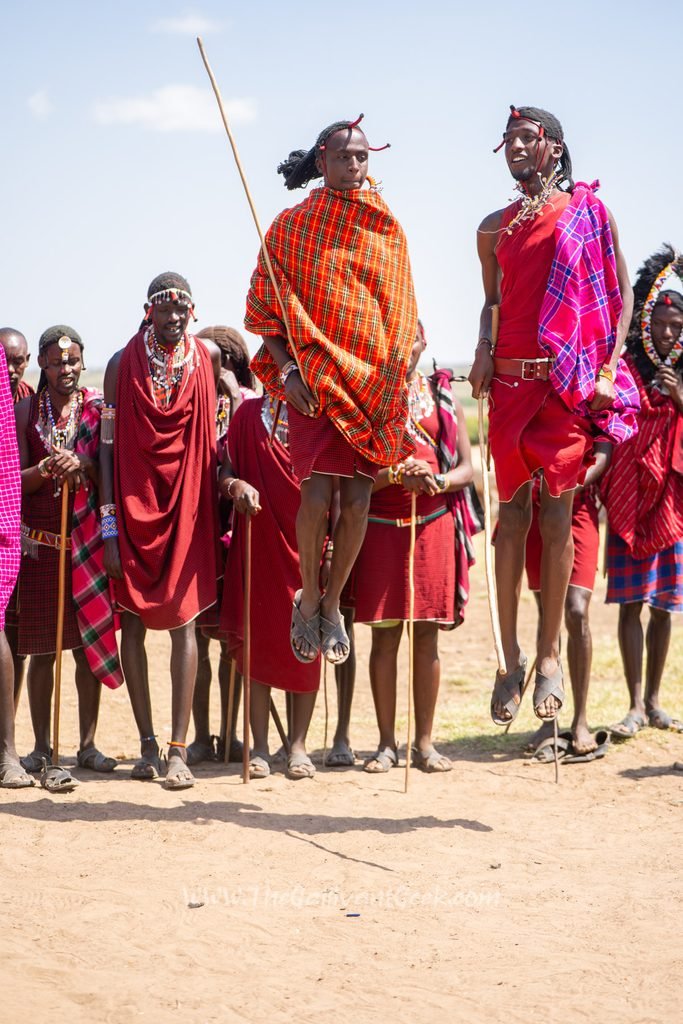
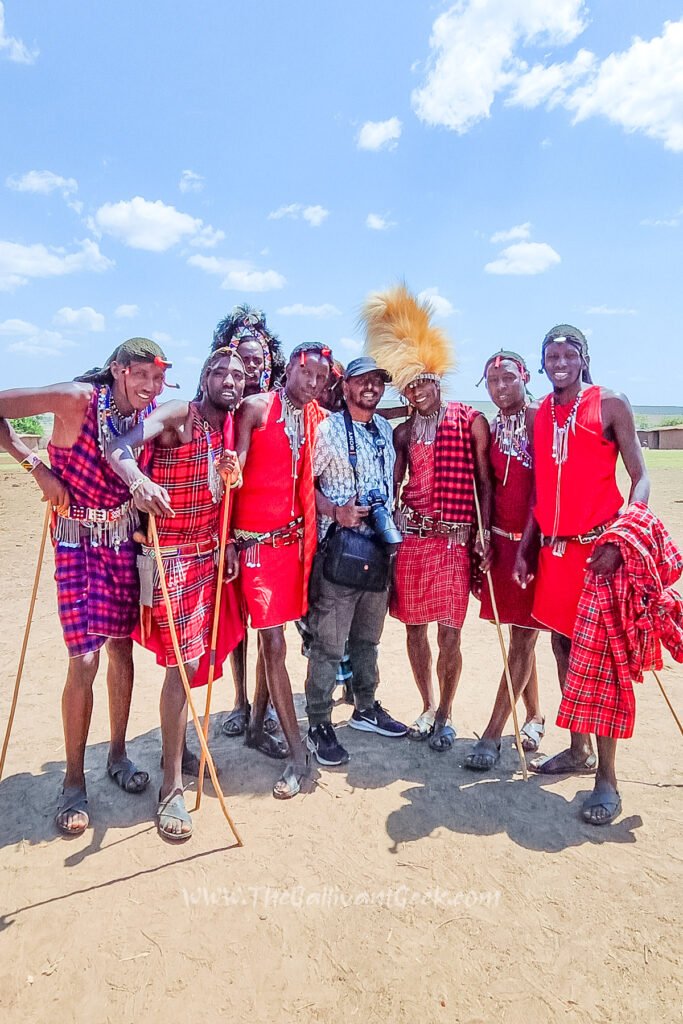
Then we were invited inside the fence. First the men welcomed us with a song, and then came the part I had seen in documentaries: they took turns jumping high into the air, straight up, with a stick in hand, while the others sang around them. This is the famous adumu, often called the Maasai jumping dance. It is traditionally performed by young warriors (moran), and jumping high is a way of showing strength. They jumped really high!
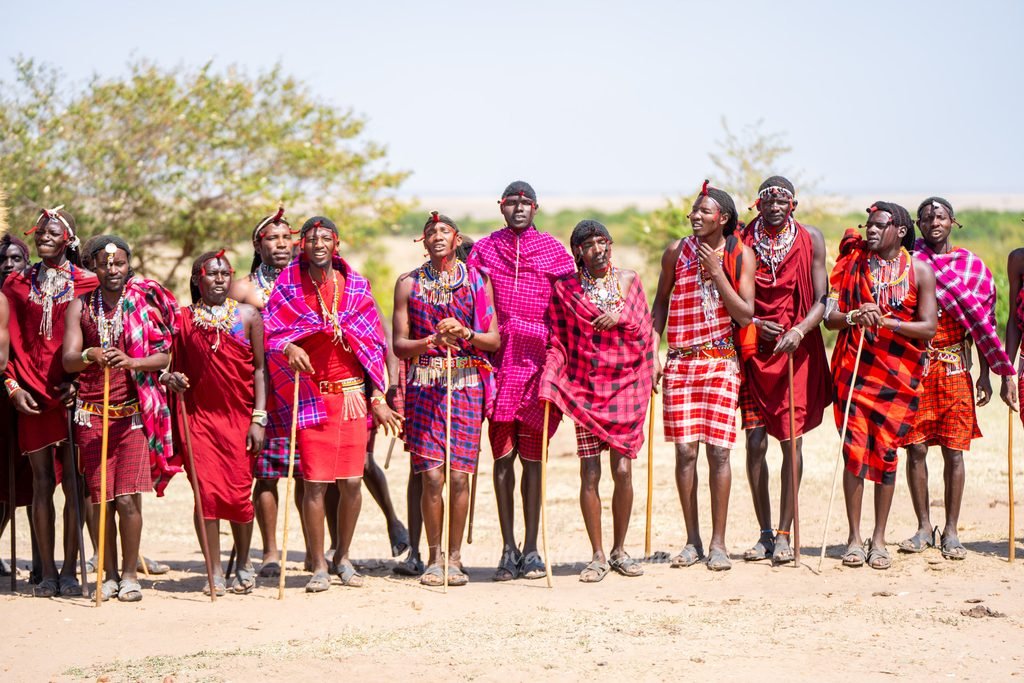
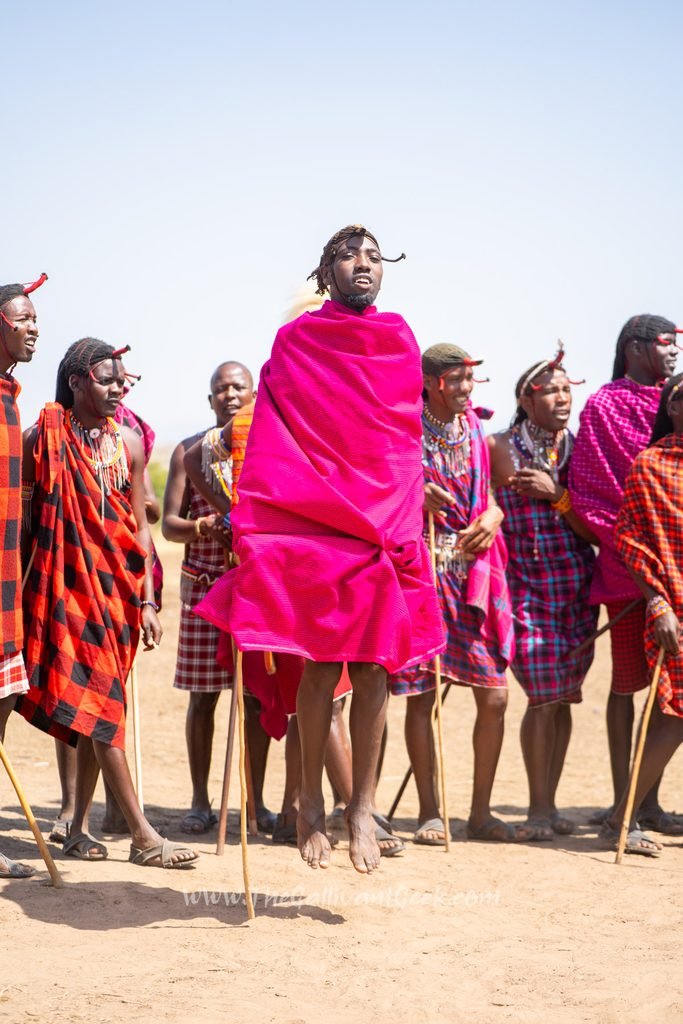
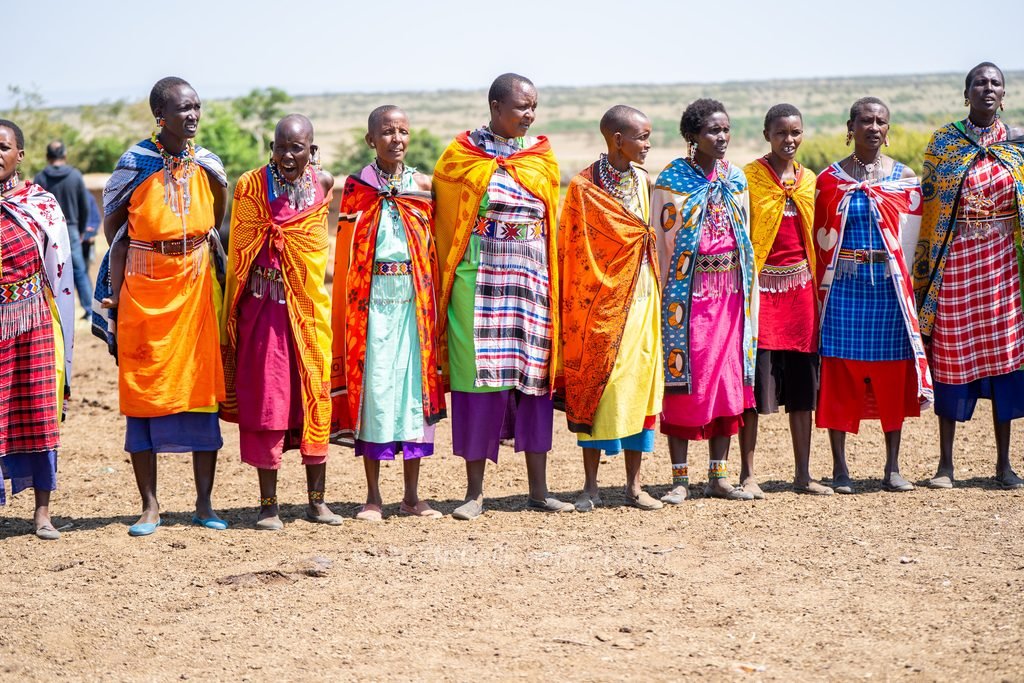
After the men, the women of the village came out and sang another welcome song for us. It was such a nice welcome.
Traditional Maasai Clothing, Lion Fur and Skulls
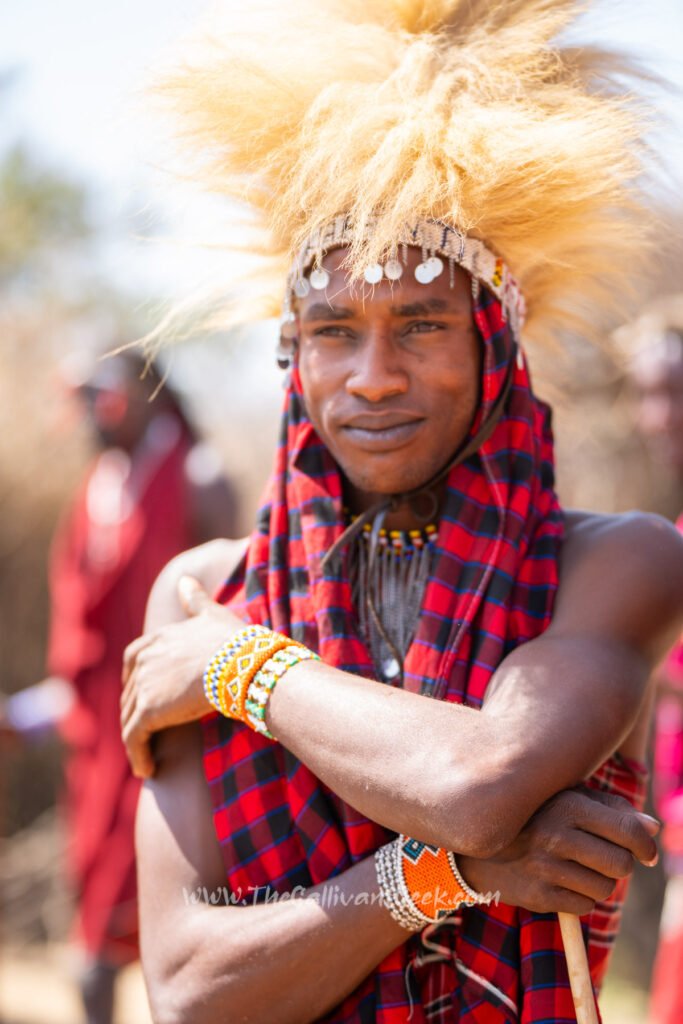
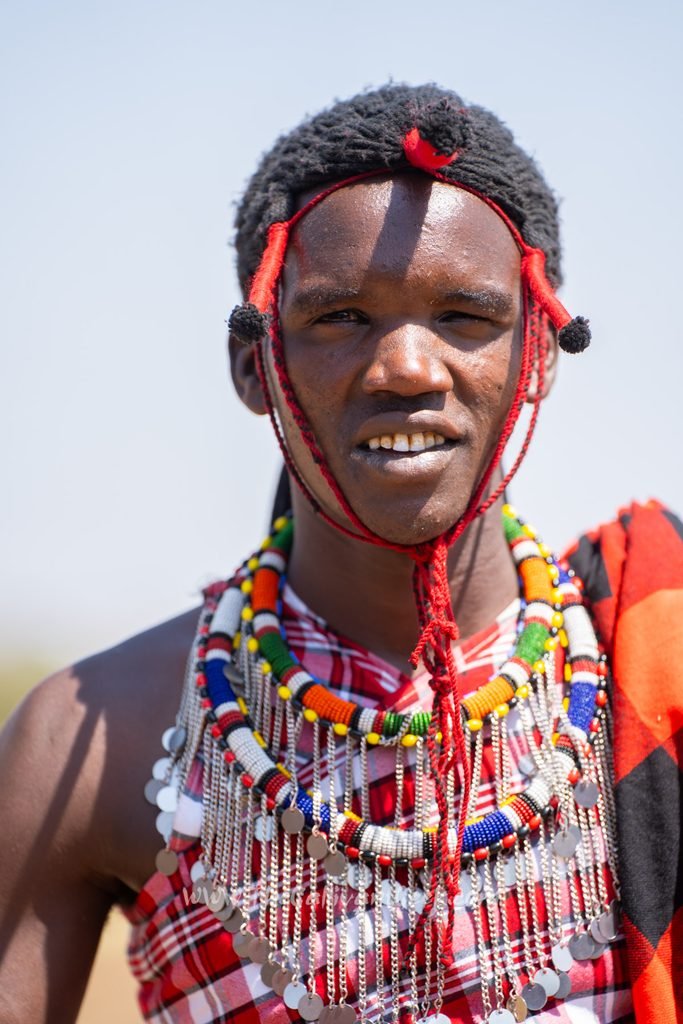
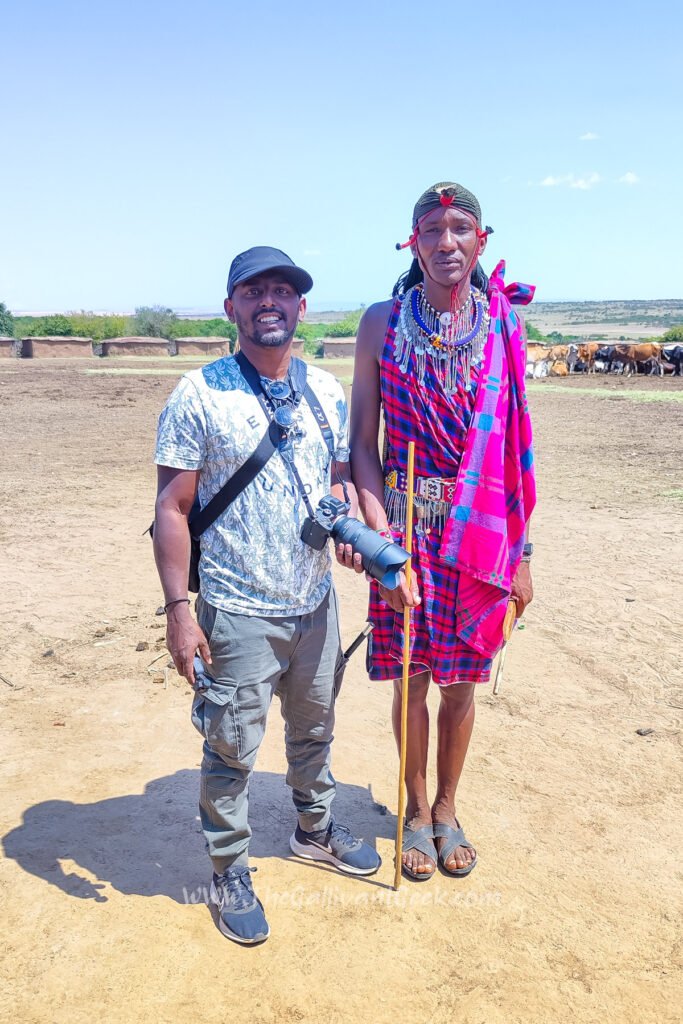
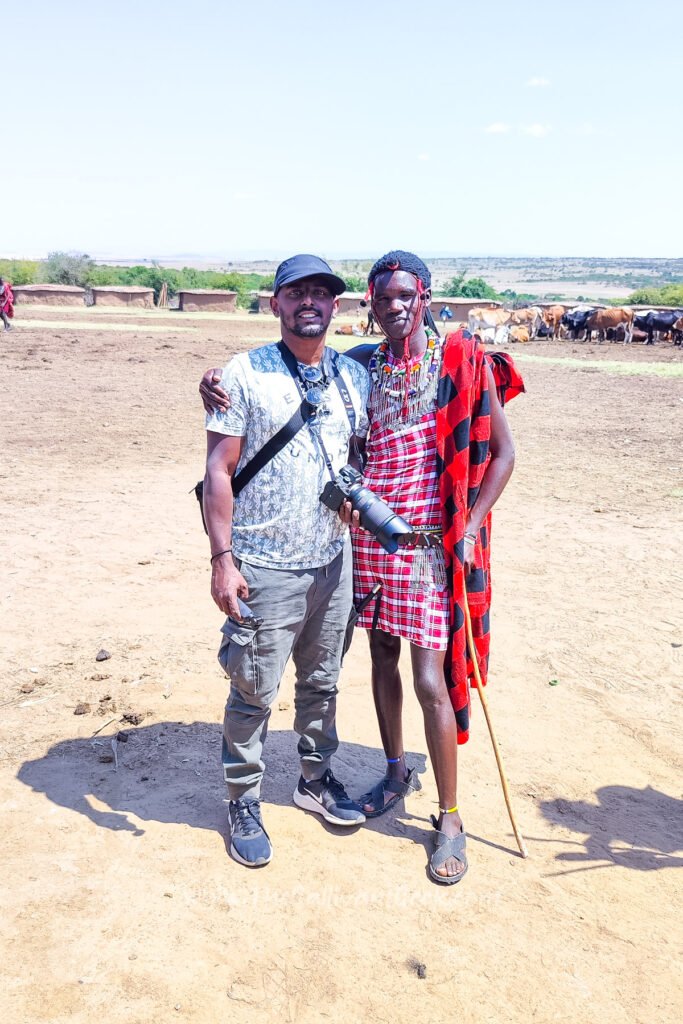
What struck me most was the clothing. Most people wore the bright red or checked cloth known as a shuka, wrapped around the body, with layers of colourful beaded jewellery that the women make by hand. Some of the men wore older, more traditional attire: one had a headdress made of lion fur, and I also saw animal skulls used as decoration. In the past, a lion-mane headdress was linked to a warrior’s bravery, but lion hunting is no longer part of Maasai life the way it once was.
Making Fire with Two Sticks
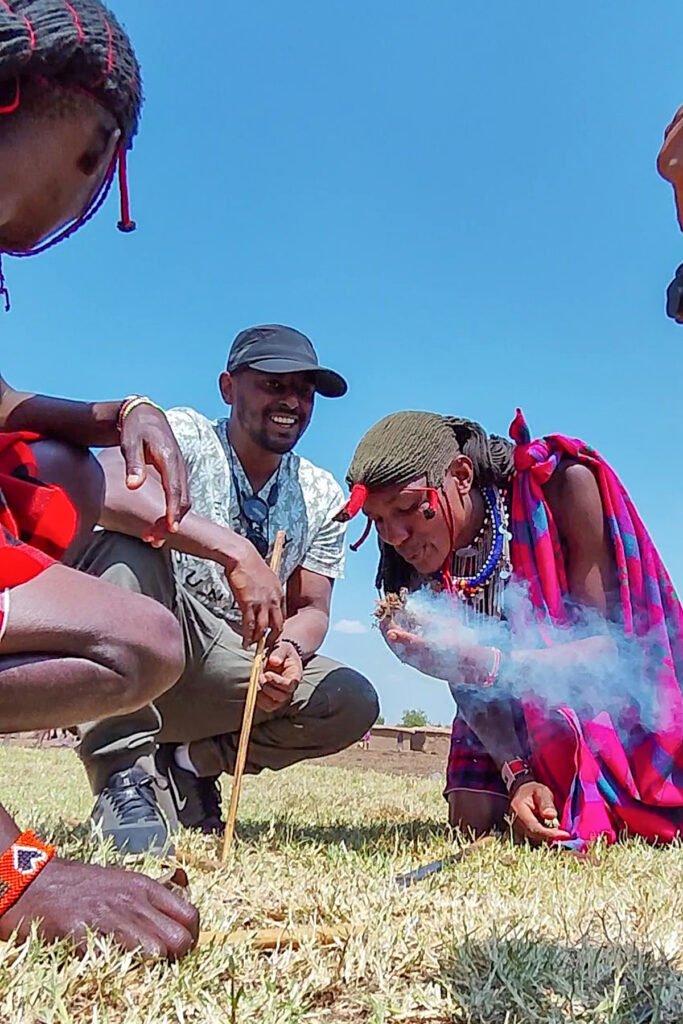
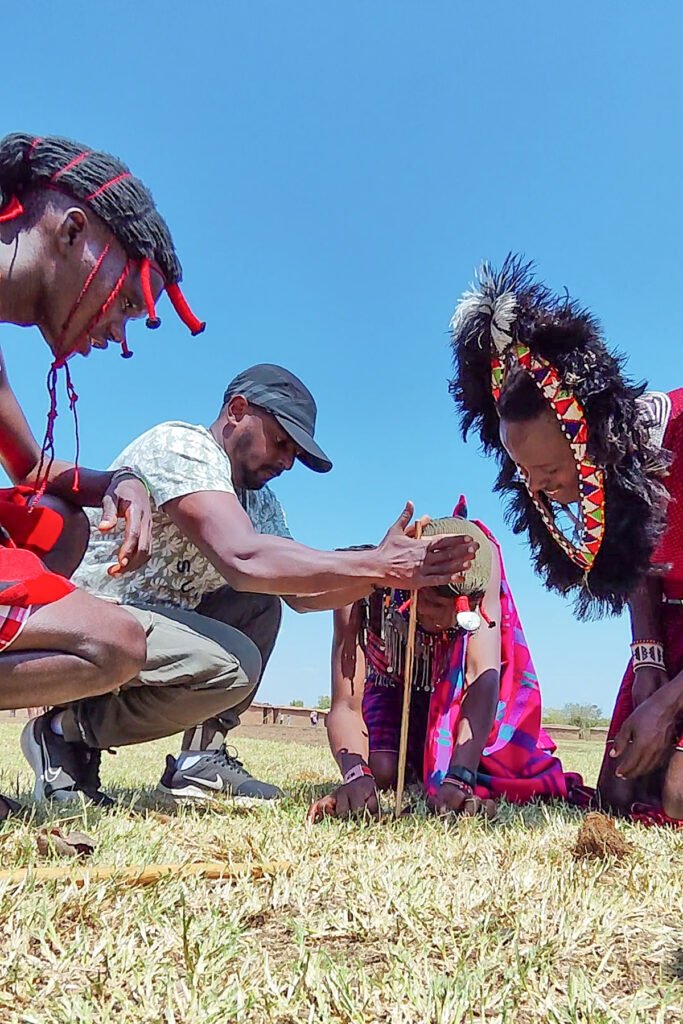
Next, a few of the men showed us how they make fire without matches. They placed a harder, flat piece of wood on the ground and put a thin stick upright on top of it. Then they spun the stick very fast between their palms, pressing down hard. After a short while, sparks and smoke appeared, and soon there was fire.
They made it look easy, so of course I wanted to try. It was much harder than I imagined. But somehow, with a lot of effort, I managed to make fire. It was one of my favourite moments of the day.
Inside a Traditional Maasai House
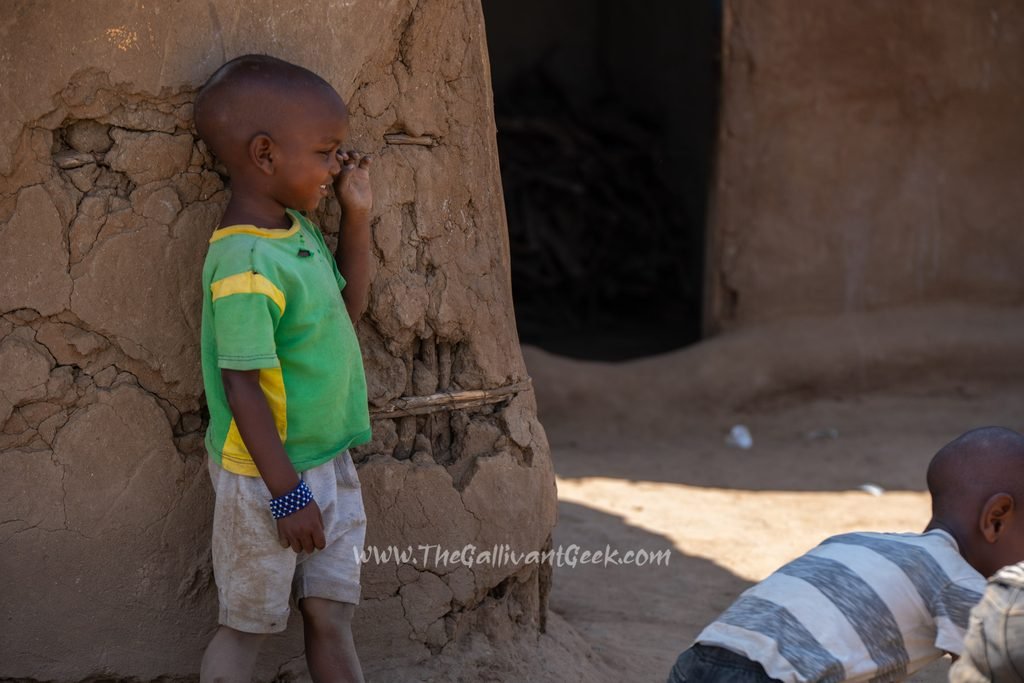
Then we were invited into one of the houses. Maasai houses are built from a frame of wooden poles and sticks, plastered with a mix of mud and cow dung that dries hard and keeps out the rain.
Inside it was very small, compact and dark. I couldn’t even stand up straight. They showed us the tiny kitchen, and everything was close together and cosy. Light only came in through small openings, so it took a moment for my eyes to adjust.
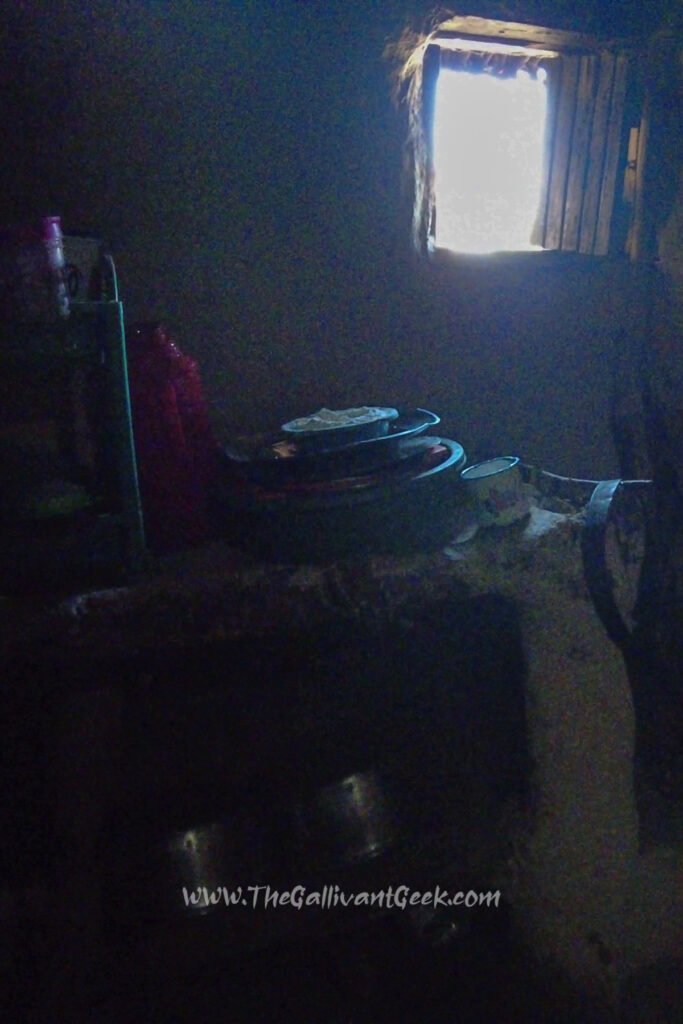
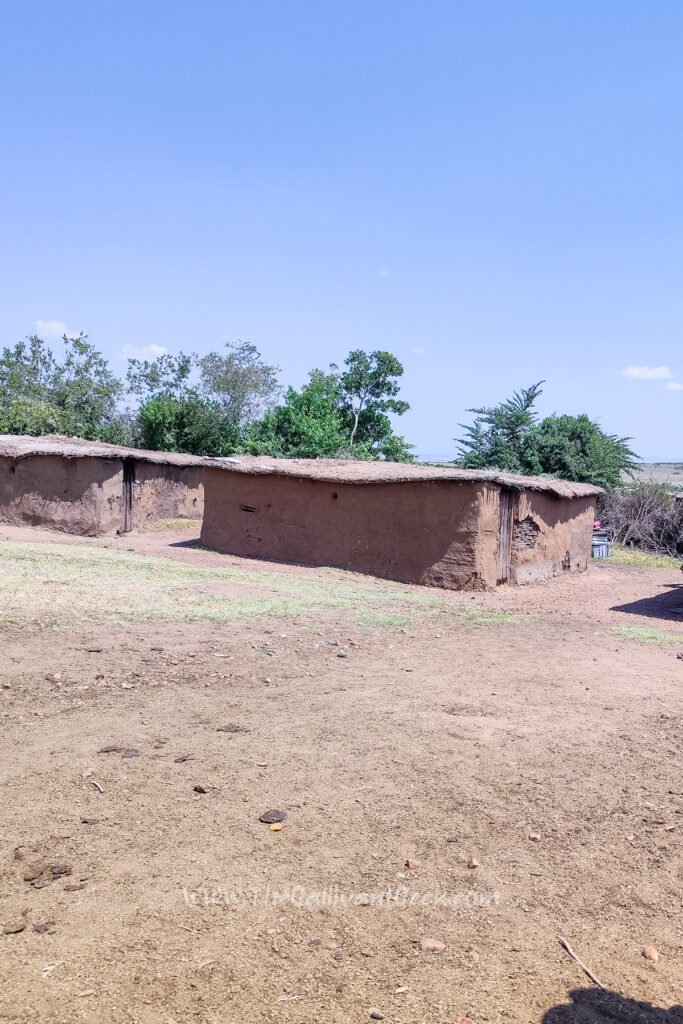
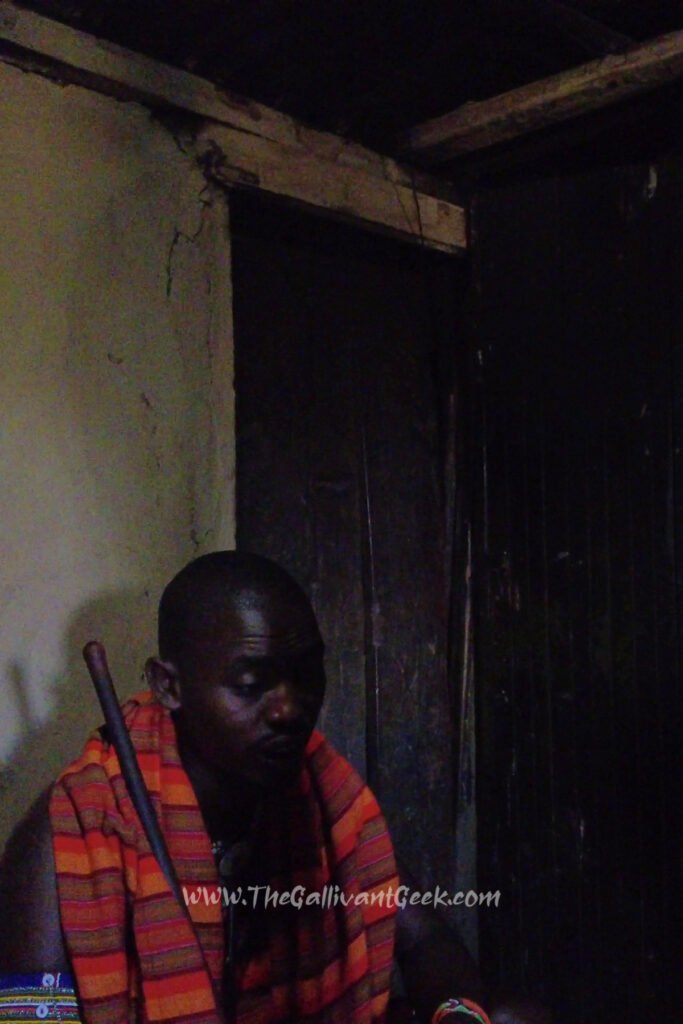
Photo tip: it is very dark inside the houses. Raise your ISO, open your aperture as wide as it goes and ask before taking photos of people inside their home.
Cattle, Kids and Daily Life in the Village
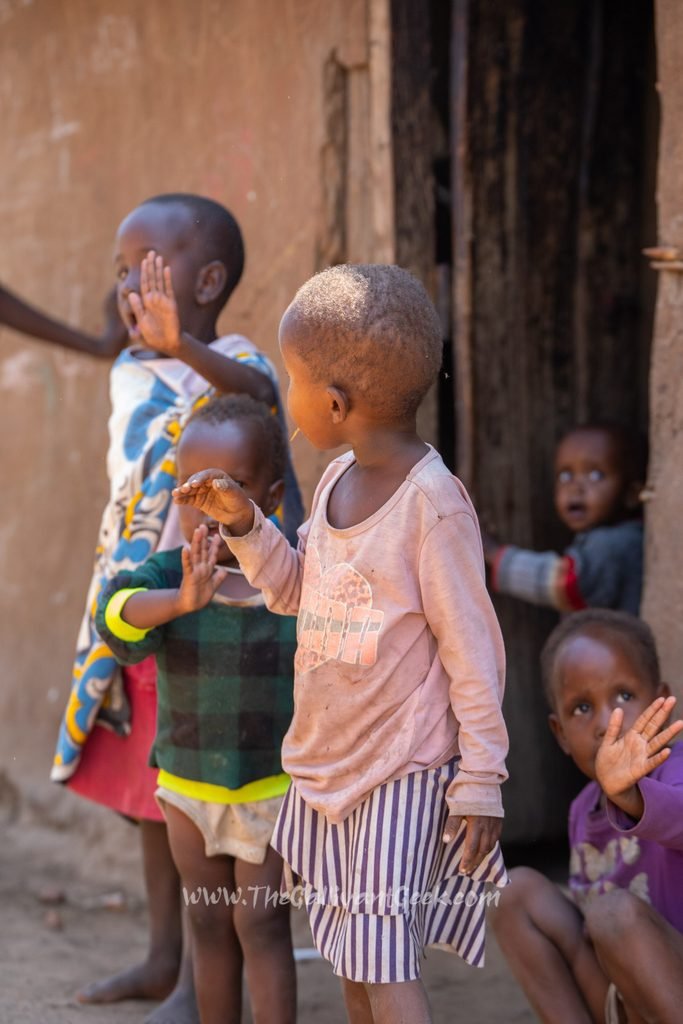
Afterwards they walked us around the village. There were cows everywhere, which makes sense when cattle are at the heart of Maasai life, and kids playing and running around between the houses. Honestly, it reminded me a little of the old village vibes in South Asia: simple living, animals close by and children playing outside all day.
The Souvenir Market: Handmade Maasai Crafts
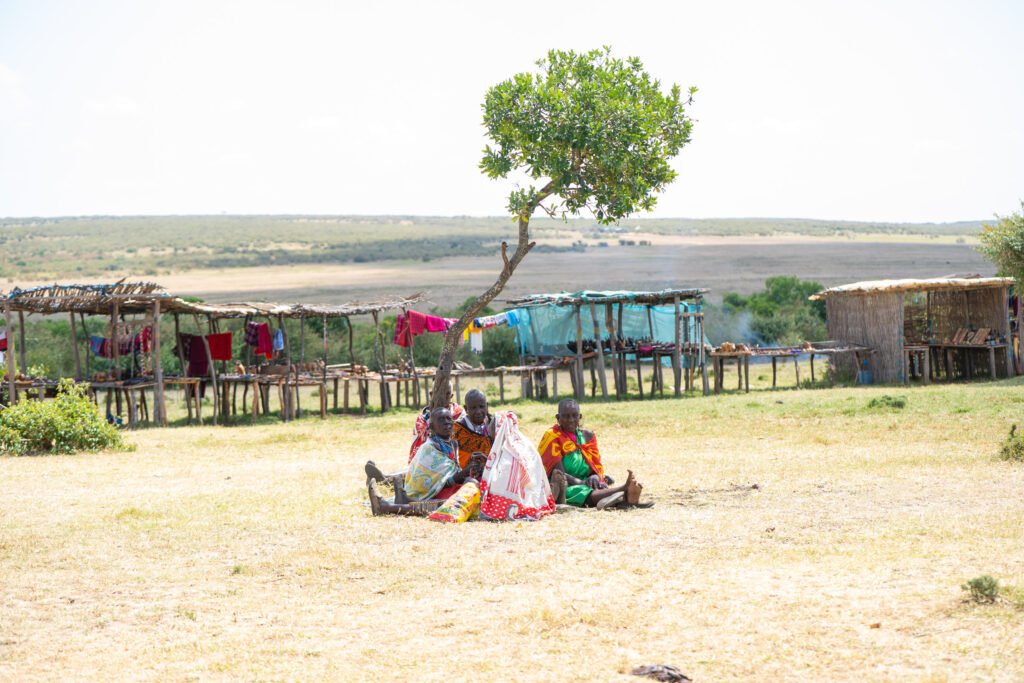
The last stop was the village’s small community market, where people sell handmade souvenirs: from beaded jewellery to wood carvings. We bought a few items to take home. Prices are often a little flexible, but remember that this is how many families earn their living.
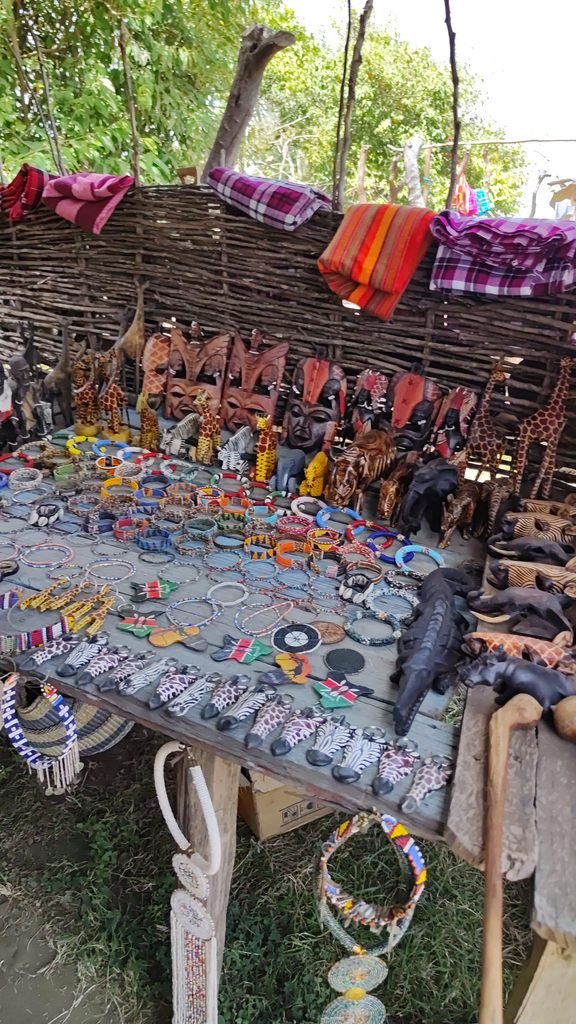
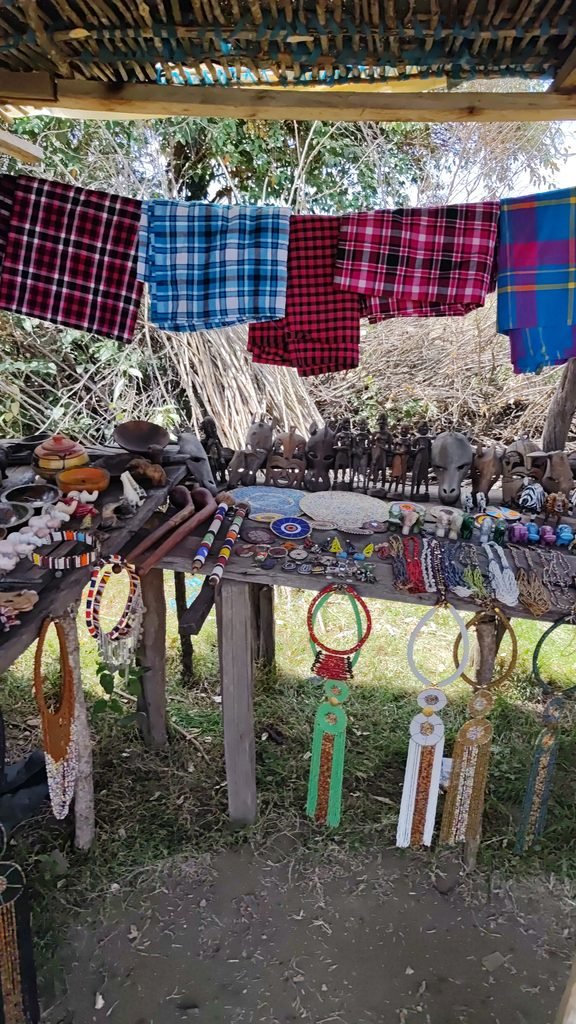
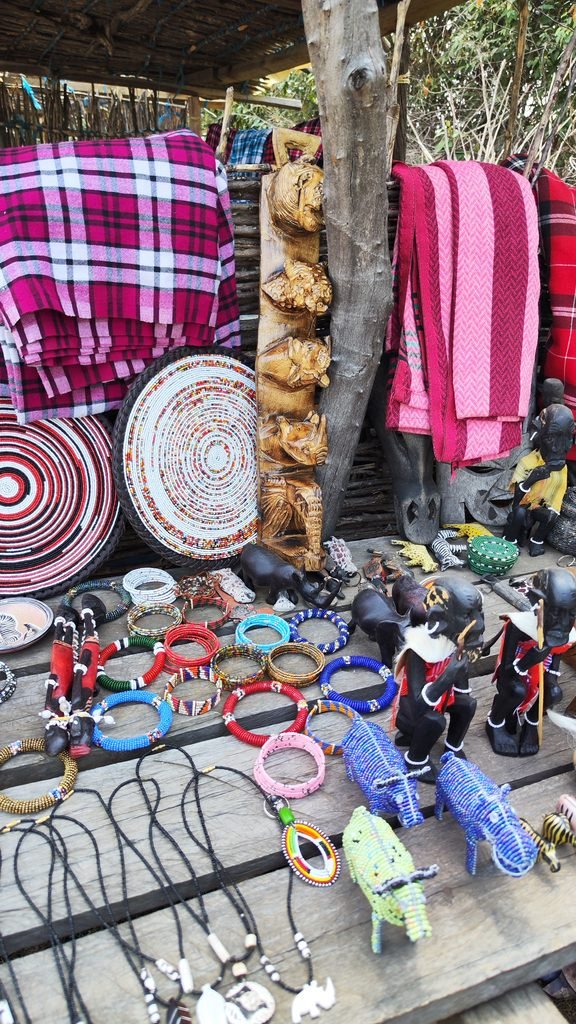
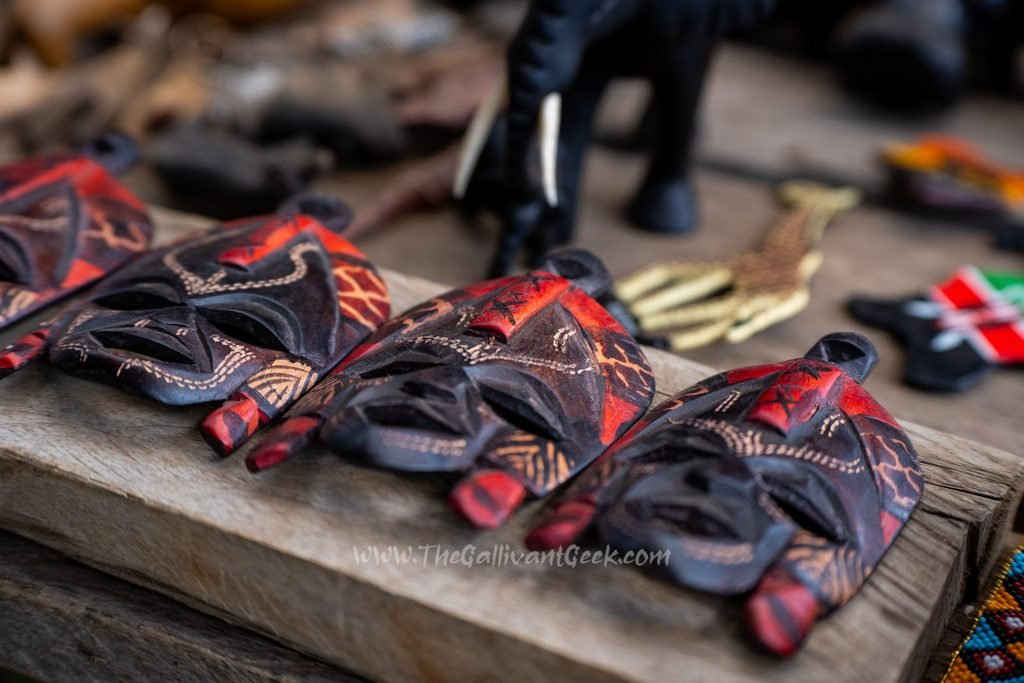
After the market, we drove back to camp for some rest before the afternoon game drive.
How Much Does a Maasai Village Visit Cost?
We paid USD 30 per person to enter the village. I don’t think it is a fixed price, though: it can vary between villages and depending on who arranges the visit, so ask your guide in advance. What made it feel right for us was where the money goes. We were told it is used to improve education for the village children and the community’s livelihood. I was happy to be part of that.
Bring some extra cash in small notes if you want to buy souvenirs, as cash is easiest. (I cover money, SIM cards and costs in how we planned our Kenya photo safari.)
Tips for Visiting a Maasai Village
- Fit it between game drives. A late-morning visit after an early drive worked perfectly for us, with time to rest before the afternoon drive.
- Ask your guide or camp to arrange it. They usually know the nearby villages and can tell you the current entry fee.
- Take a lighter lens. A 70-180mm or 24-70mm is ideal; leave the big telephoto behind.
- Ask before you photograph people, especially inside their homes.
- Wear closed shoes. It is dusty and there are cows everywhere, so expect some dung.
- Join in. Try making fire, jump with the warriors if they invite you and ask questions. That is where the best moments happen.
- Bring cash for souvenirs and buy directly from the community.
Is a Maasai Village Visit Worth It?
Yes. After days of chasing leopards and lions, it was lovely to spend a morning with the people who have lived alongside this wildlife for generations. If you are visiting the Masai Mara, I highly recommend taking a few hours between your game drives to visit a Maasai village and experience it yourself.
Maasai Village Visit FAQ
How much does it cost to visit a Maasai village in the Masai Mara?
We paid USD 30 per person. Prices are not fixed and can vary by village and by who arranges the visit, so ask your guide or camp beforehand.
What is the Maasai jumping dance called?
It is called the adumu. Young Maasai warriors take turns jumping straight up as high as they can while the others sing around them.
What are Maasai houses made of?
Traditional Maasai houses have a frame of wooden poles and sticks, plastered with mud and cow dung. They are built by the women and are small and dark inside.
Can you take photos in a Maasai village?
Usually yes, photography is part of most visits. Still, always ask before photographing people, especially inside their homes.
Is a Maasai village visit worth it?
Yes. It is a great way to learn about Maasai culture, and the entry fee supports the community, including education for the village children.
More from this trip: our five days in the Masai Mara, the full 9-day Kenya safari itinerary and the camera gear I took on safari. Packing for Kenya? Read my Kenya safari tips on what to wear, weather and park rules. Love wildlife photography? Don’t miss my Atlantic puffin trip to Runde, Norway and my Dalmatian pelican photography trip to Lake Kerkini.
Love the colours of Kenya? My wildlife photos from this trip are available as prints: 👉 Kenya Wildlife Photo Prints – Shutter Story
Join My Wildlife Photography Tour
Reading this and dreaming of your own safari? I’m putting together a small-group wildlife photography tour: about 10 days with a photographer’s pace, long days in the field and plenty of time at every sighting. The destination is still being decided, so follow along to be the first to know. Send me a DM on Instagram at @mnmshakir and I’ll share the details.
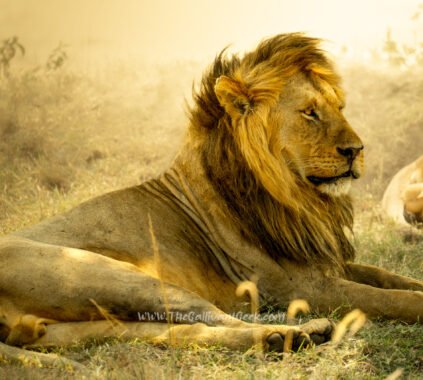

[…] We finished the morning drive at around 9 a.m. and went back to camp to freshen up, because that day we had planned a visit to a nearby Maasai village. For once, I left the big lens in the tent. After the visit we rested for a while and headed out again at around 3 p.m. (Read the full story of our Maasai village visit.) […]