

This post contains affiliate links. If you buy through them, I may earn a small commission at no extra cost to you. As an Amazon Associate I earn from qualifying purchases.
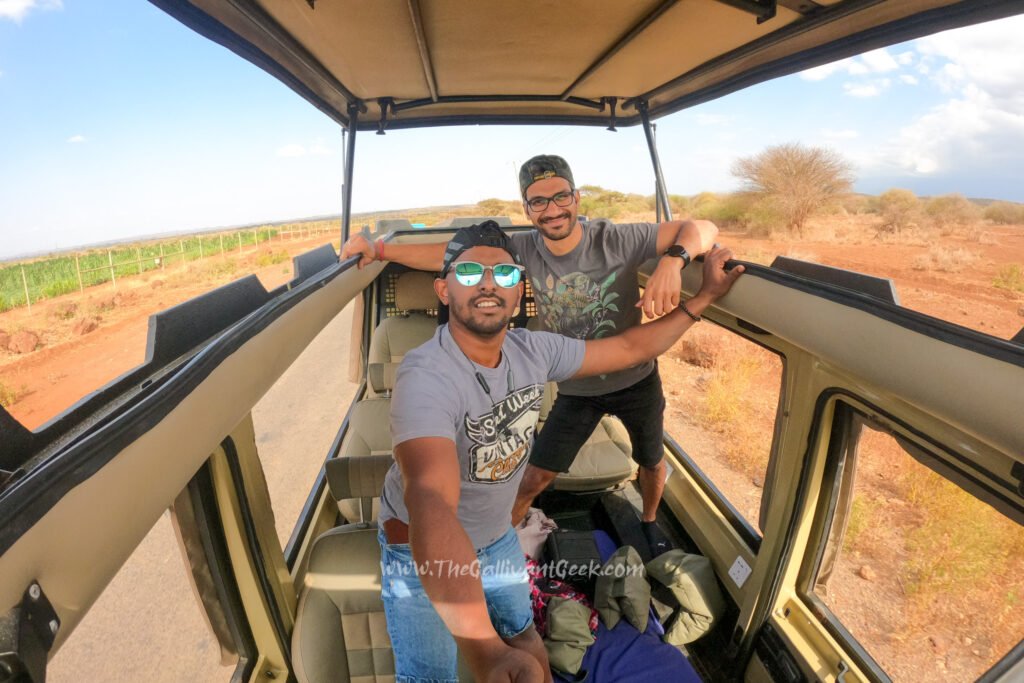
“It’s Africa, it’ll be hot.” That’s what I thought when I packed for Kenya. Then the 5:30 a.m. game drive started, the roof of our safari vehicle popped up, and the cold morning wind went straight through my T-shirt.
Here are the Kenya safari tips I wish I’d known before our trip: what to wear on safari in Kenya, what the weather is really like in July, the health and document questions, and the national park rules every visitor should respect.
In This Post
Kenya Safari Weather in July
July is dry season in Kenya’s safari parks, and one of the best times to go. There’s little rain, the grass is shorter and the animals gather around water, which makes them easier to find. But it isn’t hot all day:
- Early mornings are cold. Temperatures can drop to around 10 to 13°C, and with the wind rushing through the open roof and windows of a moving vehicle, it feels even colder.
- Days warm up quickly. By late morning it’s T-shirt weather, and afternoons can feel hot in the sun.
- It’s very dusty. Dry season means dusty roads, especially in Amboseli and on the long drives between parks.
What to Wear on Safari in Kenya
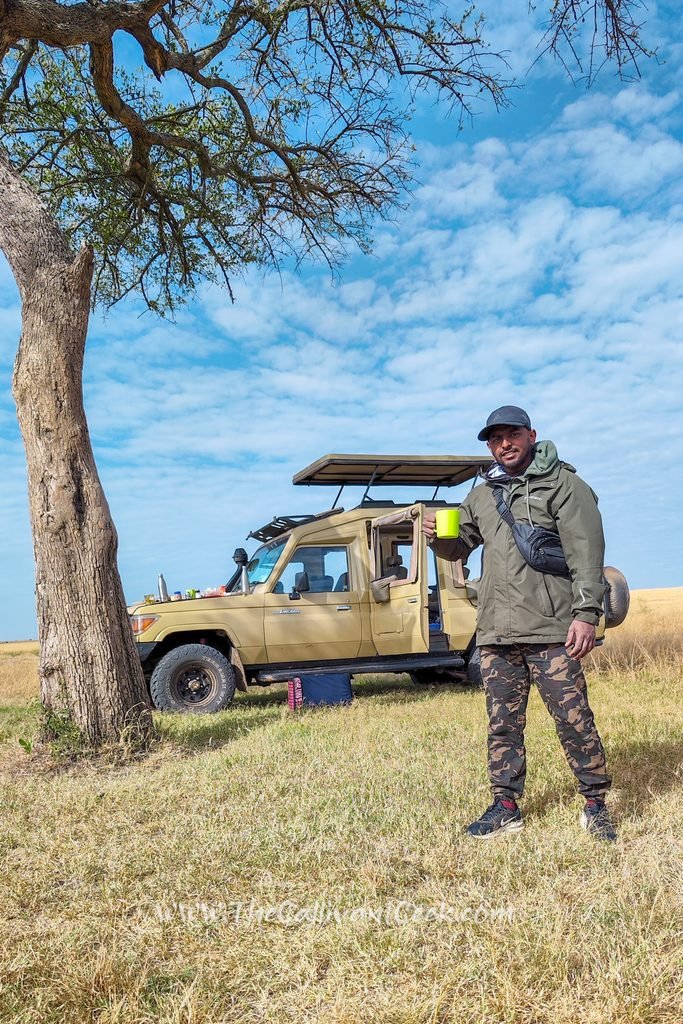
The golden rule: dress in layers. I mostly wore summer clothes and shorts, with a jacket on top for the early mornings. As the day warmed up, I simply took layers off.
- Base layer: T-shirts and shorts or light trousers.
- Warm layer: a fleece or a light packable jacket for the mornings and evenings.
- Neutral colours: khaki, olive, beige and brown blend in with the landscape and don’t show the dust. Avoid very bright colours, and skip dark blue and black, which can attract tsetse flies in some areas.
- Sunglasses and a hat for the strong midday sun.
- A face cover or buff for the dust. More on that below.
- Comfortable closed shoes. You spend most of the day sitting in the vehicle, so comfort wins.
- Long-sleeved lightweight shirts for sun protection and mosquito-prone evenings.
- A light rain jacket, just in case, and sandals for relaxing at camp.
Dealing with the Dust
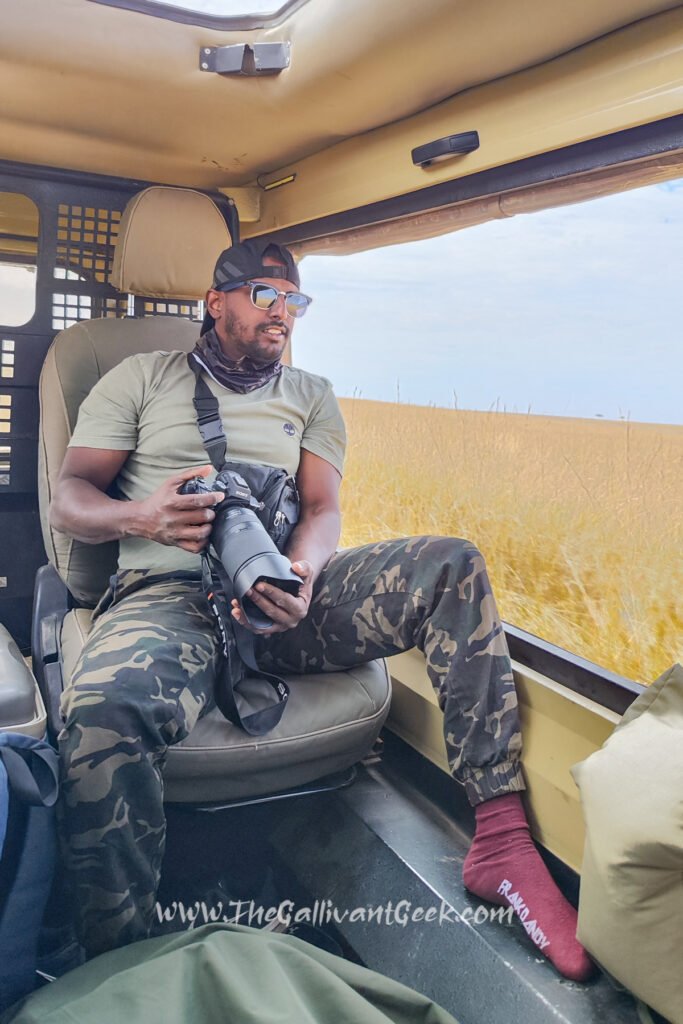
I can’t say this enough: game drives are dusty. Cover your face, and especially your nose, with a buff or scarf. If you’re allergic to dust, take extra care and bring whatever you normally use.
Your camera needs protection too. Instead of lens caps, I kept a small cloth draped over my camera, so I could uncover it in a second when an animal appeared. I explain this trick, and the rest of my kit, in my Kenya safari camera gear post.
Sun Protection
Kenya sits on the equator, so the sun is strong even when the air feels cool. Sunglasses and a hat are a must, and sunscreen is recommended. I barely used mine, but the UV is strong here, so bring some, especially if you burn easily.
Health, Vaccines and eTA
Yellow fever certificate
I had read that a yellow fever certificate was mandatory, and I actually forgot mine. In the end nobody asked for it at the airport. That matches the official rules: travellers flying in directly from Europe are generally not required to show one. You do need it if you arrive from a country with a risk of yellow fever, or if you spent more than 12 hours in transit in one.
Keep in mind that Kenya itself counts as a yellow fever risk country. If you travel on from Kenya to another country, such as Tanzania or South Africa, you may need the certificate there. Even when the certificate isn’t required for entry, the vaccine is still recommended for most parts of Kenya. Always check the latest rules for your exact route, and ask a travel clinic for advice.
Mosquitoes and malaria
I packed mosquito cream and never used it: in the dry season, we hardly noticed any mosquitoes. It’s still worth bringing, since it’s light and parts of Kenya do have malaria. Talk to a travel clinic about vaccinations and malaria prevention before your trip.
A small health kit
Pack any personal medication in its original packaging, plus hand sanitiser, lip balm (the dry air and wind are tough on lips) and a basic first-aid kit. Drink bottled or treated water rather than tap water, and refill a reusable bottle at your camp.
eTA (Electronic Travel Authorisation)
Most visitors need an eTA before flying to Kenya (most African nationals are now exempt). It costs about USD 30 plus a small processing fee, and you should apply at least 3 days before travel (I’d do it a couple of weeks ahead). I explain the process in how we planned our Kenya safari.
Money, SIM Cards and Tipping
- Cash: we exchanged about USD 100 at Nairobi airport. Most of our trip was prepaid, but cash is handy for small purchases, souvenirs and tips.
- SIM card: buy a local SIM at the airport. It’s cheap and useful throughout the trip.
- Tipping: tips are usually not included in safari packages. A common guideline is around USD 10 to 20 per person per day for your driver-guide, and USD 10 to 15 per person per day for camp staff, in cash.
- Cards and M-Pesa: cards work at most hotels and lodges, while small shops and markets prefer cash or M-Pesa, Kenya’s mobile money. Let your bank know you’re travelling so your card isn’t blocked.
Luggage: Pack Light
Space in a safari vehicle is limited, and you’ll be living out of your bag for days. Pack light and practical, ideally in a soft duffel bag rather than a hard suitcase. If you fly between parks on small planes, the luggage limit is usually around 15 kg in soft bags, so check with your airline before you pack.
Documents to Bring
Keep both printed and digital copies (in your email or cloud storage) of your passport, eTA, flight tickets, safari itinerary, travel insurance and emergency contacts. Keep the original passport somewhere safe, and carry a copy during the day.
Charging and Mobile Signal
Kenya runs on 240 V and uses the same Type G three-pin plugs as the UK, so bring a travel adapter. Charge everything whenever you can: some remote camps only run their generators at certain times of day. A power bank is a lifesaver on long game drives, and don’t count on mobile signal deep inside the parks.
Kenyan Food to Try
Between game drives, try some local dishes: ugali (maize porridge), nyama choma (grilled meat), sukuma wiki (spiced greens), chapati, pilau and mandazi, a sweet fried dough. And don’t leave without trying Kenyan tea and coffee.
Etiquette: Greetings and Photographing People
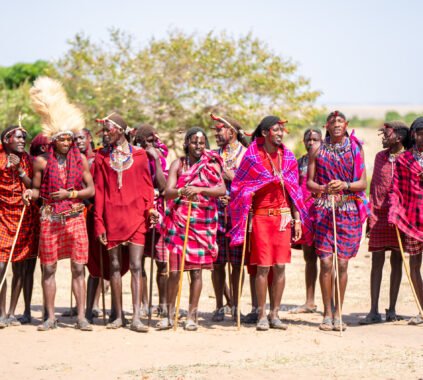
Greetings matter in Kenya, so take a moment to say hello before you ask a question. As a photographer, the most important rule is simple: always ask before you photograph people, including on Maasai village visits. When shopping for souvenirs like beaded jewellery, baskets and carvings, a little friendly bargaining is normal at markets.
Useful Swahili Phrases
A few words of Swahili go a long way, and people really appreciate the effort:
| Swahili | English |
|---|---|
| Jambo / Habari | Hello |
| Habari yako? | How are you? |
| Asante / Asante sana | Thank you / Thank you very much |
| Karibu | Welcome |
| Tafadhali | Please |
| Kwaheri | Goodbye |
Kenya National Park Rules You Must Follow
Kenya’s parks and reserves have clear rules to protect the wildlife, and your guide will enforce them. Here are the most important ones (checked October 2026, but always confirm locally, as rules change):
- No smoking during game drives.
- Keep noise down. No shouting, loud music or honking. Noise stresses the animals and spoils the sighting for everyone.
- No drones. Flying a drone in a national park or reserve requires registration with the Kenya Civil Aviation Authority and written permission from the park authority. Without them, drones can be confiscated on the spot.
- Stay in the vehicle. You may only get out at designated places, such as picnic sites and river viewpoints. Our driver was very strict about this.
- No off-road driving in the Masai Mara National Reserve. Vehicles must stay on the tracks, apart from short, rule-bound approaches to big cat sightings close to the track.
- Never feed or touch the animals, don’t litter, and don’t take anything home from the park, like stones, bones or plants.
- Don’t ask your driver to chase or crowd animals. A good guide keeps a respectful distance.
- No single-use plastics. Kenya has banned plastic bags nationwide, and single-use plastics like water bottles, cups, plates, cutlery and straws are banned in national parks and other protected areas. Bring a reusable water bottle.
Small Things That Made a Big Difference
- Prepare the night before. Charge batteries, back up photos and lay out your clothes. The 5:30 a.m. start comes fast.
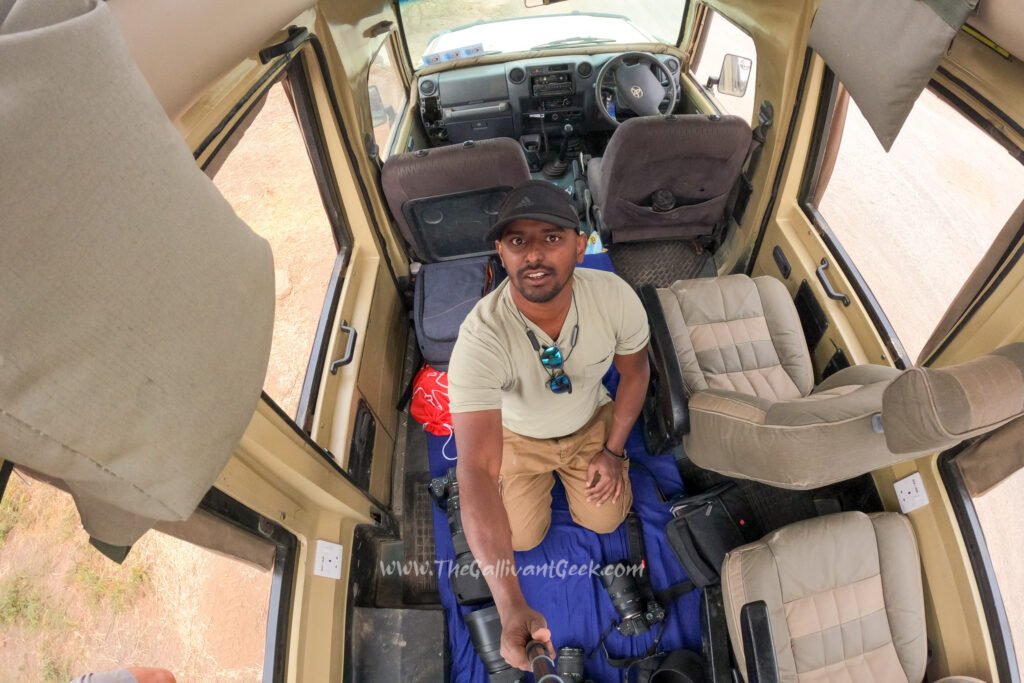
- Ask for a mattress in the vehicle. With only two of us, our driver put a mattress on the floor, so we could sit comfortably instead of bending our backs on the seats to take photos.
- Buy souvenirs from local sellers near the park gates rather than from big souvenir shops.
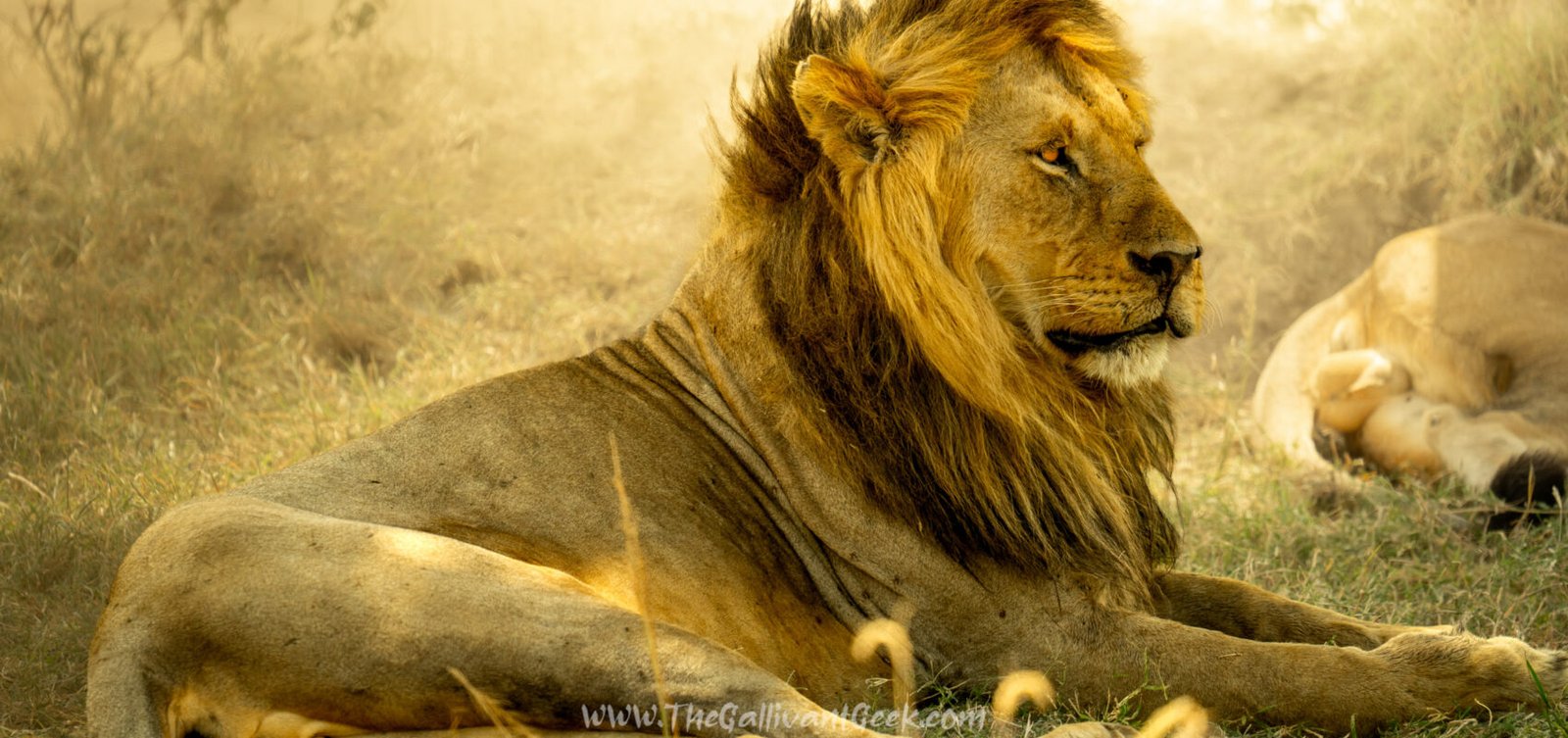
- Trust your guide. When a lion lay down right next to our open vehicle, our guide’s calm made all the difference.
- Choose your travel partner wisely. Wildlife photography is mostly waiting. We once waited 90 minutes for a leopard. I was lucky that my friend was just as passionate and patient as I am, which made the trip great for both of us.
- Give animals space, especially elephant mothers with calves. We learned that the hard way.
- No sighting is guaranteed. We photographed a leopard on our first day in the Masai Mara, then searched for four more days and only glimpsed one disappearing into the bushes. Enjoy whatever the day brings.
Kenya Safari Packing Checklist
- Layers: T-shirts, shorts or light trousers, a fleece or light jacket
- Neutral-coloured clothes
- Sunglasses, hat and sunscreen
- Buff or face cover for dust
- Mosquito repellent
- Reusable water bottle
- Travel adapter (Type G) and a power bank
- Cash for tips (USD)
- Long-sleeved shirts, a light rain jacket and sandals
- Binoculars
- Personal medication, hand sanitiser, lip balm and a basic first-aid kit
- Printed and digital copies of your documents
- A soft duffel bag (essential if you fly between parks)
- Passport, eTA and travel insurance documents
- Camera gear, spare batteries and plenty of memory cards
Kenya Safari Tips FAQ
What should I wear on safari in Kenya?
Wear layers in neutral colours like khaki, olive and beige. Mornings can be cold, around 10 to 13 degrees Celsius in July, and afternoons are warm, so bring a light jacket you can take off during the day. A buff or scarf helps with the dust.
Do I need a yellow fever vaccination for Kenya?
If you fly in directly from Europe, a yellow fever certificate is generally not required. You need one if you arrive from a yellow fever risk country or spent more than 12 hours in transit in one. Check the latest rules for your route with a travel clinic.
Can I fly a drone in Kenya national parks?
Not without permission. You need to register the drone with the Kenya Civil Aviation Authority and get written permission from the park authority. Unpermitted drones can be confiscated.
Can I bring plastic water bottles into Kenyan national parks?
Single-use plastics, including plastic water bottles, are banned in Kenya’s national parks and protected areas. Bring a reusable bottle instead.
How much should I tip on a Kenya safari?
A common guideline is USD 10 to 20 per person per day for your driver-guide and USD 10 to 15 per person per day for camp staff, paid in cash at the end of your stay.
More from our Kenya trip: our 9-day Kenya safari itinerary, five days in the Masai Mara and our Maasai village visit. My post about meeting Craig the super tusker is coming soon. You can find all my trips on the destinations page.
Want to bring a piece of the savannah home? My Kenya wildlife photos are available as prints: 👉 Kenya Wildlife Photo Prints – Shutter Story
Join My Wildlife Photography Tour
Reading this and dreaming of your own safari? I’m putting together a small-group wildlife photography tour: about 10 days with a photographer’s pace, long days in the field and plenty of time at every sighting. The destination is still being decided, so follow along to be the first to know. Send me a DM on Instagram at @mnmshakir and I’ll share the details.

[…] Also check the yellow fever rules for your route. I cover that, and other health tips, in my Kenya safari tips post. […]