
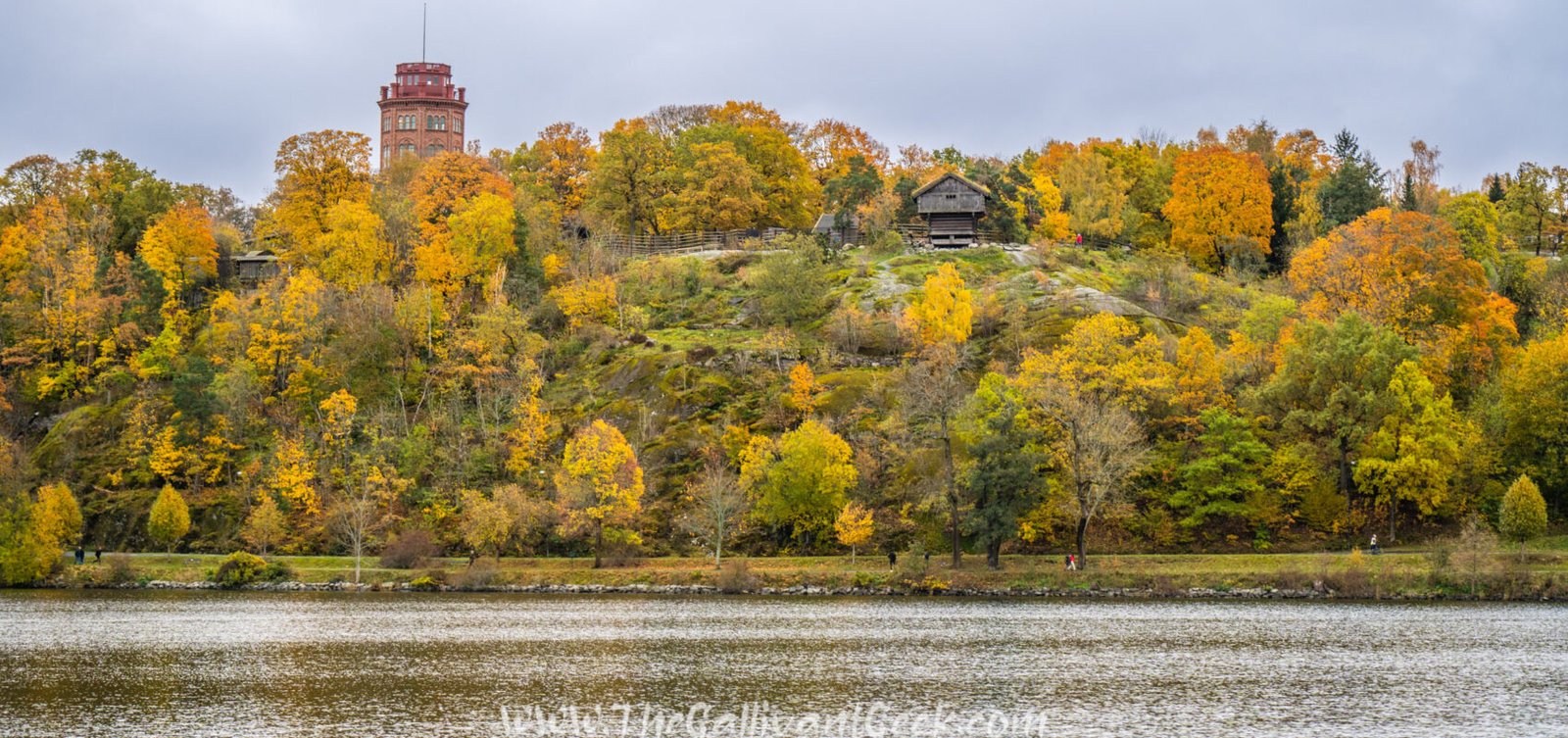
Stockholm in autumn is the city at its most photogenic. For a few short weeks every October, birch and maple leaves turn gold, wet cobblestones glow under the street lamps and soft, low sunlight lingers for hours. Most visitors head straight to Gamla Stan and Djurgården, and those are beautiful, but some of the best fall colours in Stockholm are hiding in places the tour buses never stop.
I live in Stockholm and photograph the city every season. This guide covers the 20 best spots for autumn photography in Stockholm, starting with famous classics like Djurgården, Drottningholm and City Hall, then hidden gems inside the city that most visitors never find. At the end you will find four bonus nature areas, including a national park, for real forest colour. For every spot you get how to get there by public transport and a practical photo tip.
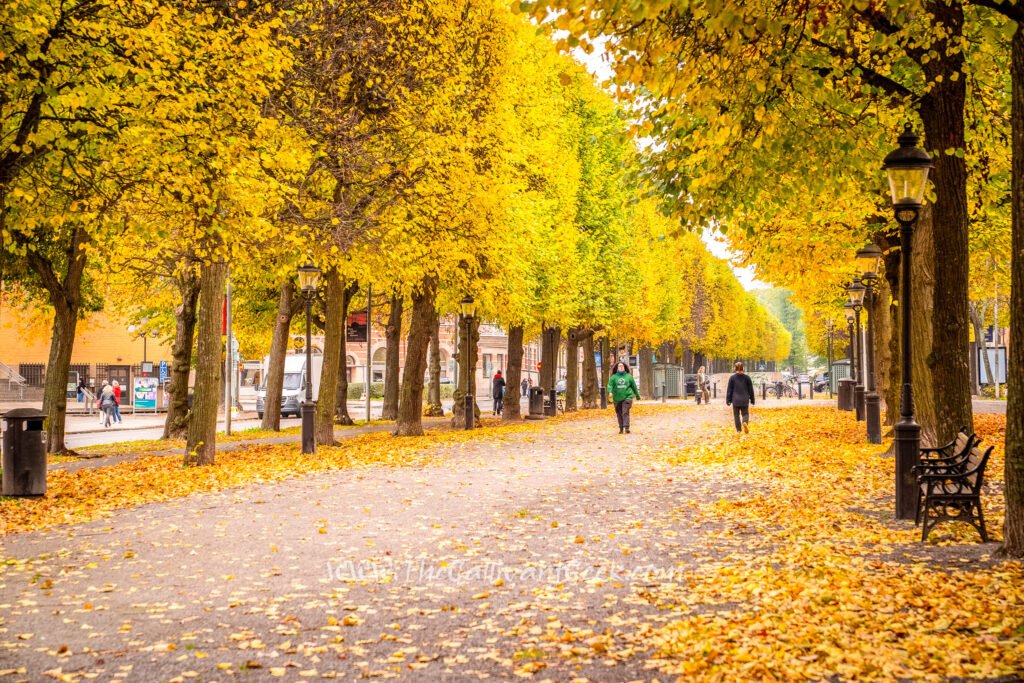
When Is the Best Time to See Autumn in Stockholm?
Fall colours in Stockholm usually start in late September and peak around the first three weeks of October. Birches and cherry trees turn and drop first, while oaks and maples hold on until late October. A cold, sunny week makes the colours brighter, and one autumn storm can strip the trees in a day, so go early rather than late.
- Sunset: around 18:20 at the start of October and about 17:40 by mid-month. Clocks go back on the last Sunday of October, and after that the sun sets before 16:30.
- Golden hour: the sun stays low all day in autumn, so you get soft, warm light from mid-afternoon.
- Weather: expect 5–12°C and frequent rain. Rain is good news for photographers, because wet leaves and stone look far richer.
Classic Autumn Photo Spots in Stockholm
Start with the famous places. They are popular for a reason, and autumn gives them a completely new look.
1. Djurgården
Djurgården is the green heart of Stockholm and the first place I go when the leaves start to turn. The whole island is a royal park, and in October its oaks, maples and birches turn gold and copper along the water. It is big enough to fill a whole day, so here are my three favourite corners for autumn photos.
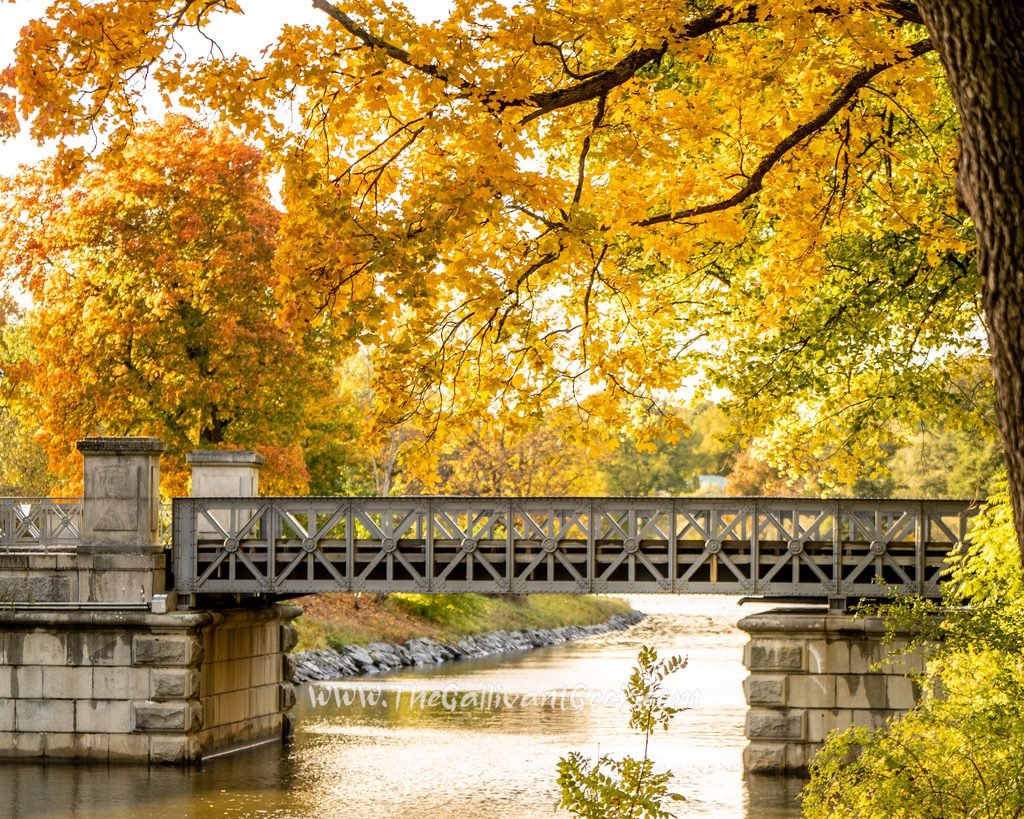
Djurgårdsbrunnskanalen: the canal on the east side of the island is lined with tall trees on both banks and turns into a tunnel of gold, with small bridges and boats along the way.
Rosendals Trädgård: a biodynamic garden with apple orchards, greenhouses and a much-loved café. In autumn it is all harvest, with pumpkins, apples and flowers stacked in crates. If you love that cosy look, my guide to the pumpkin patch near Stockholm is a good next stop.
The south shore and Waldemarsudde: the waterside path towards Prins Eugens Waldemarsudde gives you autumn trees in the foreground and the city skyline across the water. With kids in tow, Skansen is right next door.
How to get there: Tram 7 from Norrmalmstorg, bus 67 or 69, or the Djurgården ferry from Slussen, which is a scenic ride in itself.
Photo tip: Shoot the canal from the bridges on a still morning for mirror-like reflections. At Rosendal, get close to the details and use a wide aperture for a soft background.
2. Drottningholm Palace
Drottningholm Palace, home of the Swedish royal family, is a UNESCO World Heritage site on the island of Lovön in Lake Mälaren. The formal baroque garden is lined with long, perfectly straight avenues of trees, and in October they turn into corridors of yellow and orange leading up to the palace. Behind it, the English-style park has ponds, small bridges and the Chinese Pavilion, all framed by autumn colour. The palace park is free to walk around.
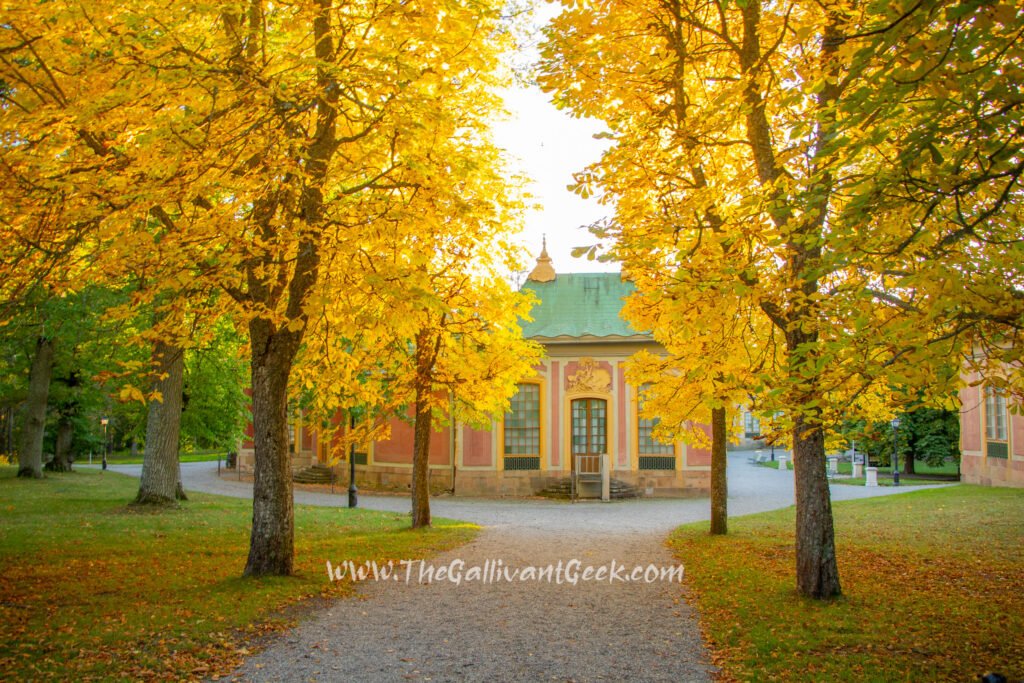
How to get there: Metro to Brommaplan (green line), then a short bus ride. The scenic boat from Stadshuset mostly runs in summer, so check the schedule before you go.
Photo tip: Stand in the middle of a tree avenue and shoot straight down it for perfect symmetry. From the jetty, you can catch the palace and autumn trees reflected in the lake.
3. Stockholm City Hall (Stadshuset)
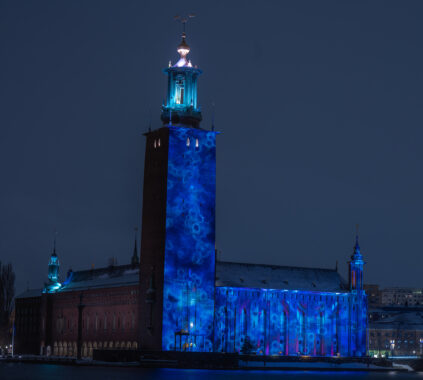
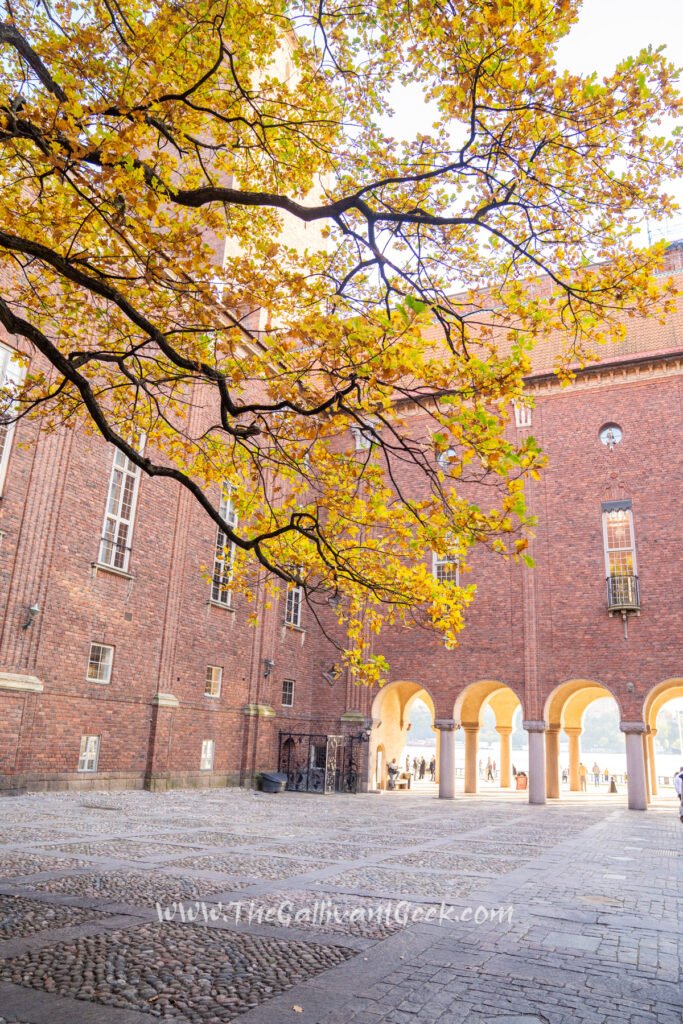
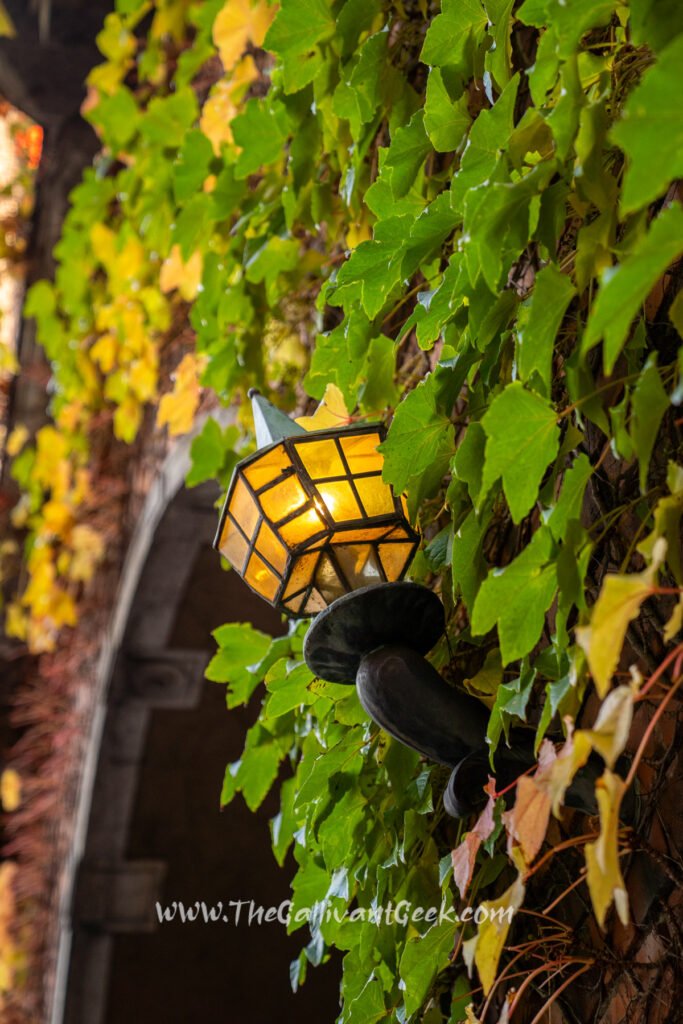
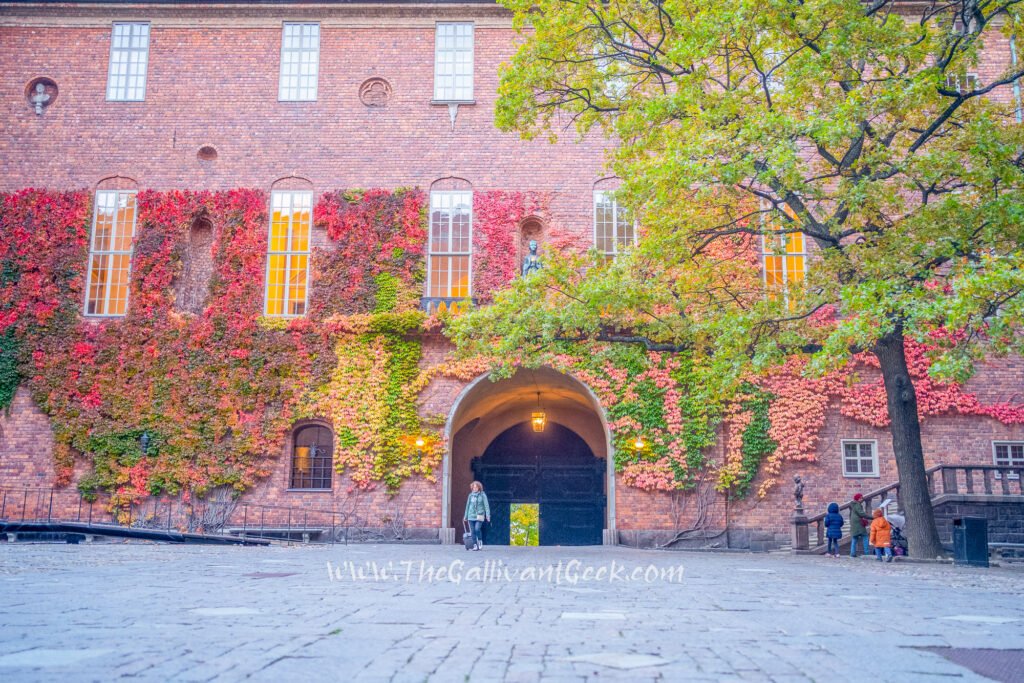
Stockholm City Hall is the city’s most famous landmark, a red-brick building with a 106-metre tower right on the waterfront of Kungsholmen. Its garden terrace by the water has trees that turn gold in autumn, with a view across Riddarfjärden to Riddarholmen and Gamla Stan. It is also the star of the view from Monteliusvägen, one of the best viewpoints in Stockholm.
How to get there: T-Centralen, then a 10-minute walk, or Rådhuset station (blue line).
Photo tip: Golden hour makes the red brick glow against the yellow leaves. For the classic shot, photograph it from Monteliusvägen across the water with autumn trees in the foreground. The tower only opens seasonally, so check before planning to go up.
4. Gamla Stan and Riddarholmen
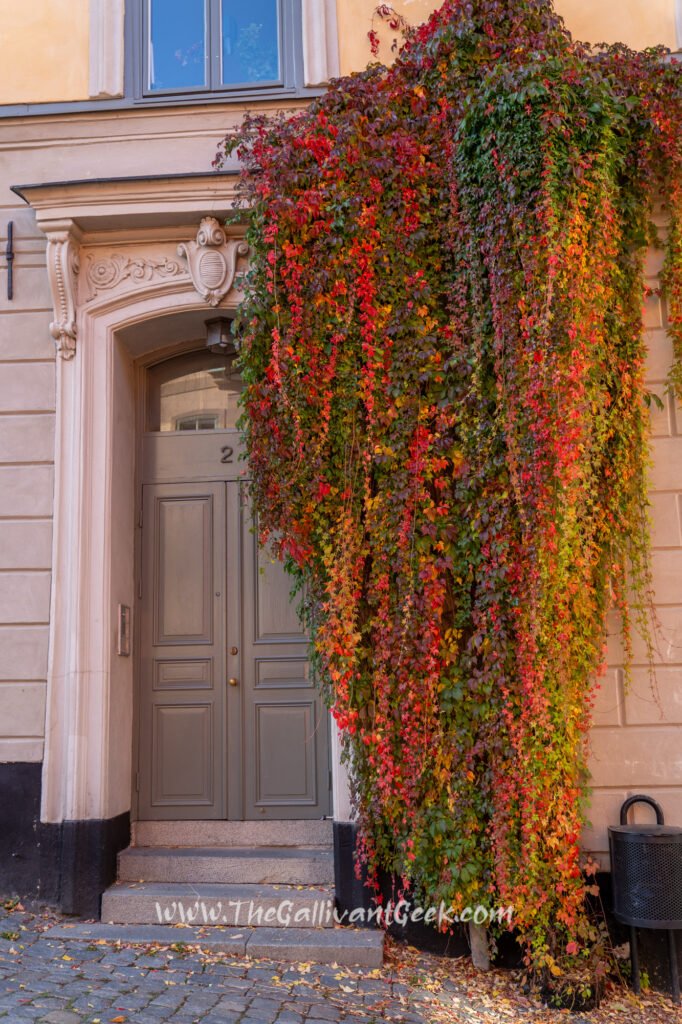
Stockholm’s old town has only a few trees, but it may be the most atmospheric place in the city in autumn. Rain turns the cobblestones into mirrors, the ochre and red buildings around Stortorget glow under grey skies, and the narrow lanes like Mårten Trotzigs gränd and Österlånggatan feel almost medieval in the mist. Stay until late November and the square fills with the Christmas market in Gamla Stan.
Walk five minutes west to Riddarholmen, the tiny island next door with brick palaces and Riddarholmskyrkan, the burial church of Swedish kings with its open cast-iron spire. From Evert Taubes terrass on its western tip you look across Riddarfjärden to City Hall and the Söder cliffs, where the autumn trees turn the hillside gold. It is one of the best sunset spots in the city.
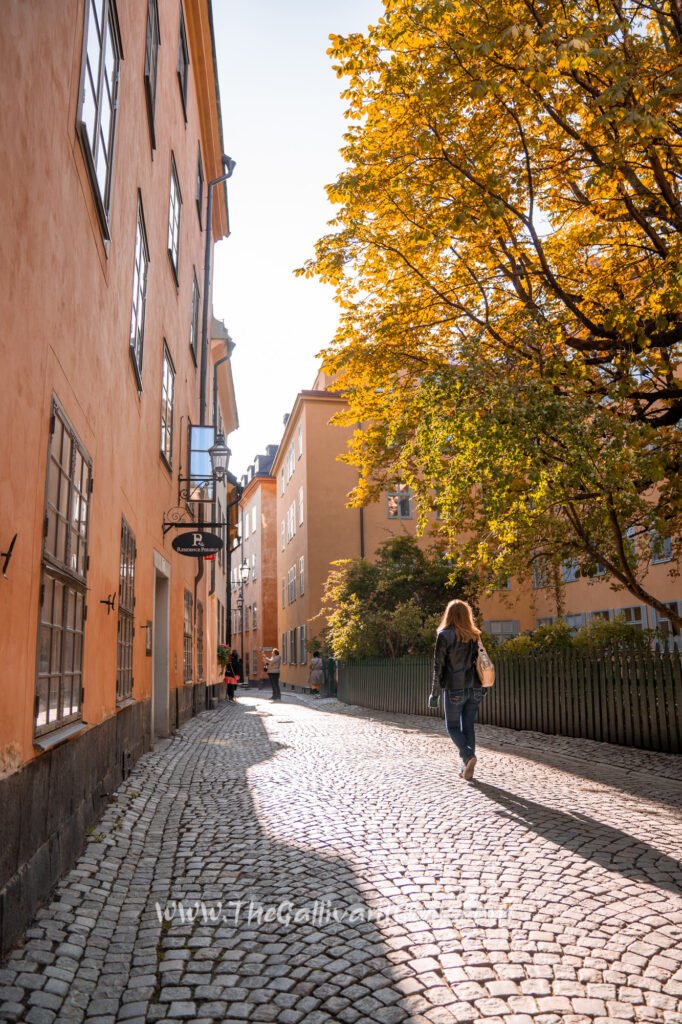
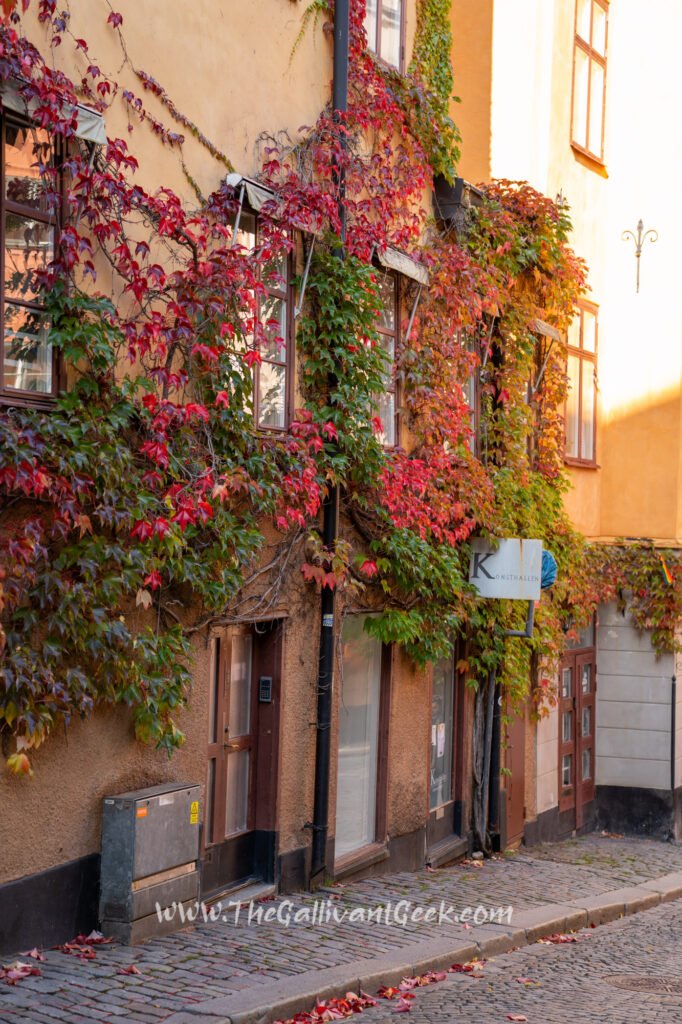
How to get there: Gamla Stan station (red and green lines).
Photo tip: Go out straight after the rain and get low to the ground so the wet cobblestones reflect the lit windows. Early mornings are almost empty.
5. Skeppsholmen
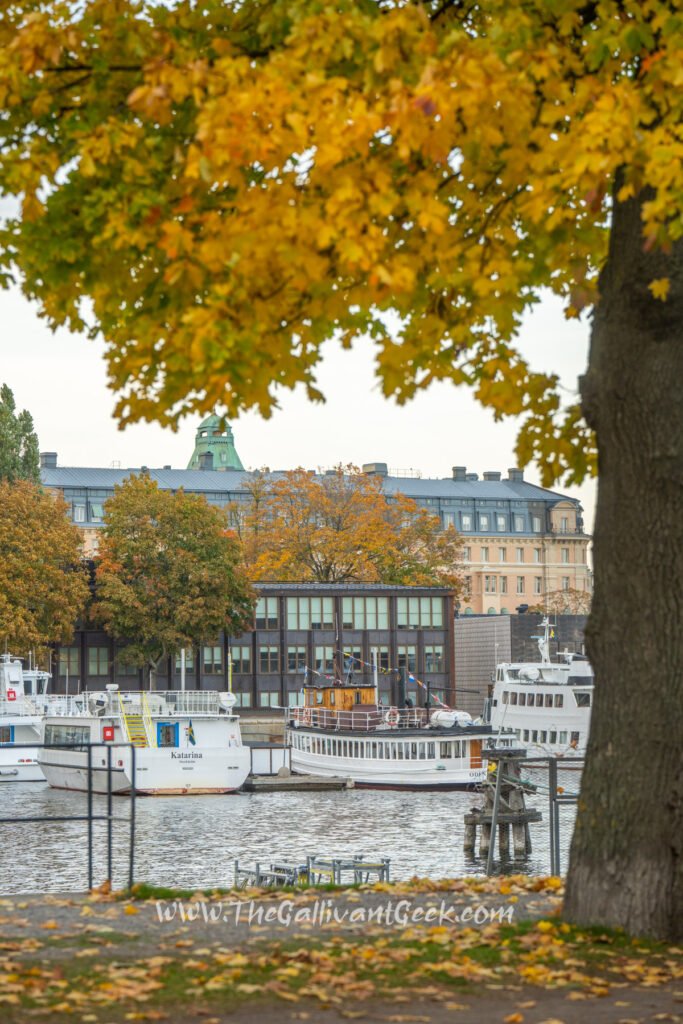
Skeppsholmen is a small island right in the city centre, home to Moderna Museet and the white sailing ship af Chapman. A quiet, tree-lined quay runs around the island, and in autumn it is covered in fallen leaves, with historic buildings on one side and views of Strandvägen and Gamla Stan on the other. It is only a few minutes from Kungsträdgården, but feels much calmer.
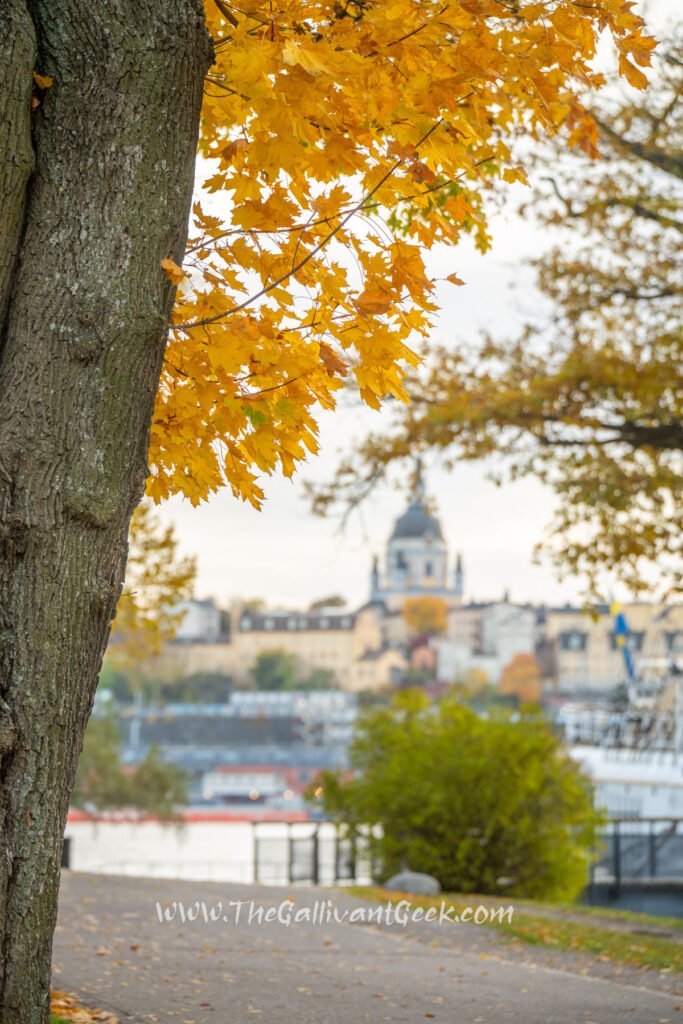
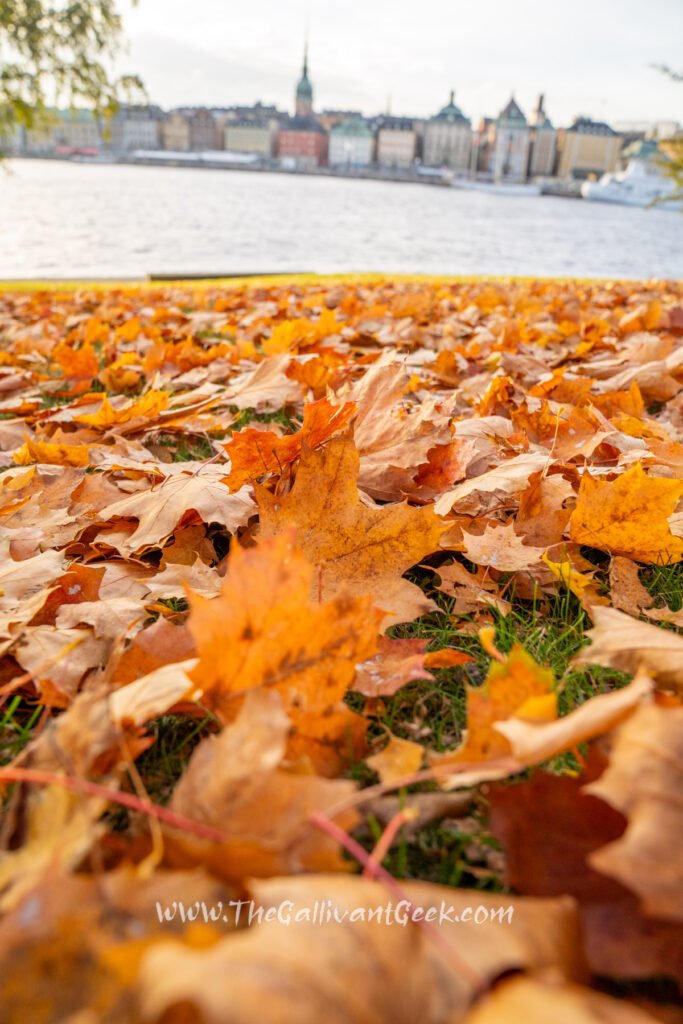
How to get there: Walk across the Skeppsholmsbron bridge from Kungsträdgården or Blasieholmen, or take bus 65.
Photo tip: Frame the masts of af Chapman with yellow leaves. Come back at blue hour for the lights of Gamla Stan across the water.
6. Kungsträdgården
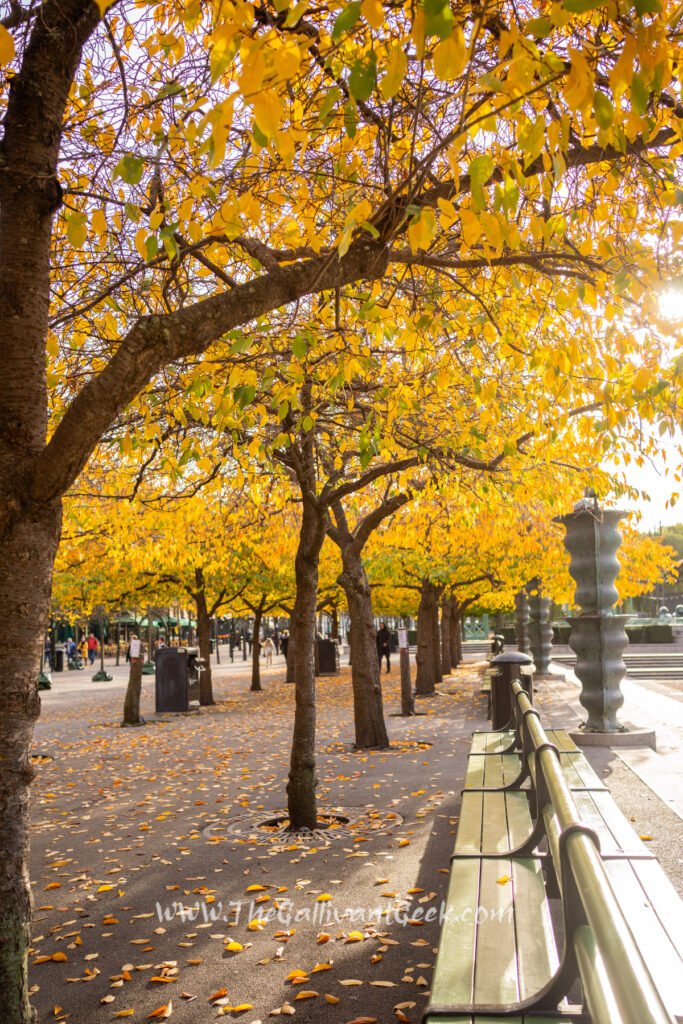
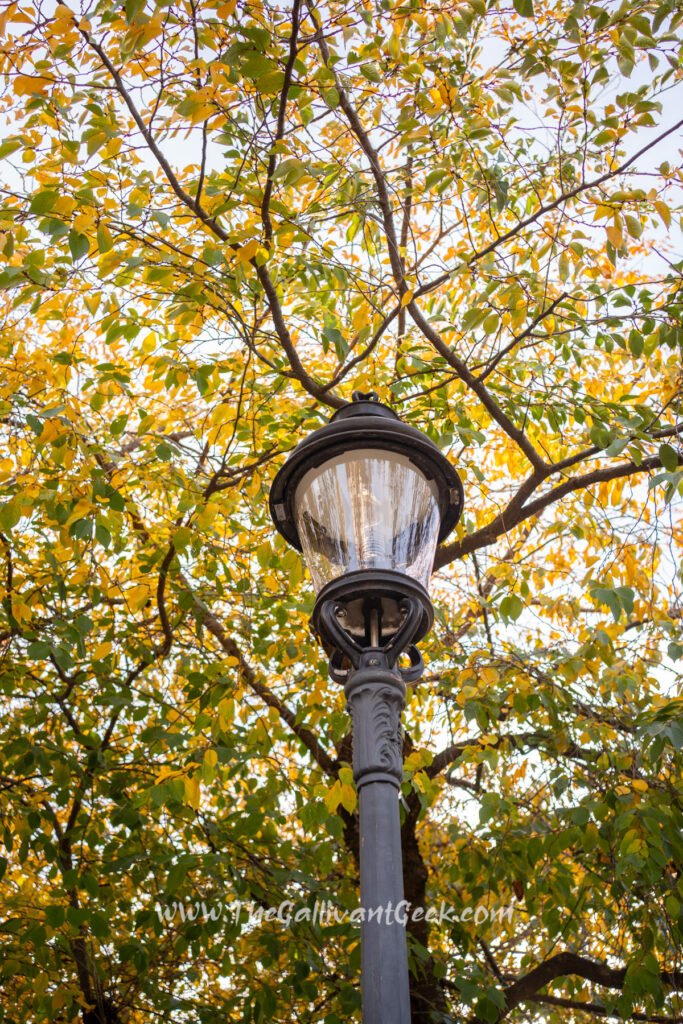
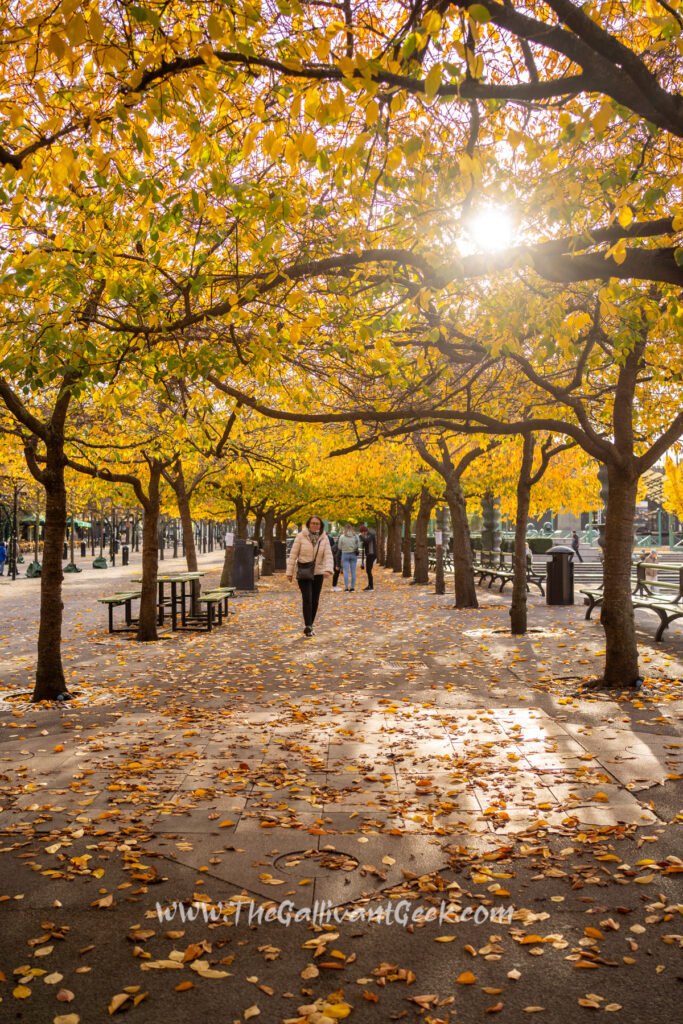
Everyone photographs Kungsträdgården during the cherry blossom season in spring, but very few come back in autumn. The same Japanese cherry trees turn red, orange and copper in October, and the rows of trees leading towards Jakobs kyrka look completely different. It is one of my favourite before-and-after comparisons: Stockholm in spring versus Stockholm in autumn.
How to get there: Kungsträdgården or T-Centralen station.
Photo tip: Cherry leaves fall earlier than most, so aim for the first half of October. After dark, the street lamps light up the red canopy.
7. Strandvägen
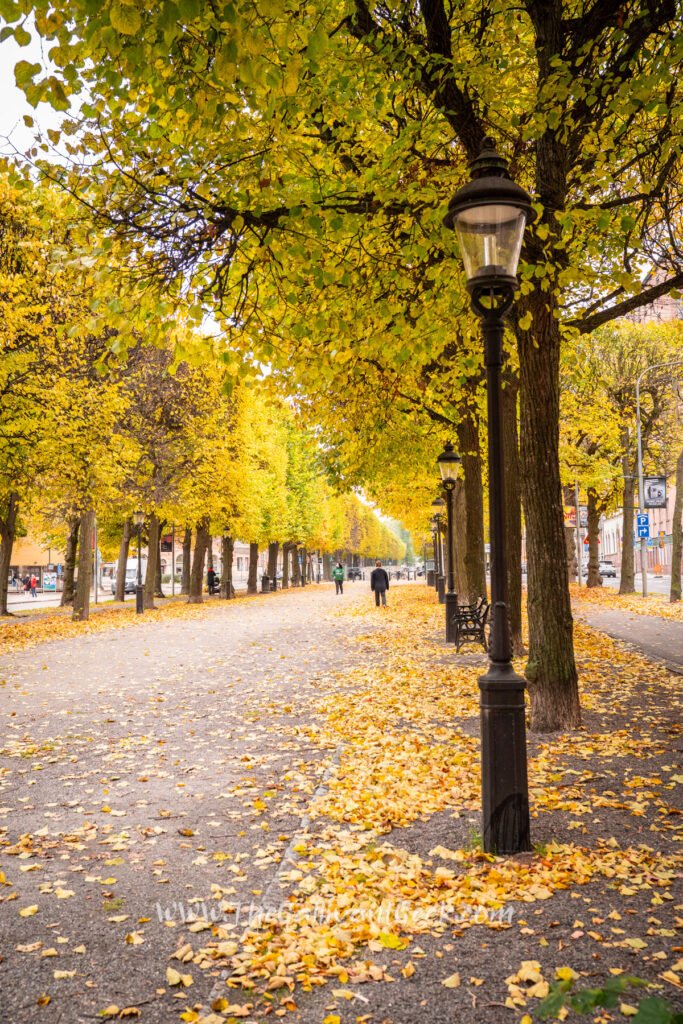
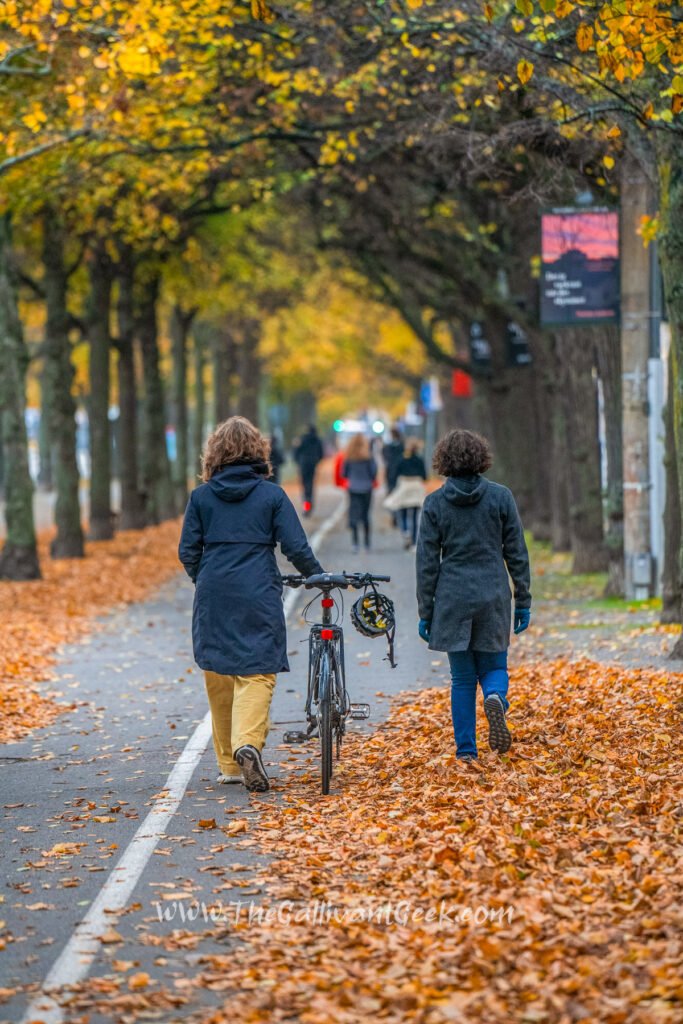
Strandvägen is Stockholm’s grandest boulevard, running along the water from Nybroplan towards Djurgården. Long rows of lime trees line the street and the waterfront promenade, with elegant 19th-century facades on one side and old wooden boats moored along the quay on the other. In October the whole avenue turns yellow and gold, making it one of the best places for fall colours in central Stockholm.
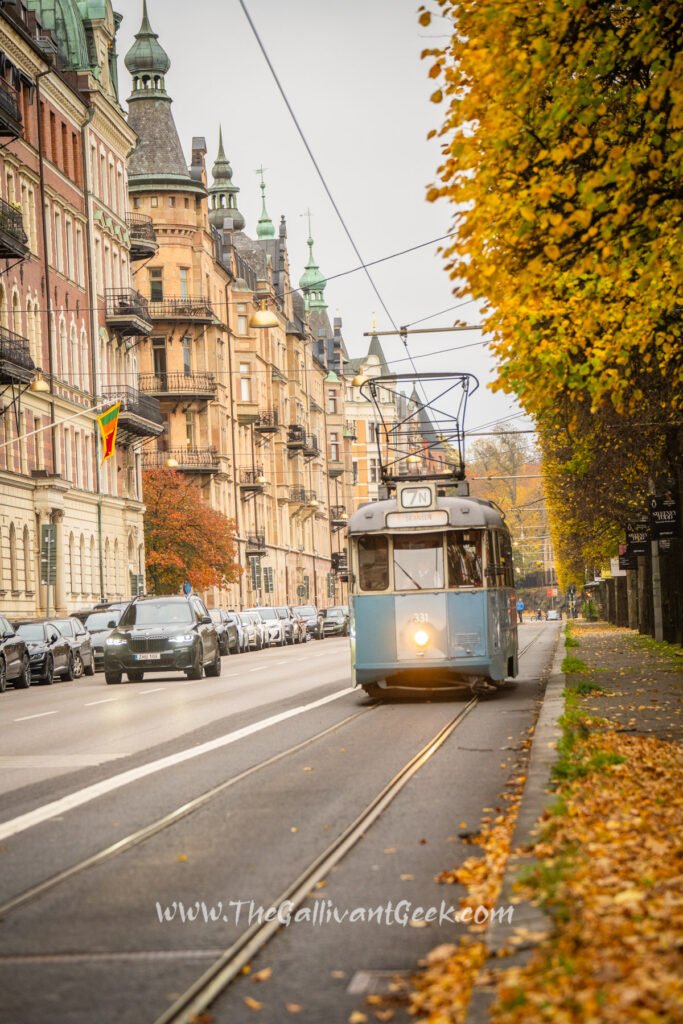
How to get there: Östermalmstorg or Kungsträdgården station, or tram 7, which runs along the street.
Photo tip: Stand on the tree-lined promenade in the middle and shoot straight down the avenue for a tunnel of yellow leaves. Wait for tram 7 to pass, or walk to Djurgårdsbron and look back at the boulevard at golden hour.
8. Monteliusvägen
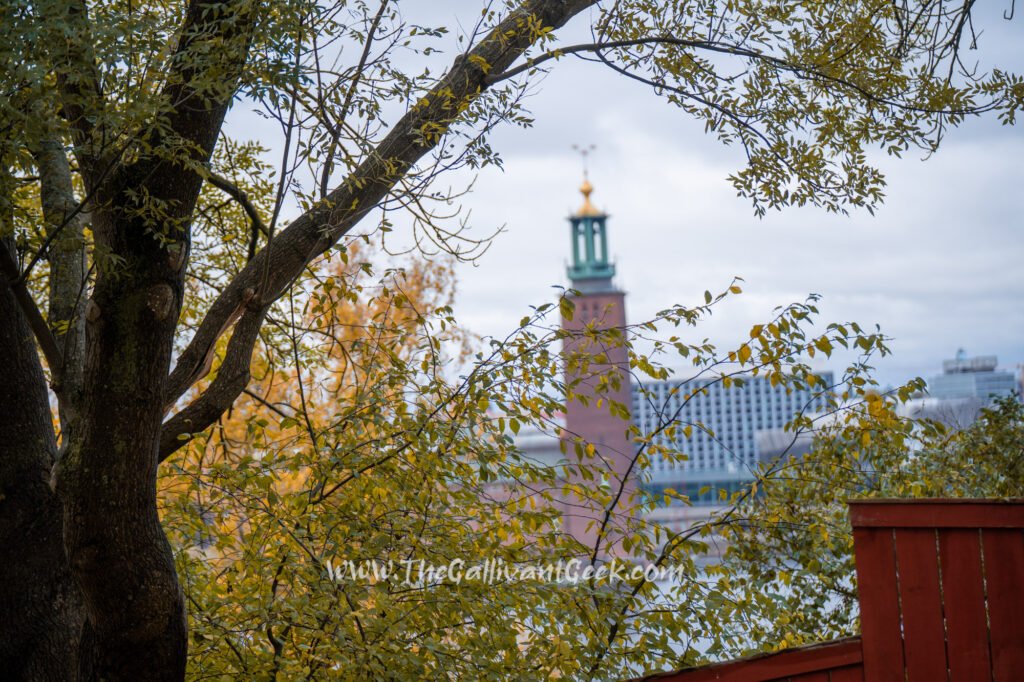
Monteliusvägen is a 500-metre walking path along the cliffs of Södermalm and one of the best-known views in Stockholm, looking across the water to City Hall, Riddarholmen and Gamla Stan. In autumn, the trees and bushes along the path turn yellow and red, giving you a natural foreground for the skyline. It is one of my favourite viewpoints in Stockholm.
At the western end of the path, the small Ivar Los Park adds old wooden houses and leafy trees to the same view, so you can photograph both in one short walk.
How to get there: Slussen or Mariatorget station, then a 5-minute walk.
Photo tip: Arrive 30 minutes before sunset and stay for blue hour. Shoot through the autumn leaves to frame City Hall.
9. Humlegården
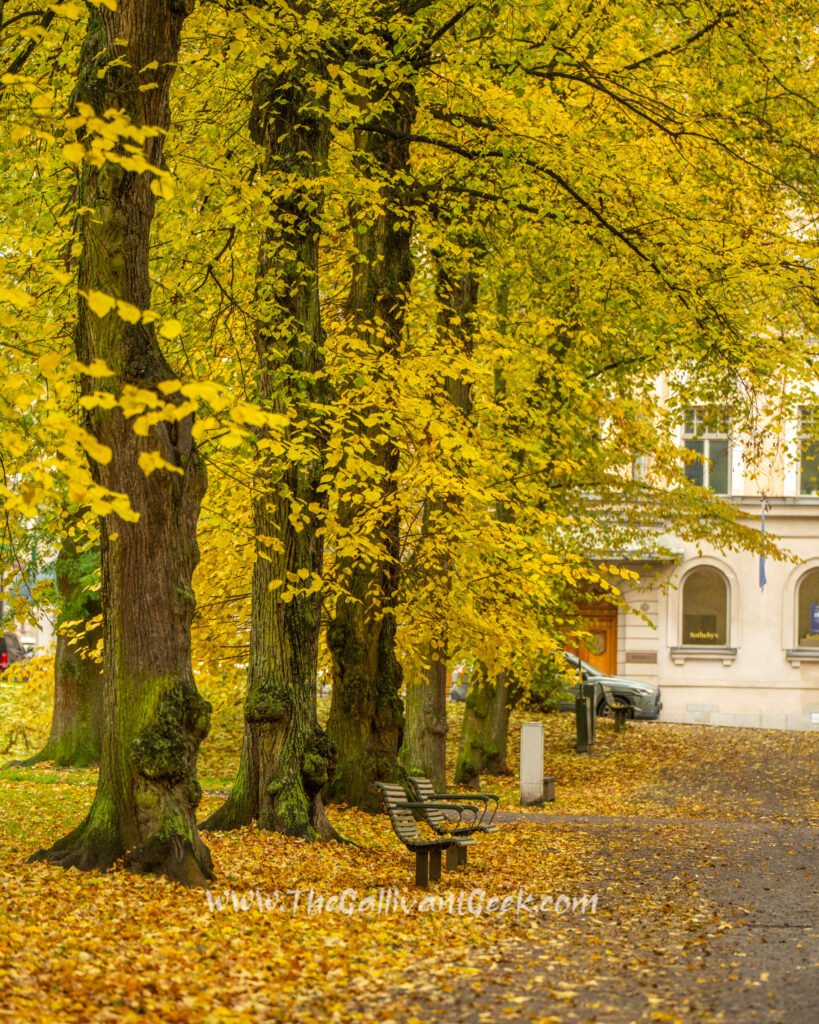
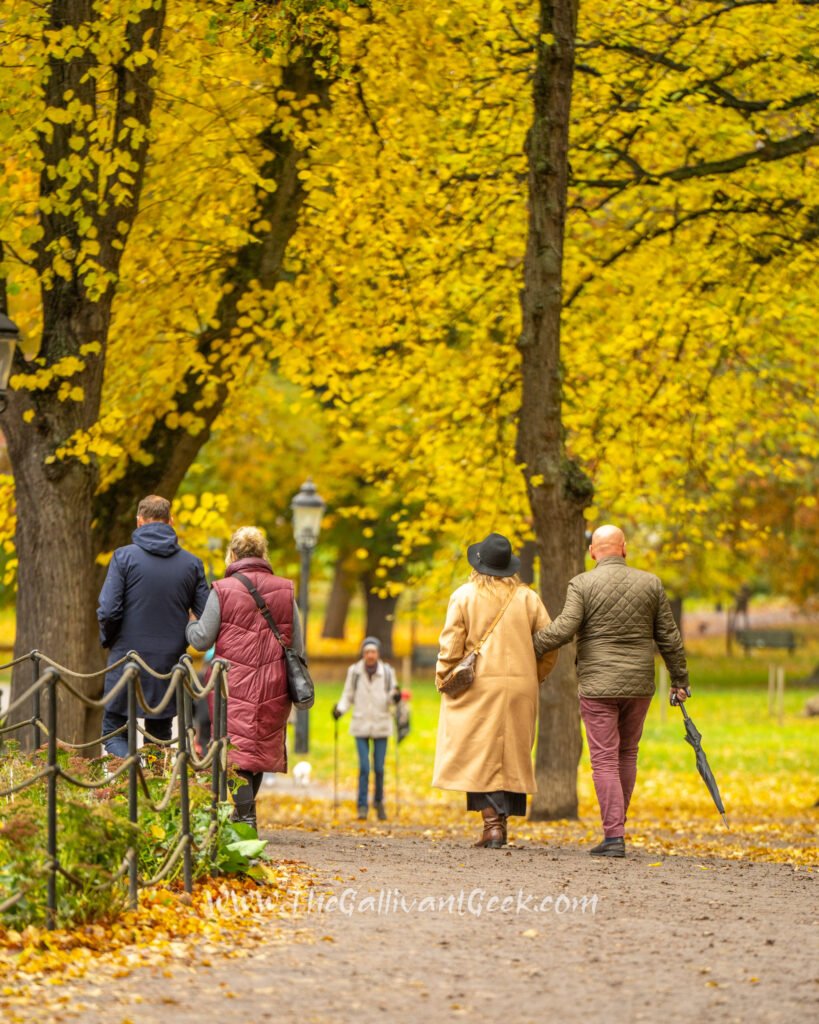
Humlegården is a classic park in Östermalm, once the royal hop garden and now home to the Royal Library (Kungliga biblioteket). Wide paths lined with old lime and maple trees turn into carpets of yellow leaves in October, and the statue of botanist Carl Linnaeus is surrounded by colour.
How to get there: Östermalmstorg or Stadion station (red line).
Photo tip: Shoot down the leaf-covered paths with a person walking for scale. The Royal Library with yellow trees in front is a lovely composition.
10. Hagaparken and Koppartälten
Hagaparken is an English-style landscape park on the shore of Brunnsviken, with long tree avenues, a small palace and the famous copper-blue Koppartälten (Copper Tents). In October the birches and oaks around the water turn gold, and mist often lies over the lake in the morning.
How to get there: Bus from Odenplan, or walk from Haga Norra.
Photo tip: The blue-green copper tents against yellow trees is a striking colour contrast. Arrive at sunrise for mist on Brunnsviken.
Hidden Gems for Autumn Photography in Stockholm
These hidden gems in Stockholm are where I send friends who have already seen the classics. They are all easy to reach by public transport, and on a weekday morning you will often have them to yourself.
11. Norr Mälarstrand and Rålambshovsparken
Norr Mälarstrand is the long waterfront promenade on Kungsholmen running from City Hall towards Rålambshovsparken. Tall trees line the water, old boats are moored along the quay, and across the bay you see the Söder cliffs. It is a lovely, easy autumn walk that many visitors miss.
Follow it to the end and you reach Rålambshovsparken, a big, open park right under the arches of Västerbron. In summer it is full of picnics, but in autumn it is quiet, with big trees changing colour and the bridge towering above them.
How to get there: Rådhuset station, or walk from City Hall. Fridhemsplan station is closest to Rålambshovsparken.
Photo tip: Look back towards the City Hall tower with the autumn trees along the quay as a leading line. Under Västerbron, shoot the repeating arches above the yellow trees with a wide lens.
12. Långholmen
Långholmen is a small, green island west of Södermalm with rocky shores, old oak trees and a former prison that is now a hotel and museum. Walking paths loop around the island, with views of the Västerbron bridge. It feels like the countryside, but you are only ten minutes from the city centre.
How to get there: Hornstull station (red line), then walk across the small bridge.
Photo tip: Find a calm bay in the early morning for reflections of the coloured trees. Västerbron framed by yellow leaves is a classic shot.
13. Vitabergsparken and Sofia Kyrka
On the eastern side of Södermalm, Vitabergsparken is a hilly park loved by locals and rarely visited by tourists. At the top stands Sofia kyrka, a grand church from 1906 whose tall tower rises above the park, surrounded by trees that turn bright yellow in October. The little red wooden houses of the old Vita Bergen area around the park add classic Swedish colour.
How to get there: Medborgarplatsen or Skanstull station (green line), then a 10-minute walk.
Photo tip: Shoot the church from the slope below so the yellow trees fill the bottom of the frame. The red cottages plus autumn leaves look great with a 50mm lens.
14. Tantolunden
Tantolunden is a big park on southern Södermalm, best known for its allotment gardens full of tiny, colourful cottages. In autumn the gardens are full of apple trees, late flowers and falling leaves, and the little red, yellow and blue cottages make it one of the most charming hidden gems in Stockholm.
How to get there: Zinkensdamm or Hornstull station (red line).
Photo tip: Use a short telephoto to compress rows of cottages and trees. Respect privacy and stay on the public paths, since the gardens belong to their owners.
15. Observatorielunden
Observatorielunden is a small hill park around the old Stockholm Observatory from the 1700s. Trees circle the hill, and from the top you look down on the round, orange Stockholm Public Library (Stadsbiblioteket), one of the city’s architectural icons. In autumn, the library and the leaves are almost the same colour.
How to get there: Odenplan or Rådmansgatan station.
Photo tip: Frame the round library through the autumn trees from the hill. Overcast days give soft, even light.
16. KTH Royal Institute of Technology Campus
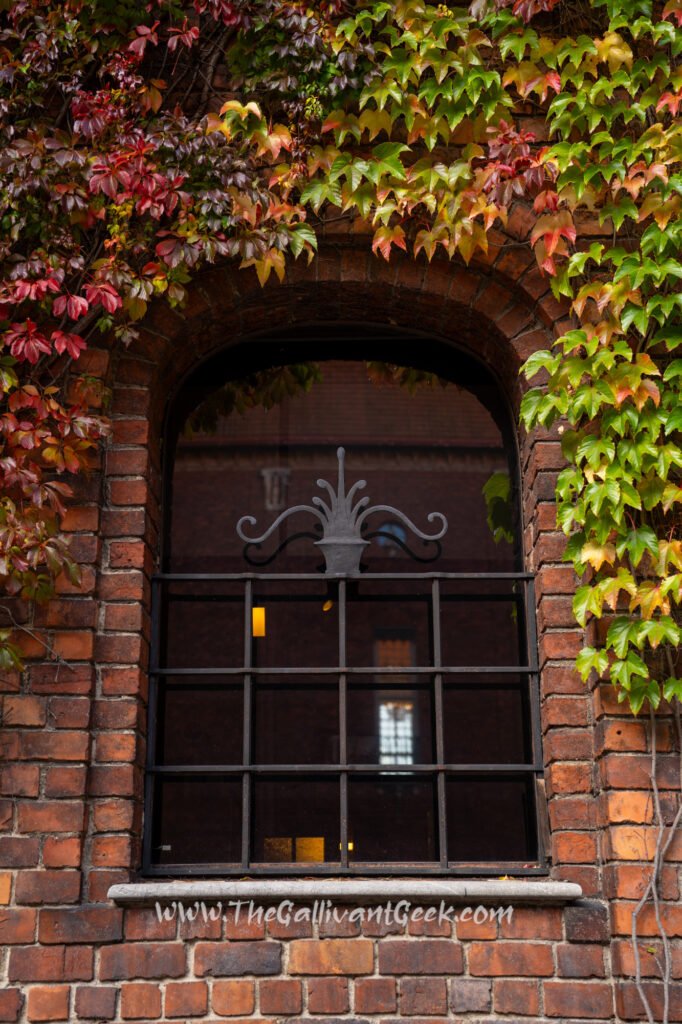
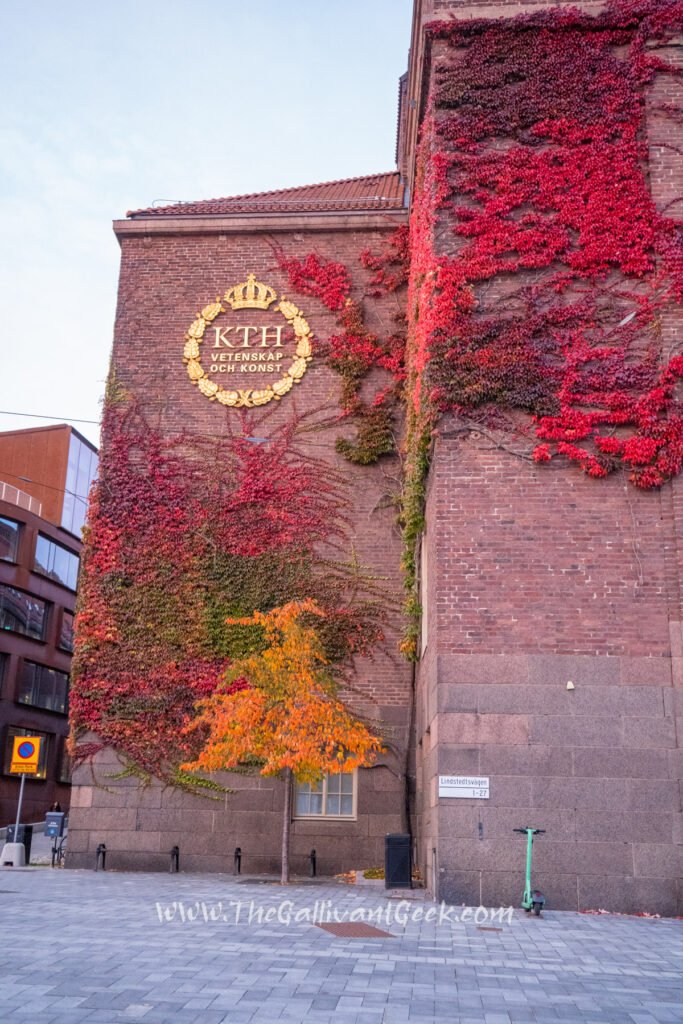
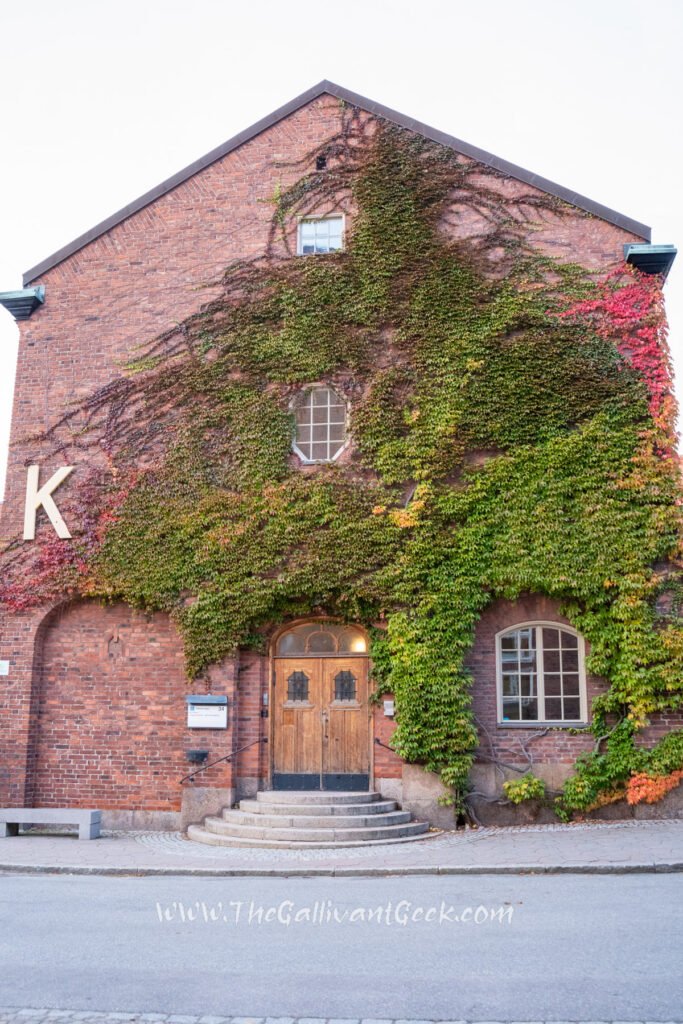
The main campus of KTH is one of the most atmospheric places in the city for autumn photos. Red-brick buildings from the 1910s, arched gateways, quiet courtyards and tree-lined paths give it a moody, old-university look that suits October perfectly. It is a working university, but the outdoor areas are open to walk through.
How to get there: Tekniska högskolan station (red line), directly at the campus.
Photo tip: Use the arches as a frame and wait for a student on a bike to pass through. Red brick plus orange leaves is a lovely warm palette, so keep your white balance on the warm side.
17. Lill-Jansskogen
Right behind KTH lies Lill-Jansskogen, a real forest in the middle of the city. It is part of the Royal National City Park (Kungliga nationalstadsparken), the world’s first national urban park. Birch, oak and maple trees line soft trails, and on cold mornings mist hangs between the trunks. It is one of the best places for fall foliage in Stockholm without leaving the city.
How to get there: Walk in from the KTH campus or from Universitetet station.
Photo tip: Go just after sunrise on a still day for mist and backlit leaves. A telephoto lens lets you isolate a single golden tree among the darker trunks.
18. Bergianska Trädgården (Bergius Botanic Garden)
The botanic garden of Stockholm University sits on the shore of Brunnsviken, and outside the summer season it is surprisingly quiet. Trees from around the world change colour at different times, so you get a mix of reds, oranges and yellows that is hard to find in an ordinary Swedish forest. The outdoor garden is free to enter.
How to get there: Universitetet station (red line), then a 10-minute walk.
Photo tip: Look for single trees with bright red leaves and use the lake behind them as a soft, dark background.
19. Skogskyrkogården (The Woodland Cemetery)
Skogskyrkogården is a UNESCO World Heritage site and one of the most peaceful places in Stockholm. Its landscape of pine forest, open lawns and a hill crowned with elm trees was designed to be calm and contemplative. In autumn, the grass, fallen leaves and long shadows make it feel quietly beautiful. It is free to visit and open every day.
How to get there: Skogskyrkogården station (green line).
Photo tip: The long avenue of trees is the signature shot. Please be respectful. It is an active cemetery, so keep noise down and do not photograph mourners or funerals.
20. Ulriksdal Palace Park
Most people visit Hagaparken and stop there, but continue north and you reach Ulriksdal, a royal palace with a quiet park, old oak woods and a small orangery. It is part of the same Royal National City Park and gets a fraction of the visitors, which makes it a true hidden gem for autumn in Stockholm.
How to get there: Bergshamra station (red line) or the commuter train to Ulriksdal, then a walk.
Photo tip: The palace and its autumn trees reflected in Edsviken bay are the shot to get. Calm, cold mornings give the best reflections.
Bonus: Nature Reserves Near Stockholm for Autumn Colours
Want real forest and lakes? These nature reserves are a short metro or bus ride from the centre and show autumn in Sweden at its wildest.
Judarskogen Nature Reserve
Judarskogen is a small nature reserve in Bromma, built around the lake Judarn. An easy trail loops around the water through old forest, and in October the birches and oaks reflect in the lake. It is one of the most peaceful places for autumn photography in Stockholm, only 20 minutes from the city centre.
How to get there: Åkeshov station (green line), then a 5-minute walk.
Photo tip: Walk the loop slowly and look back across the lake for reflections. A wooden footbridge on the trail makes a nice foreground.
Nackareservatet and Hellasgården
The Nacka nature reserve is a big forest with lakes just south-east of the city. Hellasgården, on the shore of lake Källtorpssjön, is the starting point for trails through birch and pine forest. In autumn the lakes reflect gold and red leaves, and it is the easiest real forest experience near Stockholm.
How to get there: Bus from Slussen, about 20 minutes.
Photo tip: Follow the trail around Källtorpssjön for reflection shots. Bring a polarising filter to cut glare on the water.
Nyckelviken Nature Reserve
Just east of the city in Nacka, Nyckelviken is a nature reserve with an old manor, a deep wooded valley, meadows and old deciduous trees. It is popular with local families and dog walkers but almost unknown to visitors. The mix of forest, farm buildings and water gives you a lot of variety in a short walk.
How to get there: Saltsjöbanan from Slussen to Saltsjö-Järla, then about a 15-minute walk. Check the SL journey planner for the best connection.
Photo tip: Bring a polarising filter to cut glare from wet leaves and make the colours stronger.
Tyresta National Park
Tyresta National Park, south-east of Stockholm, protects one of the largest areas of old-growth forest in southern Sweden. Moss-covered rocks, quiet lakes and ancient pines mix with birch and aspen that turn bright yellow in autumn. The little village of Tyresta by, with its red wooden houses, is a lovely start or finish.
How to get there: Commuter train to Handen, then a bus to Tyresta by. Plan for a half-day trip.
Photo tip: Aspens turn a brilliant yellow. Use them against the dark pines for contrast, and bring a tripod for low light in the forest.
A Self-Guided Autumn Photo Walk in Stockholm
If you only have a few hours to enjoy Stockholm in autumn, this walk links five of the spots above in about 5 km, mostly downhill, and ends in the city centre.
- KTH campus: start at Tekniska högskolan station and wander the courtyards.
- Lill-Jansskogen: a short loop into the forest behind the campus.
- Humlegården: tree-lined paths and the Royal Library.
- Strandvägen: walk the yellow lime tree avenue along the water.
- Kungsträdgården: finish under the red cherry trees at golden hour, then grab a fika.
Autumn Photography Tips for Stockholm
- Go out after the rain. Wet leaves, stone and cobblestones are much richer in colour, and puddles give free reflections.
- Use a polarising filter. It removes glare from leaves and water and makes autumn colours pop.
- Underexpose slightly. Dropping exposure by a third of a stop keeps the yellows and oranges from blowing out.
- Watch the white balance. Auto white balance can cool autumn scenes down. Try the cloudy or shade setting for a warmer look.
- Carry a lens cloth and gloves. October mornings are cold and damp.
- Use public transport. Every spot in this guide is reachable with an SL travel card, so you do not need a car. Plan routes with the SL journey planner.
Planning the rest of your trip? Have a look at my list of things to do in Stockholm, and if you are travelling with kids, Skansen is wonderful in autumn too.
Frequently Asked Questions About Stockholm in Autumn
When is peak autumn colour in Stockholm?
Usually the first three weeks of October, which is the best time to see Djurgården and Drottningholm at their most colourful. Birches and cherry trees peak in early October, while oaks and maples last until late October. Exact timing changes from year to year with the weather.
Is Stockholm worth visiting in autumn?
Yes. Stockholm in autumn has far fewer tourists than in summer, hotels are cheaper and the light is excellent for autumn photography in Stockholm. Bring warm, waterproof clothes, since rain is common.
What are the best hidden gems in Stockholm for autumn photos?
Vitabergsparken, Observatorielunden, Lill-Jansskogen and Ulriksdal Palace Park are my favourites. They are beautiful in October, easy to reach by metro and rarely crowded.
Can I see fall colours in central Stockholm?
Absolutely. Strandvägen, Kungsträdgården, Skeppsholmen, the City Hall garden and Gamla Stan all have autumn trees, and the KTH campus and Lill-Jansskogen are only a few metro stops from T-Centralen.
What are the best nature reserves near Stockholm for autumn colours?
Tyresta National Park for old-growth forest, Nackareservatet and Hellasgården for forest lakes, and Judarskogen for an easy lake loop close to the city. All are reachable by public transport.
Which of these spots is your favourite for Stockholm in autumn? Tell me in the comments, and tag your photos so I can see them!